

 EN
EN
 English
 Français
 Español
 عربى
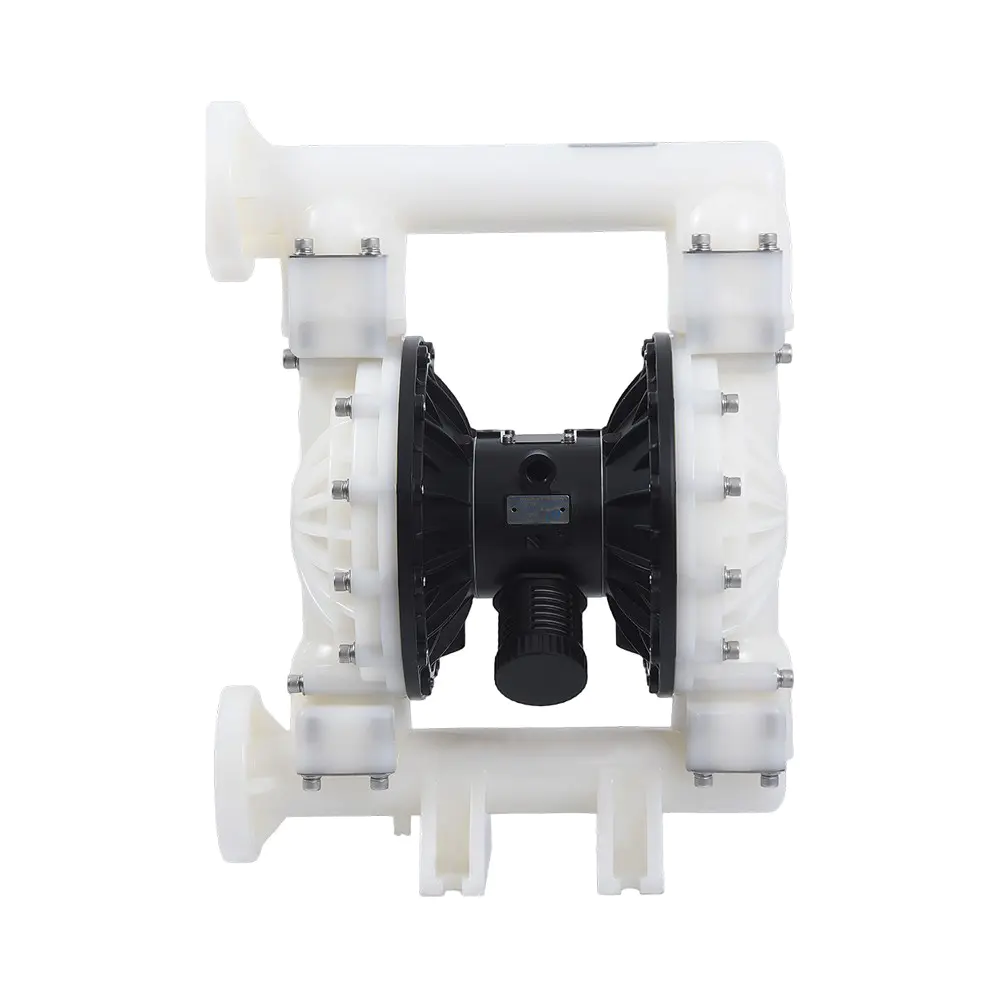
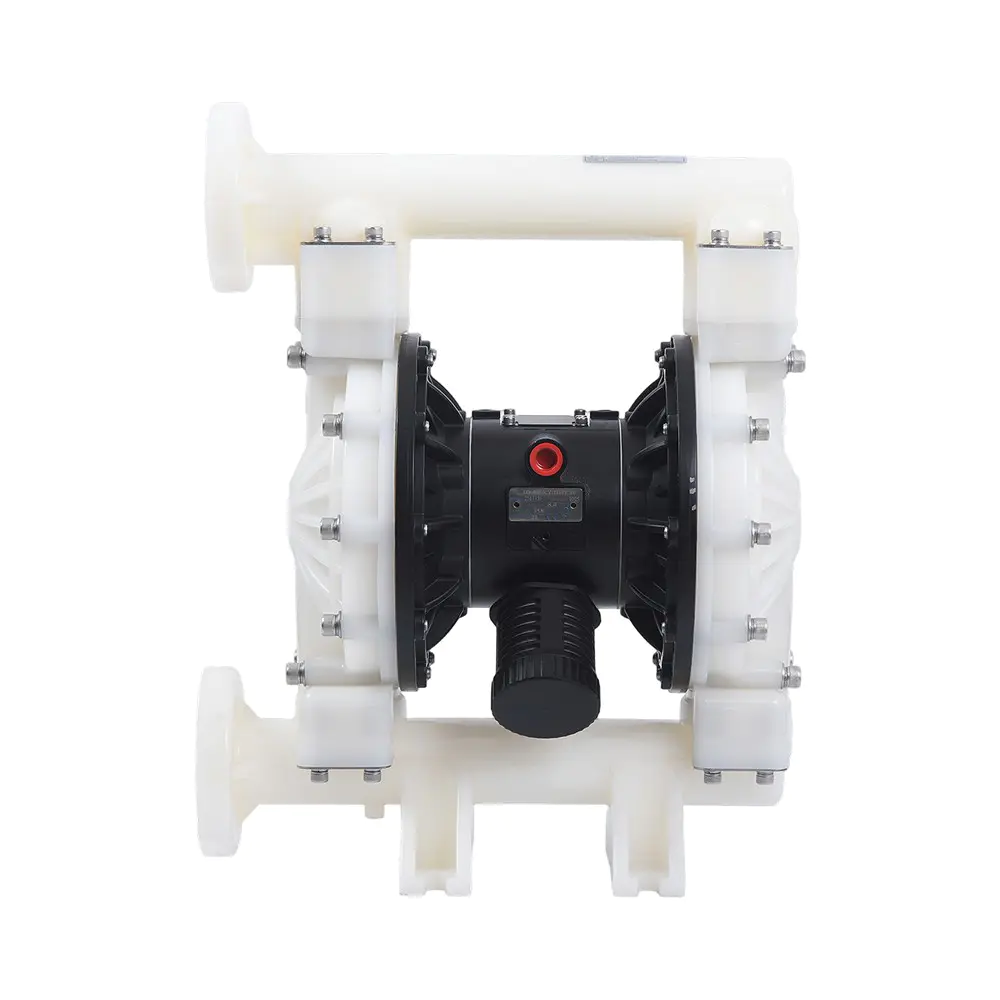
عربىA chemical resistant diaphragm pump is a positive displacement pump that uses flexible diaphragms to transfer corrosive liquids without leaking through a shaft seal. Its ability to handle acids, alkalis, solvents, and slurries — while maintaining a leak-free wetted path — makes it a standard choice in chemical processing, water treatment, paint, and pharmaceutical applications. For an engineer selecting a pump, the practical answer starts with two questions: what wetted material matches the chemical, and which drive type fits the installation environment.
Content
- 1 What Makes a Diaphragm Pump Chemical Resistant?
- 2 Material Selection for Chemical Compatibility
- 3 Air-Operated vs Electric Diaphragm Pumps for Chemical Duty
- 4 Applications in the Chemical Process Industry
- 5 Selection Criteria and Common Purchase Considerations
- 6 Maintenance and Service Tips
- 7 Frequently Asked Questions
What Makes a Diaphragm Pump Chemical Resistant?
Chemical resistance in a diaphragm pump comes from the combination of a sealed head, corrosion-resistant wetted materials, and a diaphragm that flexes instead of rotating.
Unlike a centrifugal pump, a diaphragm pump has no rotating shaft that has to pass through the pump casing. The diaphragms are clamped inside the pump head, so the liquid chamber is completely separated from the outside atmosphere. The only parts that contact the fluid are the body, diaphragm, valve balls, seats, and O-rings. When these components are made from polypropylene, PVDF, 316 stainless steel, or PTFE-lined elastomers, the pump can safely move chemicals that would quickly damage a conventional metallic or mechanical seal pump.
The design also gives you a practical advantage: a chemical resistant diaphragm pump can run dry for a short period and self-prime from an empty line. This makes it easier to handle transfers from drums, tanks, and sumps, especially when the liquid level drops below the pump inlet. Compared with a centrifugal pump, it can deliver high pressure at a lower flow, handle viscous fluids and solids, and produce much less shear damage to the pumped media.
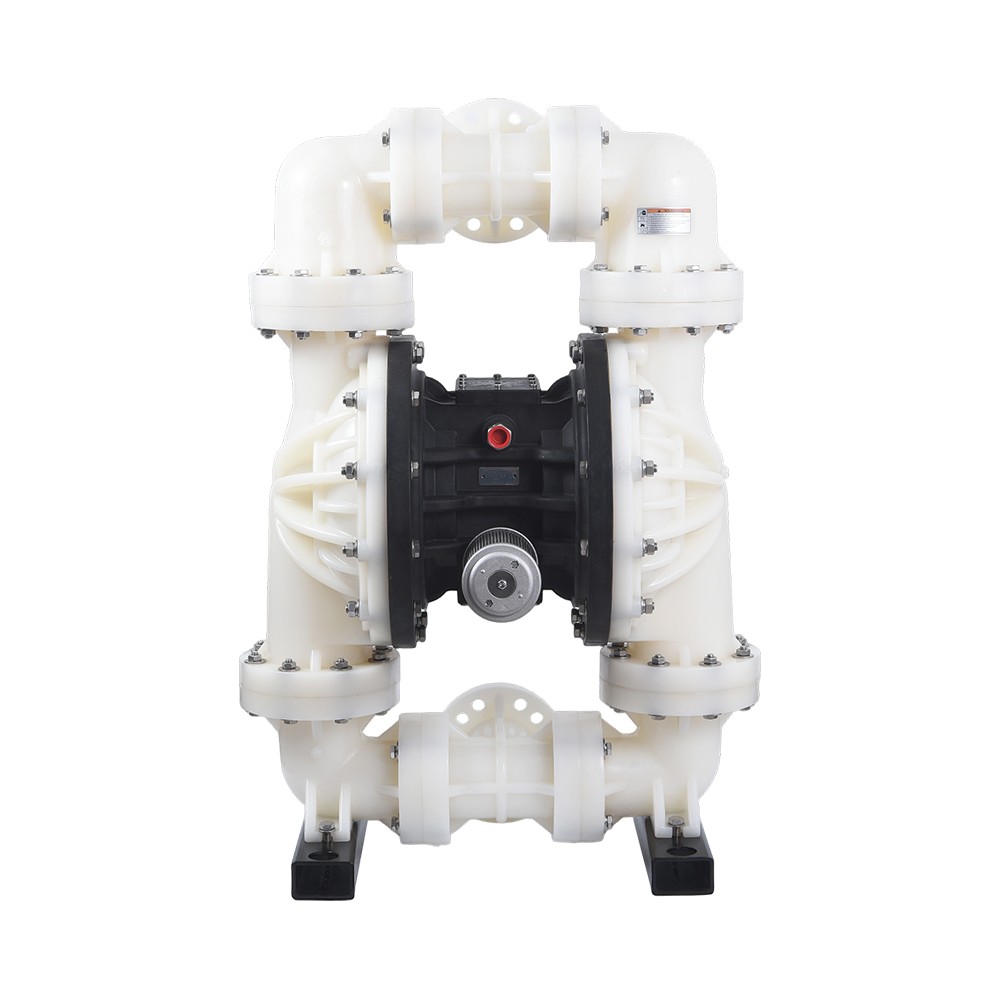
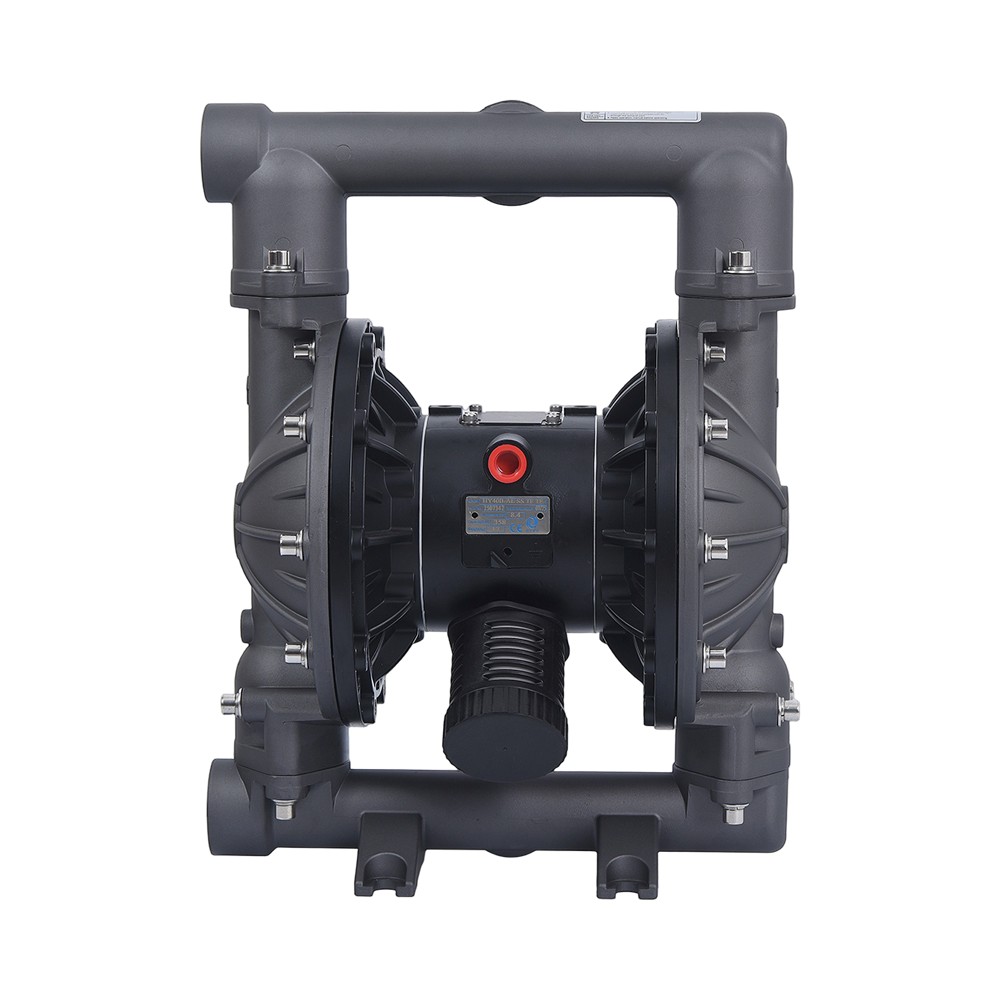 PVDF Diaphragm Pump for Aggressive Chemical TransferThis PVDF pump offers broad compatibility with acids and bases, high temperature resistance, and abrasion protection, making it a strong choice for handling aggressive chemicals while avoiding corrosion.View Product →
Material Selection for Chemical Compatibility
Selecting the wetted material is the first step in choosing a chemical resistant diaphragm pump, and the chemical compatibility chart is the starting point rather than an afterthought.
| Material | Typical Chemical Resistance | Practical Temperature Limit | Best Suited For |
|---|---|---|---|
| Polypropylene (PP) | Good resistance to many acids and alkalis, but limited with strong oxidizers, aromatic solvents, and chlorinated solvents | 60-80°C (140-176°F) | General chemical transfer, wastewater, and projects where cost is a major factor |
| PVDF | Excellent resistance to strong acids, oxidizers, halogens, and many solvents | 100-140°C (212-284°F) | Chlor-alkali plants, hydrochloric acid, sodium hypochlorite, and highly corrosive media |
| 316 Stainless Steel | Good resistance to organic acids and salt solutions, but susceptible to pitting from chlorides | Above 150°C | High-temperature processes, food, and pharmaceutical duties that need hygiene |
| Aluminum | Lightweight and economical, but not recommended for strong acids, alkalis, or harsh saline environments | About 80°C | Paints, oils, and mild solvents with low corrosivity |
The diaphragm and valve materials are just as important as the body. A PTFE diaphragm provides wide chemical resistance, while Santoprene or EPDM is limited to lower temperatures and less aggressive media. If the elastomer is not compatible with the fluid, it will swell, soften, or crack, leading to internal leakage and eventual pump failure.
For many mild acid and alkali applications, polypropylene gives the best balance of chemical tolerance and purchase cost. For aggressive media such as concentrated hydrochloric acid or sodium hypochlorite, PVDF is the safer choice.
Air-Operated vs Electric Diaphragm Pumps for Chemical Duty
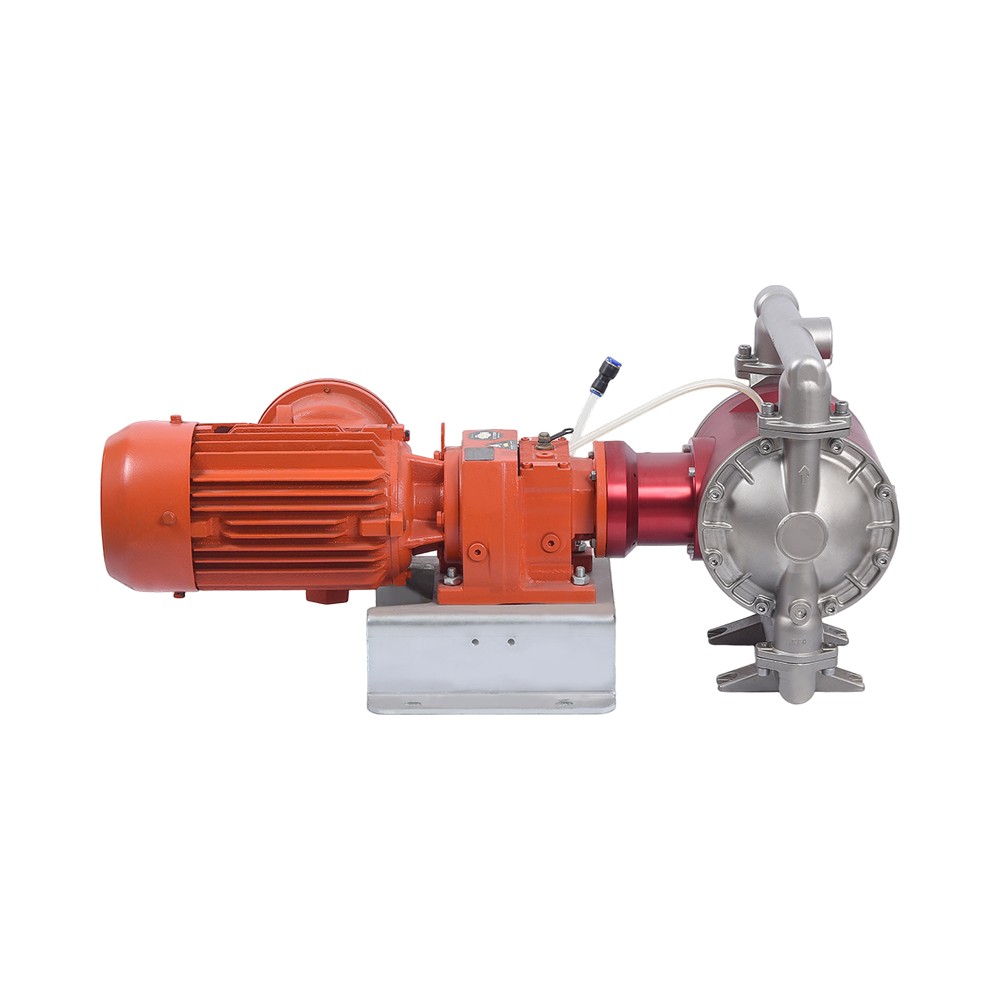
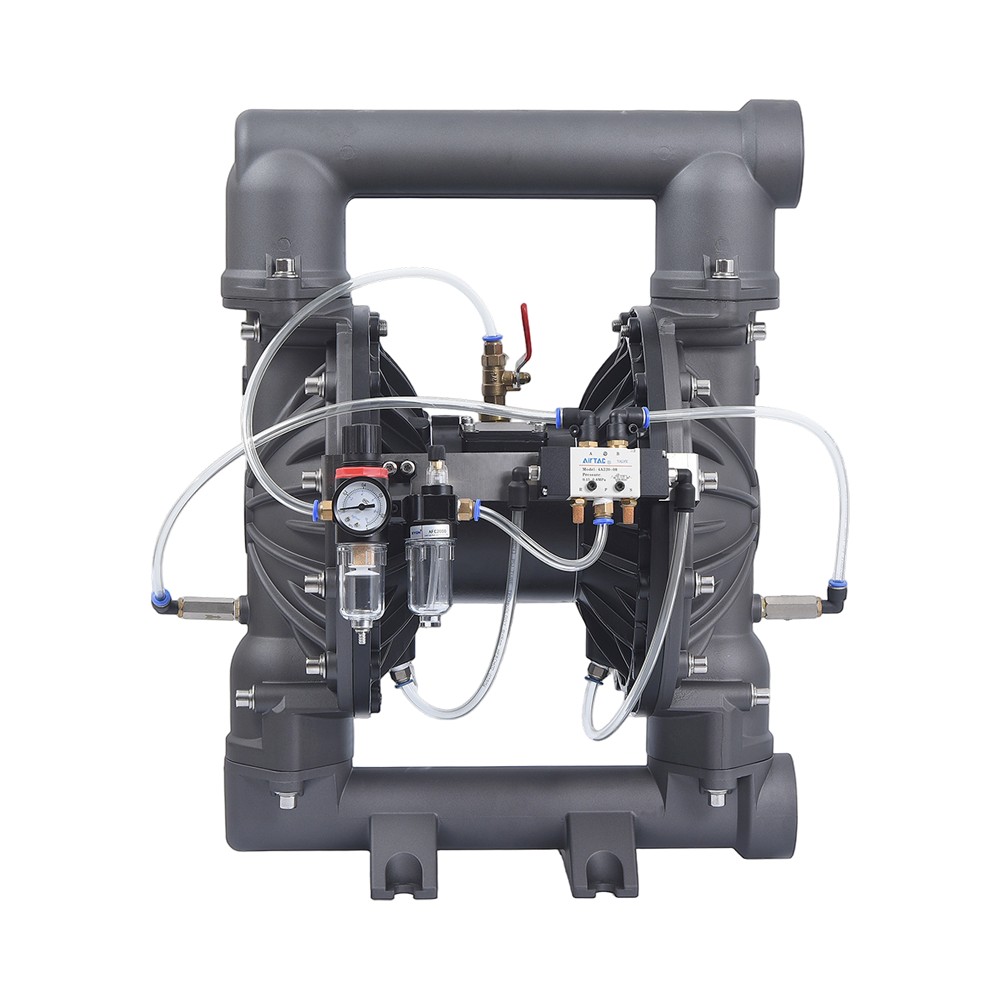
The drive type is the next decision: a pneumatic double diaphragm pump is the natural option when an explosion-proof installation is required, while an electric diaphragm pump is a better fit when energy cost dominates the lifespan calculation.
| Feature | Air-Operated Double Diaphragm (AODD) | Electric Diaphragm Pump (EODD) |
|---|---|---|
| Power source | Compressed air | Electric motor |
| Intrinsic safety | No electrical components in the wetted path, so it suits hazardous areas when supplied with clean dry air | Needs an explosion-proof motor if used in a classified zone |
| Flow control | Simple air valve regulation | Variable frequency drive or speed control |
| Energy efficiency | Lower, because compressed air must be generated continuously | Higher, especially for steady, long-running transfer |
| Maintenance | Air valve and diaphragms can be serviced without removing the pump head | Motor maintenance is separate from the pump end |
If the process area is classified as hazardous and compressed air is available, an AODD pump is usually the low-risk choice. If the duty is continuous and the atmosphere is not explosive, an electric diaphragm pump will provide a significantly lower energy bill over time.
Applications in the Chemical Process Industry
Chemical resistant diaphragm pumps are used wherever a corrosive, toxic, or viscous fluid has to be moved without exposing the environment to the product.
- Chemical transfer from ISO containers, drums, IBCs, and storage tanks
- Dosing of acids, caustics, and coagulants in water and wastewater treatment
- Feeding reactors, neutralization systems, and scrubber loops
- Loading and unloading tanker trucks and railcars
- Filter press feeding for slurry dewatering
- Surface treatment, plating, and coating lines
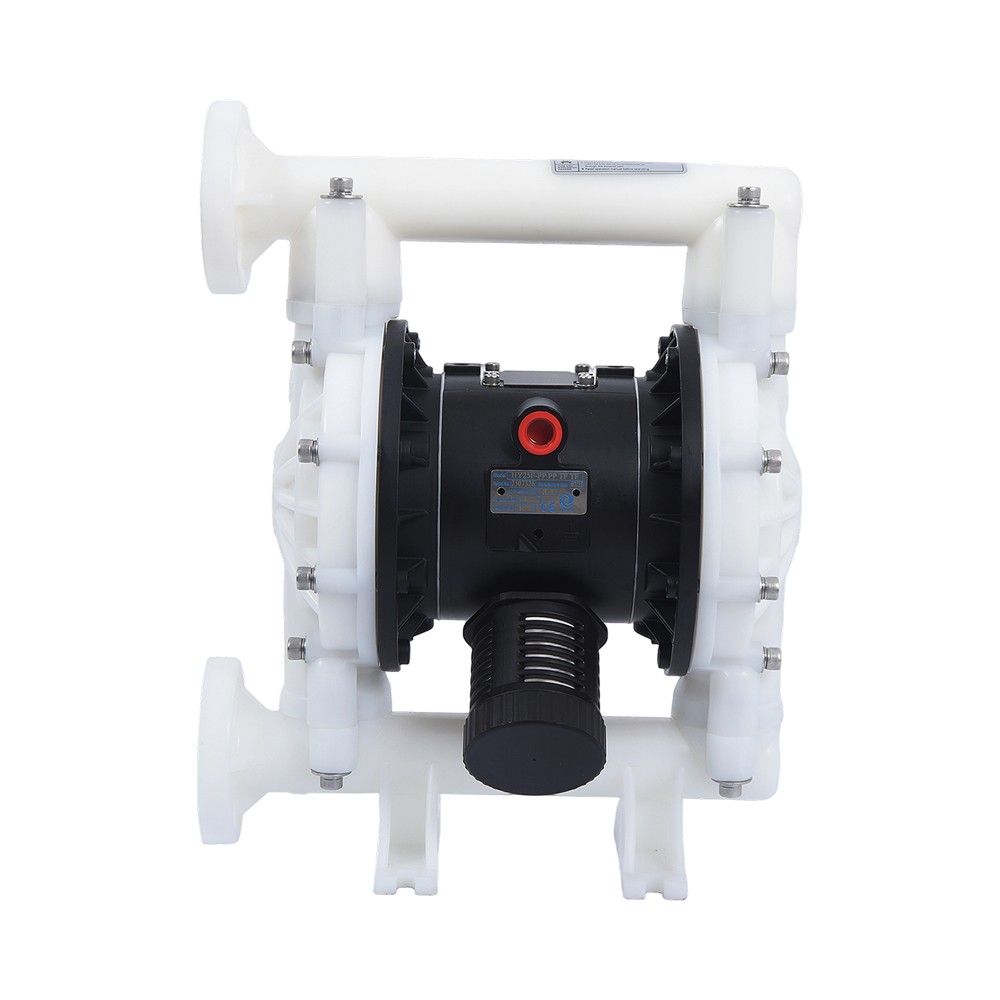
In these applications, a polypropylene diaphragm pump often provides the most economical resistance to common process chemicals such as sulfuric acid, hydrochloric acid, and sodium hydroxide.
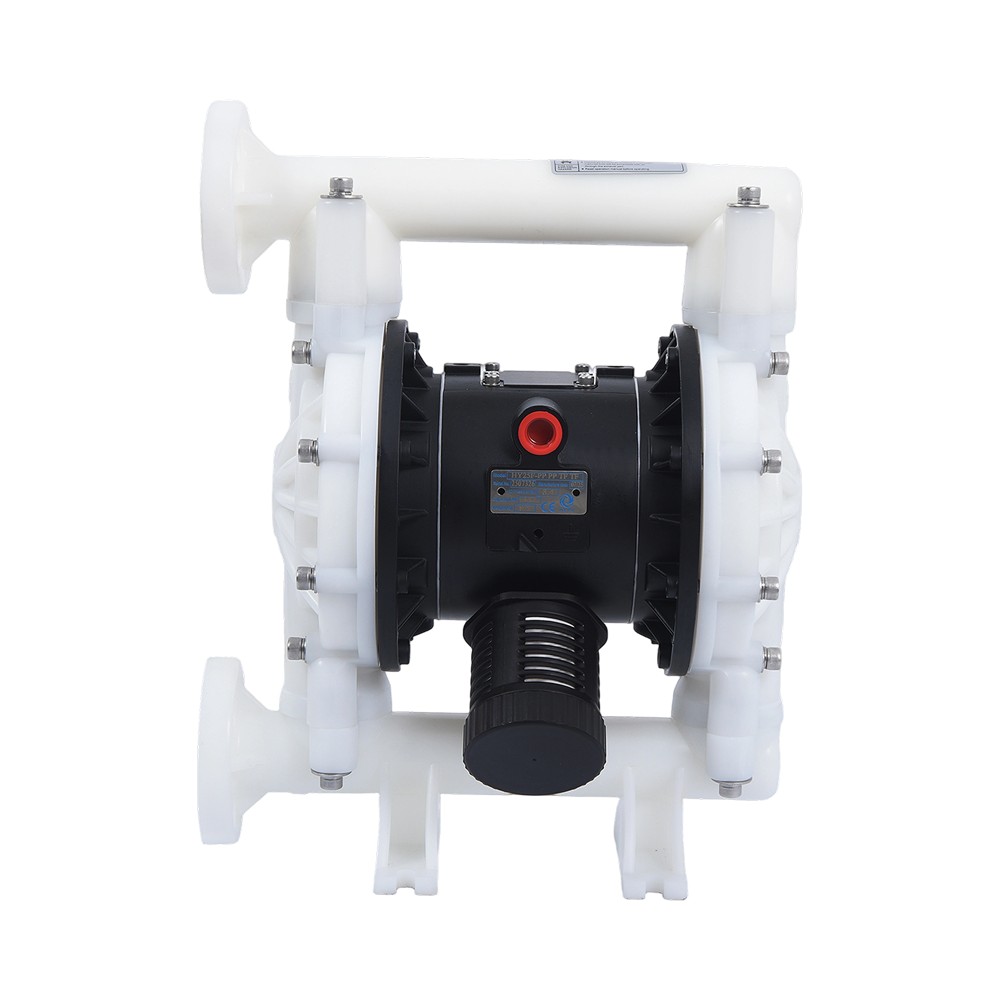 1 Inch Polypropylene Diaphragm Pump for Chemical ServiceFor economical handling of common process chemicals like sulfuric or hydrochloric acid, this 1-inch polypropylene pump balances cost with reliable chemical resistance and easy maintenance.View Product →
Selection Criteria and Common Purchase Considerations
The correct selection process begins with the chemical compatibility chart, then evaluates flow, pressure, temperature, solids content, and the installation environment before asking for a quote.
- Wetted material compatibility. Check the chemical at its actual concentration and operating temperature. A material that works at 20°C may fail at 60°C.
- Flow and pressure. Select the pump based on the duty point, not maximum capability. Running a pump near its maximum speed for the rest of its life shortens diaphragm life.
- Viscosity and solids. Larger ball valves and wider fluid paths can handle slurries up to roughly 6 mm particle size.
- Air supply. An AODD pump requires a clean, dry compressed air supply with enough volume. Insufficient air leads to reduced flow and unstable pumping.
- Pulsation. Double diaphragm pumps generate a pulsed discharge. In long piping runs, a pulsation dampener protects instruments, valves, and piping from water hammer.
One of the most common mistakes is choosing an aluminum pump for hydrochloric acid or a non-wetted elastomer that is incompatible with a solvent. These errors can cause corrosion and diaphragm failure within weeks, creating safety risks and unplanned downtime. Properly sizing the pump and confirming the elastomer compatibility at the process temperature will avoid most of these failures.
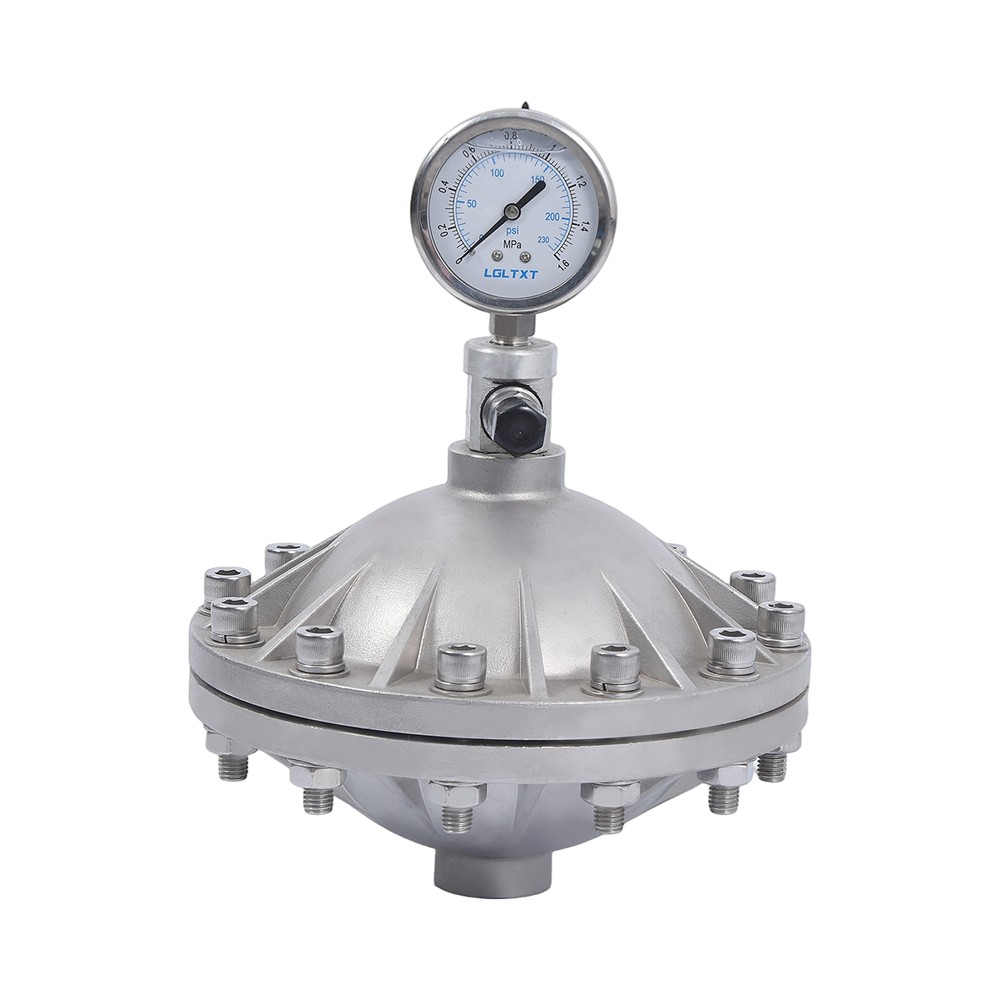 Pulsation Dampener for Smoothing Diaphragm Pump FlowA pulsation dampener reduces pressure fluctuations in diaphragm pump discharge lines, protecting downstream equipment and improving process stability, especially when handling chemicals or slurries.View Product →
Maintenance and Service Tips
Routine maintenance is straightforward and is the most effective way to prevent unplanned downtime in chemical service.
- Inspect the air valve for carbon buildup and clean or replace it every 500 operating hours or as recommended by the manufacturer.
- Check diaphragms for cracking, swelling, or blisters after every change in chemical service.
- Look at O-rings and valve seats for distortion, which is usually the first sign of incompatibility.
- Never operate a diaphragm pump continuously without liquid. Short dry-run capability is not a substitute for proper liquid intake.
- Use a suction strainer when handling solids to protect the ball valve seats from premature wear.
Replacing a diaphragm early is far cheaper than repairing the damage caused by a sudden leak. Keeping a spare diaphragm kit, a set of O-rings, and an air valve repair kit onsite is the simplest way to reduce downtime.
Frequently Asked Questions
The following answers address common selection concerns for engineers and maintenance planners.
What is a chemical resistant diaphragm pump?
It is a positive displacement pump that uses flexible diaphragms to move corrosive liquids without requiring a rotating shaft seal. Its leak-free structure makes it suitable for aggressive chemicals.
Which material gives the best chemical resistance?
PVDF is usually the first choice for strong acids, oxidizers, and many solvents. Polypropylene is a practical option for general acid and alkali service at a lower cost.
Can a chemical resistant diaphragm pump run dry?
Air-operated diaphragm pumps can run dry for short periods, but sustained dry running can overheat and damage diaphragms. Avoid it during normal operation.
Do diaphragm pumps require a mechanical seal?
No. A diaphragm pump needs no mechanical shaft seal, which is the main reason it is considered leak-free and safe for toxic or flammable fluids.
How often should diaphragms be replaced?
In normal service, inspect the diaphragms every 6-12 months. Replacement frequency changes with temperature, chemical aggressiveness, and cycle rate.
For more operational detail on diaphragm pump applications and industry trends, see our industry news.