

 EN
EN
 English
 Français
 Español
 عربى
عربىA diaphragm pump works by flexing a flexible membrane back and forth inside a closed chamber, creating suction on the inlet stroke and positive pressure on the discharge stroke. It is a positive displacement pump, meaning each stroke moves a fixed volume of fluid regardless of the discharge pressure. Because the diaphragm fully isolates the pumped fluid from the drive mechanism, the pump can handle corrosive, abrasive, and high-viscosity liquids with no shaft seal to leak and no rotating impeller to clog.
Those three characteristics, fixed-volume displacement, hermetic separation, and simple construction, explain why diaphragm pumps are a standard tool in chemical, food, water treatment, mining, and marine plants. The sections below walk through the working principle, the two main drive types, the components you will maintain, and the selection factors that determine whether a pump will perform well or disappoint.
Content
Working Principle of a Diaphragm Pump
A diaphragm pump transfers fluid by repeatedly expanding and contracting a closed chamber behind a flexible membrane. The diaphragm is driven back and forth by a reciprocating mechanism. During the suction stroke, the diaphragm pulls away from the fluid chamber, which increases the chamber volume and drops the internal pressure below atmospheric pressure. The inlet check valve opens, and atmospheric pressure on the supply tank pushes fluid into the chamber. During the discharge stroke, the diaphragm pushes into the chamber, raises the pressure, seats the inlet valve, forces the discharge valve open, and sends fluid into the outlet line.
The output is pulsating but predictable. Each stroke delivers a nearly fixed volume, so total flow is the product of stroke volume and stroke frequency. This makes the pump easy to control. In air-operated models, flow is adjusted with a pressure regulator and a needle valve on the air supply. In electric models, it is adjusted through motor speed or a variable frequency drive.
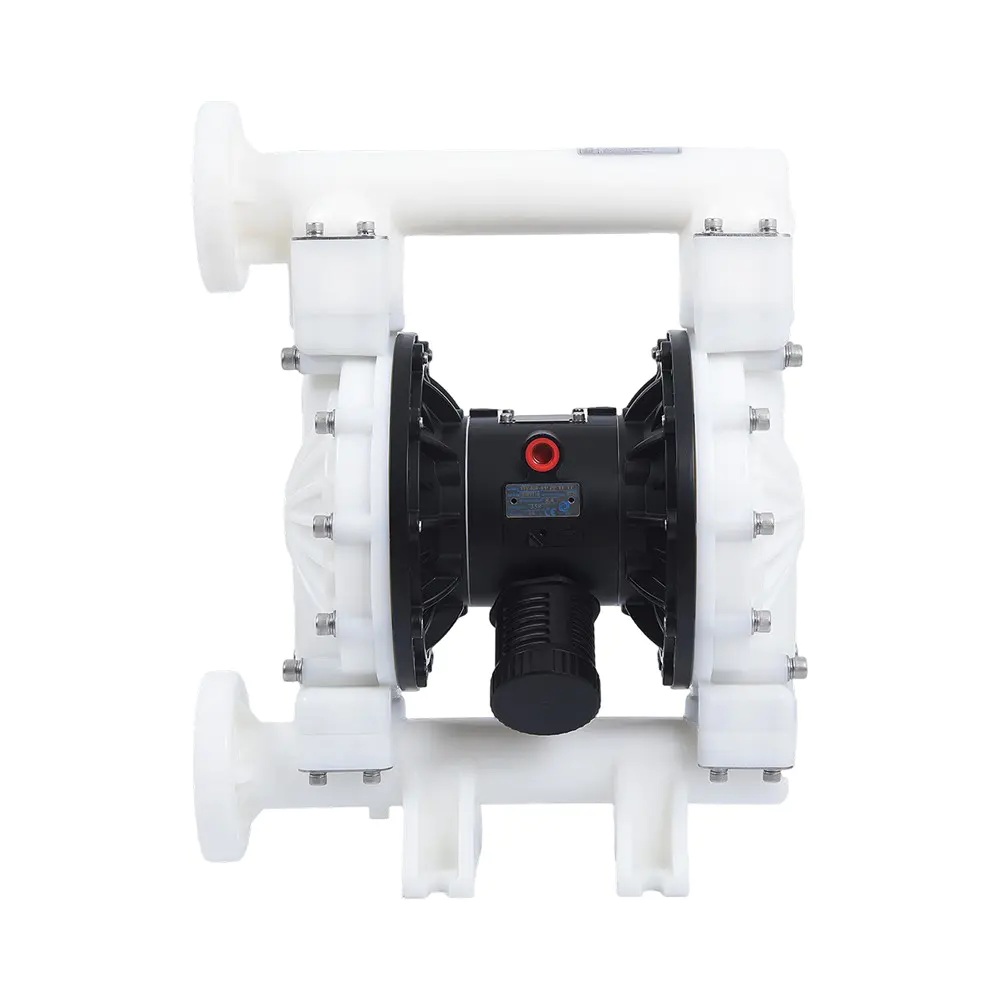
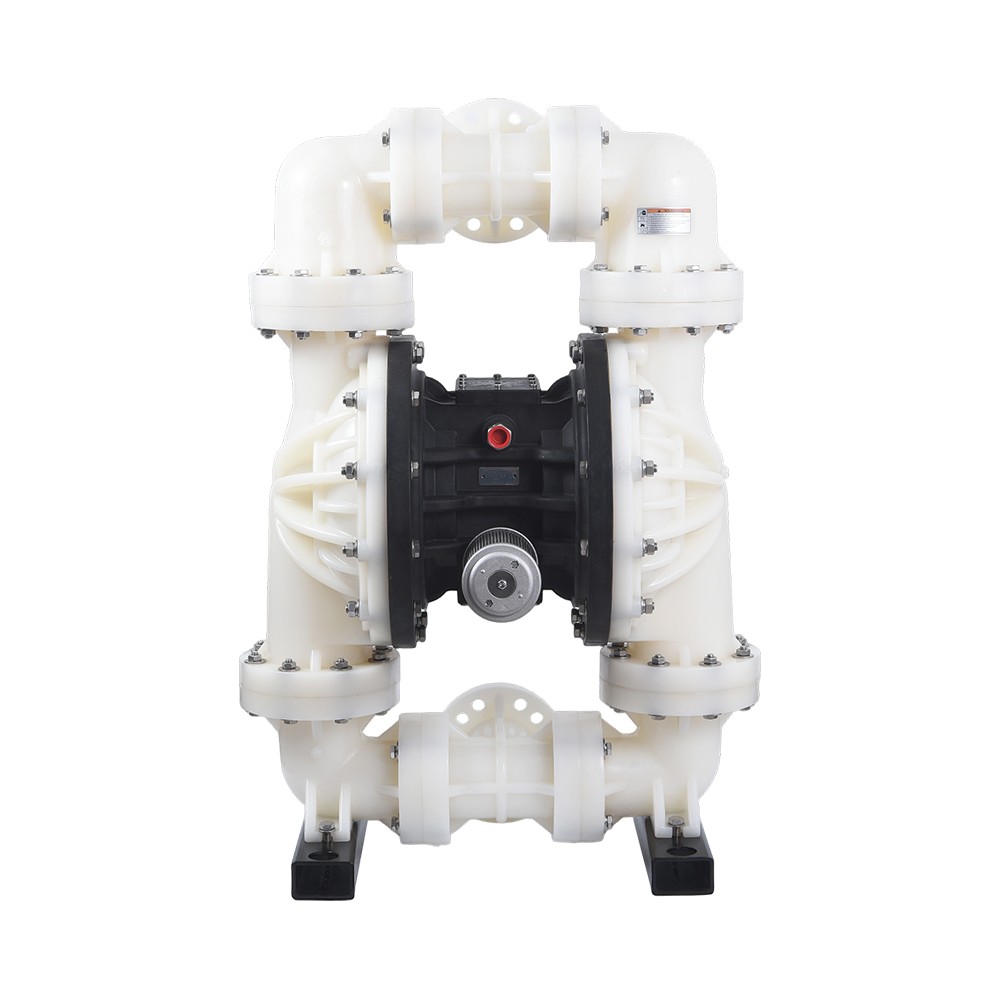
Because the pumped fluid only ever touches the diaphragm, the valve balls, the valve seats, and the fluid chamber, material compatibility is the first thing to check when specifying a pump. For strong acids, oxidizers, and chlorinated solvents, a PVDF diaphragm pump is a common recommendation, since the PVDF wetted parts resist chemicals that would attack aluminum or polypropylene.
 Custom 1Shanghai Haoyang Pump Valve Manufacturing Co., Ltd is top China 1' PVDF diaphragm pump manufacturers and custom factory,Fluid inlet/outle...View Product →
How an Air-Operated Double Diaphragm Pump Works
Air-operated double diaphragm (AODD) pumps are the most widely used diaphragm pump configuration in industry, and their operating logic is simple: a small pilot valve shuttles compressed air between two diaphragm chambers, moving the two diaphragms alternately in opposite directions to create a continuous, self-priming pumping action with no motor and no rotating shaft.
The full cycle runs in five steps:
- Compressed air enters the air chamber behind the left diaphragm and pushes the diaphragm outward.
- The outward movement displaces fluid from the left liquid chamber, opening the discharge check valve while the suction check valve stays sealed.
- A common connecting shaft pulls the right diaphragm inward at the same time. The right liquid chamber expands, pressure drops, and fluid enters through the right suction valve.
- When the left diaphragm finishes its stroke, the air valve shifts and sends compressed air to the right air chamber.
- The right diaphragm is pushed outward and discharges fluid, while the left diaphragm retracts, refills, and starts again.
The two diaphragms are mounted on a shared shaft, so one side fills exactly while the other discharges. There is no timing motor, cam, or gearbox involved. The pump can also stall safely against a closed discharge valve because the air pressure simply balances across the two diaphragms; when the valve reopens, the pump restarts on its own. That behavior is why AODD pumps are common in tanker unloading, filter press feeding, and chemical drum transfer.
Key Components and Their Functions
A diaphragm pump is built around five core components, and the diaphragm is the part that defines both performance and maintenance cost. Knowing these parts helps you compare models, plan spare parts inventory, and spot specification errors before purchase.
| Component | Function in the Cycle | Typical Material Choices |
|---|---|---|
| Diaphragm | Flexes to expand and contract the fluid chamber; separates the fluid side from the drive side | PTFE, Santoprene, Nitrile, EPDM |
| Air valve (AODD) | Directs compressed air alternately to the two air chambers | Acetal, Aluminum, Stainless steel |
| Check valves with seats | Permit flow in only one direction, creating suction and discharge | PTFE, Stainless steel, EPDM |
| Fluid chamber | Encloses the working volume of fluid on each side of the pump | Aluminum, 316 stainless steel, PP, PVDF |
| Center block | Connects the two pump halves and houses the air valve | Acetal, Aluminum |
The diaphragm is the hardest-working wear part. It flexes once per stroke, so its chemical resistance and flex life determine both the pump's fluid compatibility and its maintenance schedule. Valve balls and seats are second in importance; they take repeated impact and throttling flow, and they usually need replacement at the same time as the diaphragm.
Air-Operated vs. Electric Diaphragm Pumps
Diaphragm pumps come in air-operated and electric motor driven versions, and the choice comes down to one rule: choose air-operated for hazardous areas and simple flow control, and choose an electric pump when the process runs continuously and energy efficiency matters.
| Feature | Air-Operated (AODD) | Electric Diaphragm Pump |
|---|---|---|
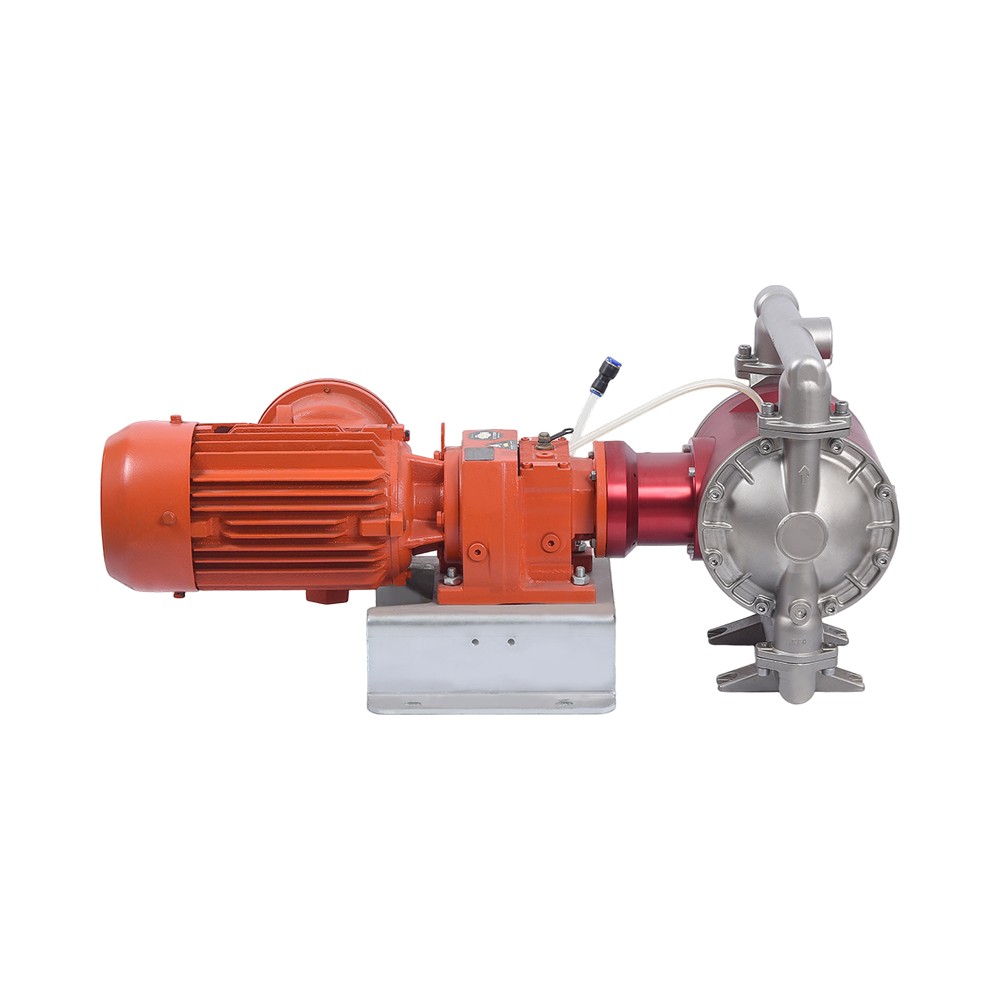
| Drive medium | Compressed air | Electric motor with reducer |
| Explosion safety | Intrinsically safe, no electrical spark | Requires an explosion-proof motor in hazardous zones |
| Flow adjustment | Air pressure and air volume | Motor speed or variable frequency drive |
| Dead-head operation | Safe; pump stalls automatically | Needs a pressure relief valve |
| Energy cost | Higher due to compressed air losses | Lower for long-duration duty |
| Typical uses | Chemical, mining, marine, coatings | Dosing, metering, water treatment, HVAC |
Sites that already have a reliable compressed air supply usually prefer AODD pumps because installation is only a matter of connecting air and liquid lines. Sites without compressed air, or with strict energy budgets, naturally lean toward electric diaphragm pumps.
Advantages and Limitations of Diaphragm Pumps
A diaphragm pump wins on four capabilities: it is seal-less, self-priming, dry-run tolerant, and gentle on the fluid. There is no mechanical seal or packing gland to wear and leak. The pump can draw fluid from a lower level without external priming. Air-operated models can run dry indefinitely without damage because the diaphragms do not rely on the pumped fluid for lubrication or cooling. And the slow stroking action is kind to shear-sensitive products such as latex, emulsions, and food ingredients.
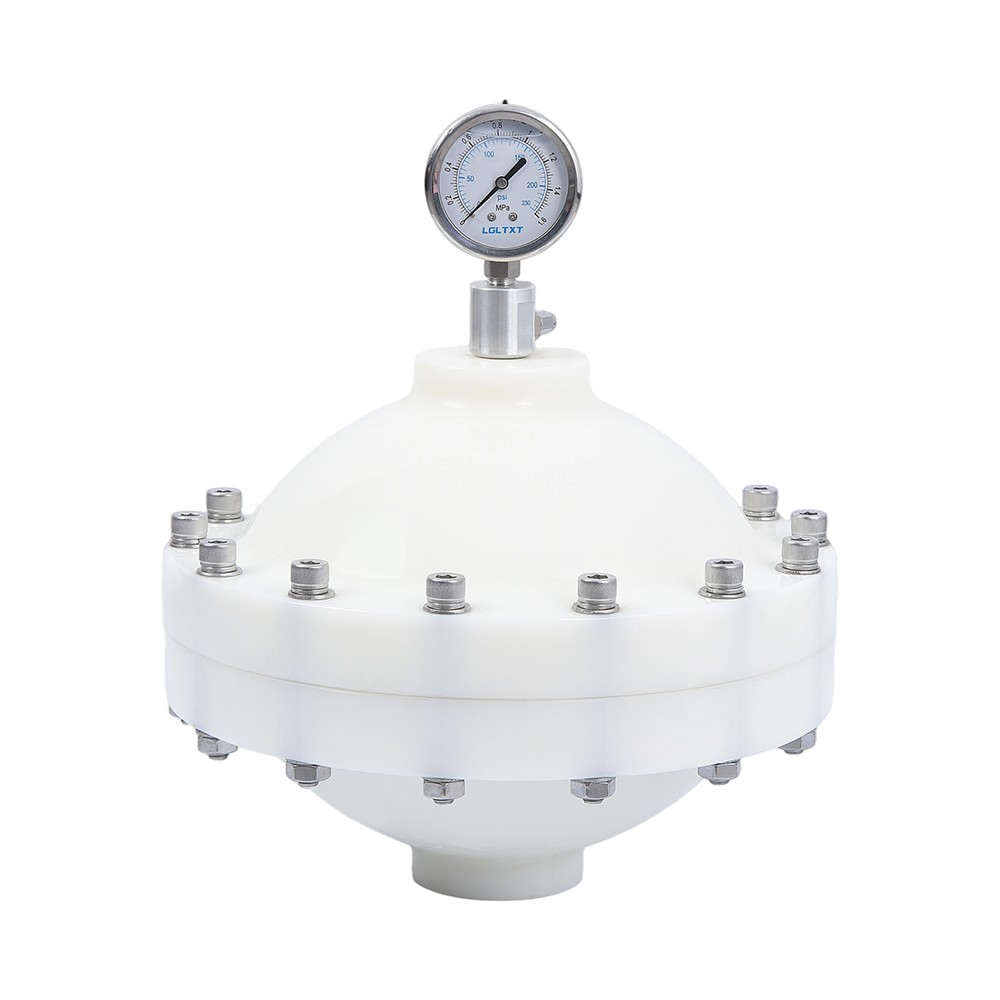
The limitations deserve equal attention. The discharge is pulsating because fluid leaves in discrete strokes, and the amplitude of those pulses can disturb downstream instruments or pipework. The pulse is easily smoothed with a pulsation dampener installed on the discharge line. Air-operated models also consume more energy per cubic meter of fluid than a centrifugal pump, since generating compressed air is inherently inefficient. Finally, maximum flow rates are modest; a 3-inch diaphragm pump moves roughly 40 to 60 cubic meters per hour, which is far below a centrifugal pump of similar flange size.
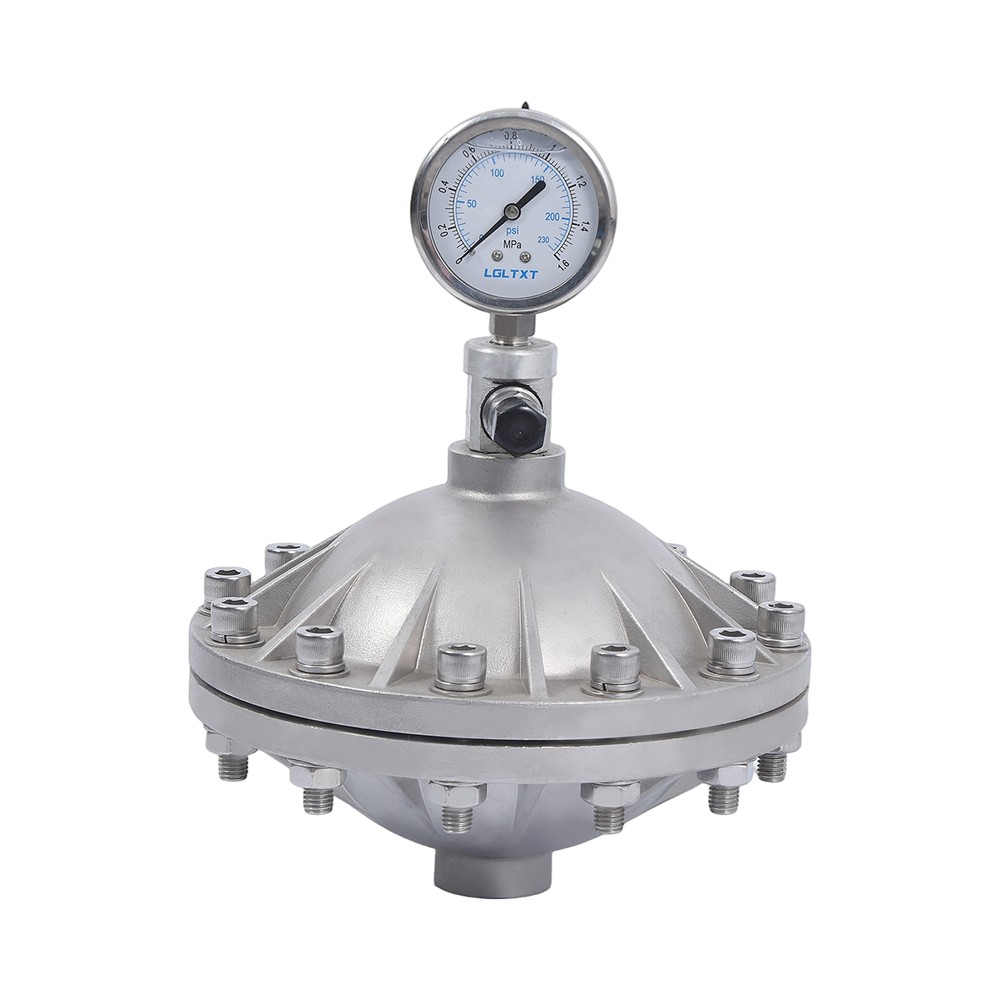 Custom Pulsation Dampener Manufacturers, Factory - Shanghai Haoyang Pump Valve MShanghai Haoyang Pump Valve Manufacturing Co., Ltd is top China Pulsation Dampener manufacturers and custom factory,View Product →
Where Diaphragm Pumps Are Used
Diaphragm pumps are a first choice in chemical processing, water and wastewater, coatings and ceramics, food and beverage, pharmaceutical, mining, printing, textile, and marine industries. The pattern is consistent: when the fluid is corrosive, abrasive, viscous, or easily contaminated, engineers pick a diaphragm pump over a centrifugal alternative. The diaphragm pump industry news regularly documents new installations in these sectors, from chemical batching plants to municipal water treatment stations.
Chemical processing
Transfer of acids, alkalis, and solvents without leakage or fugitive emissions.
Water and wastewater
Dosing of polymers, lime, activated carbon, flocculants, and sodium hypochlorite.
Coatings and ceramics
Moving glaze, pigment, slip, and high-solids slurries that would clog other pumps.
Food and beverage
Syrups, vegetable oil, cream, flavorings, and pulp with hygienic wetted parts.
Pharmaceutical
Hygienic transfer and filtration with stainless steel wetted parts and no contamination risk.
Mining and construction
Dewatering, slurry handling, grout, and cement injection at remote or rugged sites.
How to Select the Right Diaphragm Pump
Selecting a diaphragm pump is mostly a matter of matching the wetted materials to the fluid and the pump size to the required flow. Four questions lead to the right specification: What is the fluid chemistry at the actual operating temperature? What flow rate and discharge pressure are required? Does the fluid contain solids large enough to affect valve seating? And how continuous is the duty cycle? Getting all four right prevents the two most common failures: chemical attack on the wetted parts and chronic flow shortage.
- Fluid chemistry determines the wetted material: aluminum for general industrial use, 316 stainless steel for food or aggressive media, polypropylene for many acids, and PVDF for strong oxidizers and chlorinated solvents.
- Flow rate and pressure determine the port size: 1/4-inch and 1/2-inch pumps suit dosing and batching; 1-inch and 1-1/2-inch models handle standard transfer; 2-inch and 3-inch pumps move high volumes for tanker offloading and sump discharge.
- Solids content affects valve selection: larger ports and ball check valves pass more solids than spring-loaded designs.
- Duty cycle decides the drive type: continuous multishift operation justifies an electric pump with a variable speed drive.
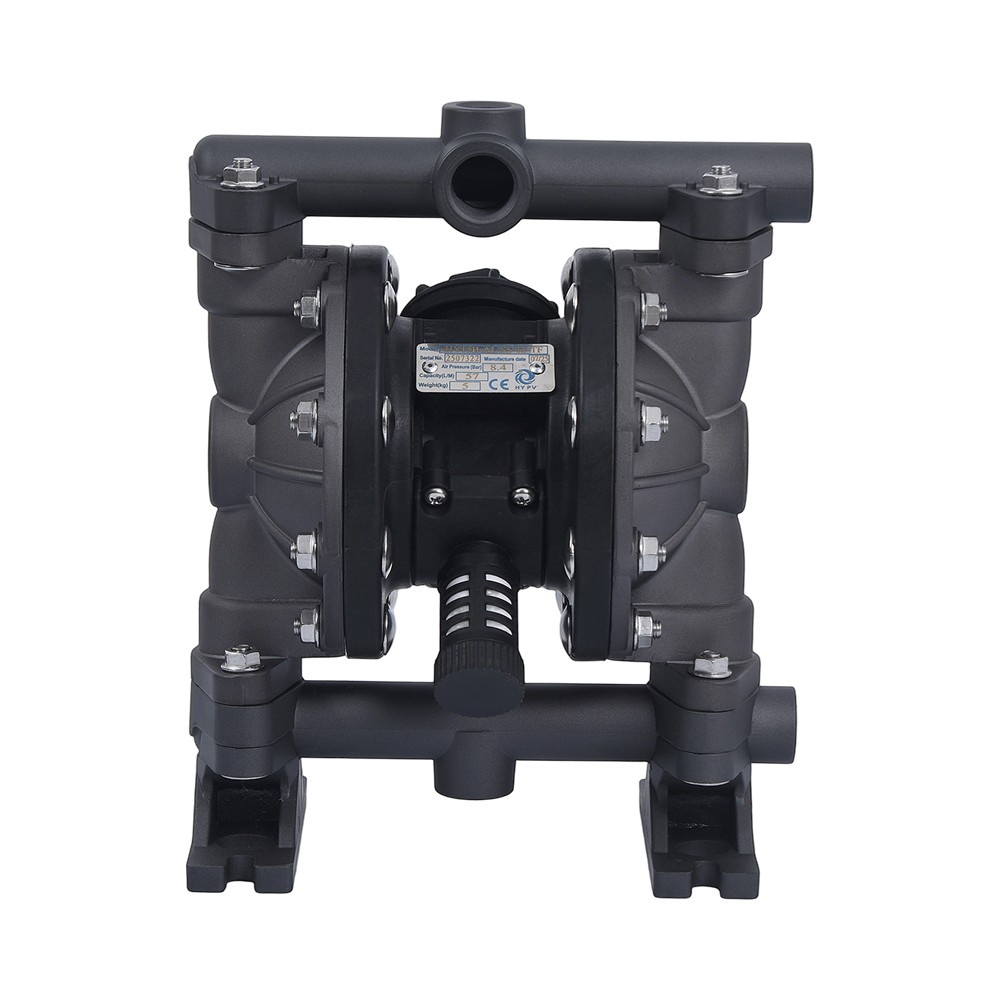
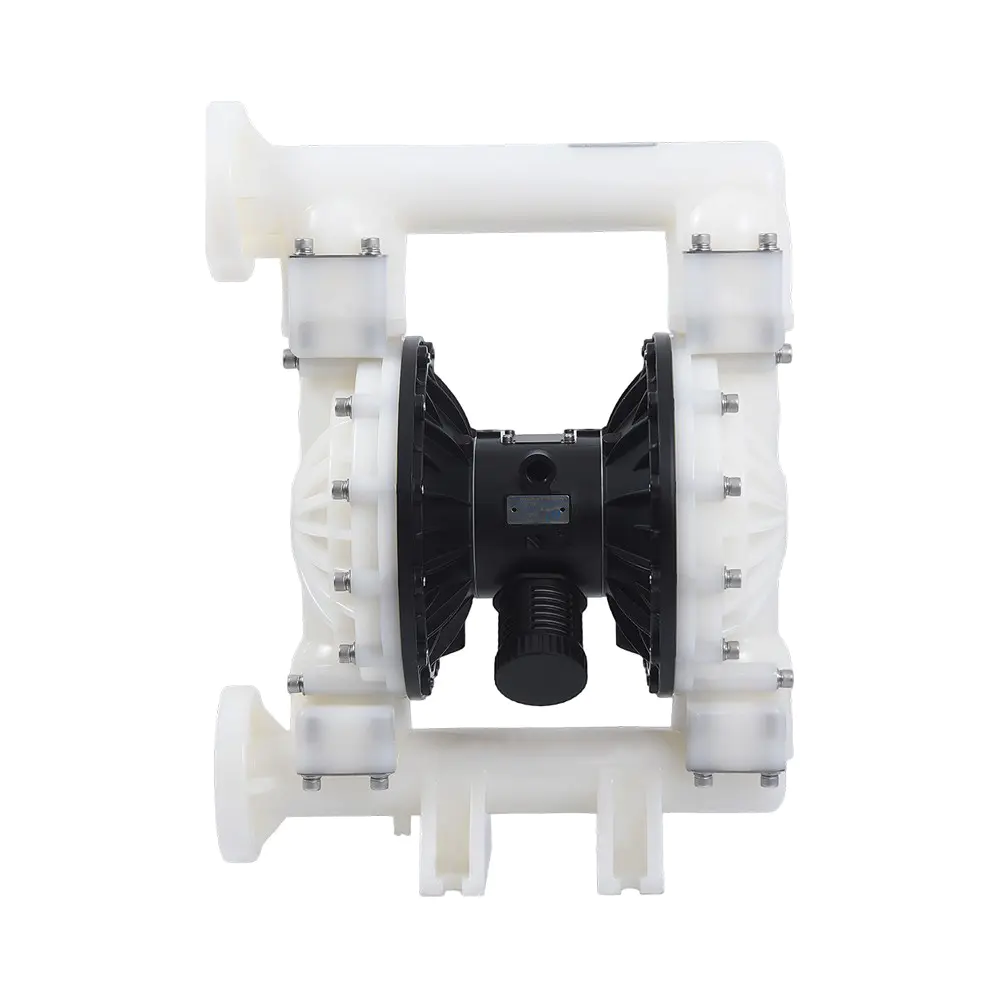
For a typical industrial transfer application up to a few cubic meters per hour, a 1-inch aluminum diaphragm pump is an economical and reliable starting point, especially when the fluid is compatible with aluminum wetted parts. If the application involves aggressive chemicals instead, step up to PVDF or stainless steel wetted parts. It is also wise to consult a manufacturer like Shanghai Haoyang Pump Valve Manufacturing Co., Ltd., which specializes in pneumatic diaphragm pumps and related accessories, for verified compatibility data before you order.
 Custom 1Shanghai Haoyang Pump Valve Manufacturing Co., Ltd is top China 1' Aluminum diaphragm pump manufacturers and custom factory,Fluid inlet/o...View Product →
FAQ
Can a diaphragm pump run dry?
Yes. Air-operated double diaphragm pumps can run dry for extended periods without damage, since the diaphragms do not rely on the pumped fluid for lubrication. Electric diaphragm pumps tolerate dry running for shorter periods; always check the manufacturer's recommendation for the specific model.
Does a diaphragm pump need to be primed?
No. Diaphragm pumps are self-priming and can draw fluid up from a level below the pump. Typical suction lift is around 5 to 7 meters of water column, depending on the model, the diaphragm material, and the specific gravity of the fluid.
Why does diaphragm pump flow pulsate?
Because discharge occurs in discrete strokes. Each stroke displaces a fixed volume, so the outlet pressure rises during the discharge stroke and falls during the suction stroke. Installing a pulsation dampener on the discharge line reduces these pressure spikes by up to 90 percent and protects downstream instruments.
What sizes do diaphragm pumps come in?
Most manufacturers offer port sizes from 1/4 inch up to 3 inches. Small pumps handle dosing and batching, while large pumps move tens of cubic meters per hour. The right size depends on the required flow, discharge pressure, and available compressed air volume or motor power.