

 EN
EN
 English
 Français
 Español
 عربى
عربىA chemical plant must transfer 3% hydrochloric acid at 8 bar and tolerate occasional dry running. A centrifugal pump would leak through its mechanical seal and overheat in seconds without liquid, but a diaphragm pump with a polypropylene body and PTFE diaphragm handles the same job without an external seal. That is why "diaphragm pump advantages and disadvantages" is not a theoretical question: the pump family solves problems other pumps cannot, yet it imposes limits you must accept when you specify it.
The short answer: diaphragm pumps offer reliable self-priming, dry-run tolerance, leak-free construction, and wide chemical compatibility, but they also deliver pulsing flow, limited maximum pressure and flow, and higher energy consumption per liter of fluid. Choose one when your fluid is aggressive, abrasive, viscous, or shear-sensitive; choose another pump type when you need steady large-volume transfer at low cost.
Read this article if you are selecting a pump for a chemical, pharmaceutical, water-treatment, coating, or food process and need to know whether the diaphragm family is a fit. You will get a working-principle summary, a balanced advantage-and-disadvantage analysis, a structural comparison against centrifugal pumps, a practical maintenance checklist, and buying guidance.
Content
- 1 What Is a Diaphragm Pump?
- 2 Advantages and Disadvantages: The Direct Comparison
- 3 Where Pulsation Hurts and How to Fix It
- 4 Diaphragm Pump vs. Centrifugal Pump: A Structural Comparison
- 5 When to Choose a Diaphragm Pump and When Not To
- 6 Maintenance, Failure Modes, and Service Life
- 7 Frequently Asked Questions
What Is a Diaphragm Pump?
A diaphragm pump is a positive displacement pump that moves fluid by flexing a flexible membrane in and out of a closed chamber. It uses no shaft seal and no packing gland, which is the core reason behind its leak-free reputation.
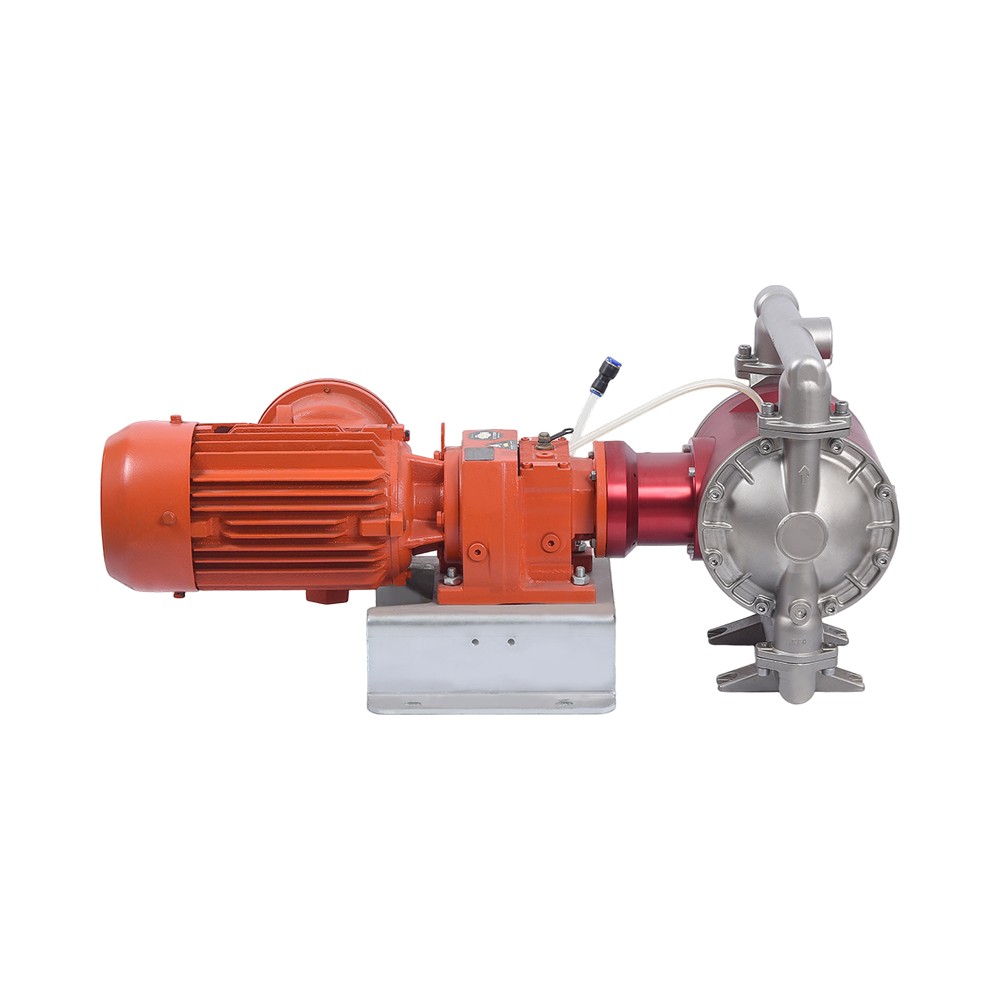
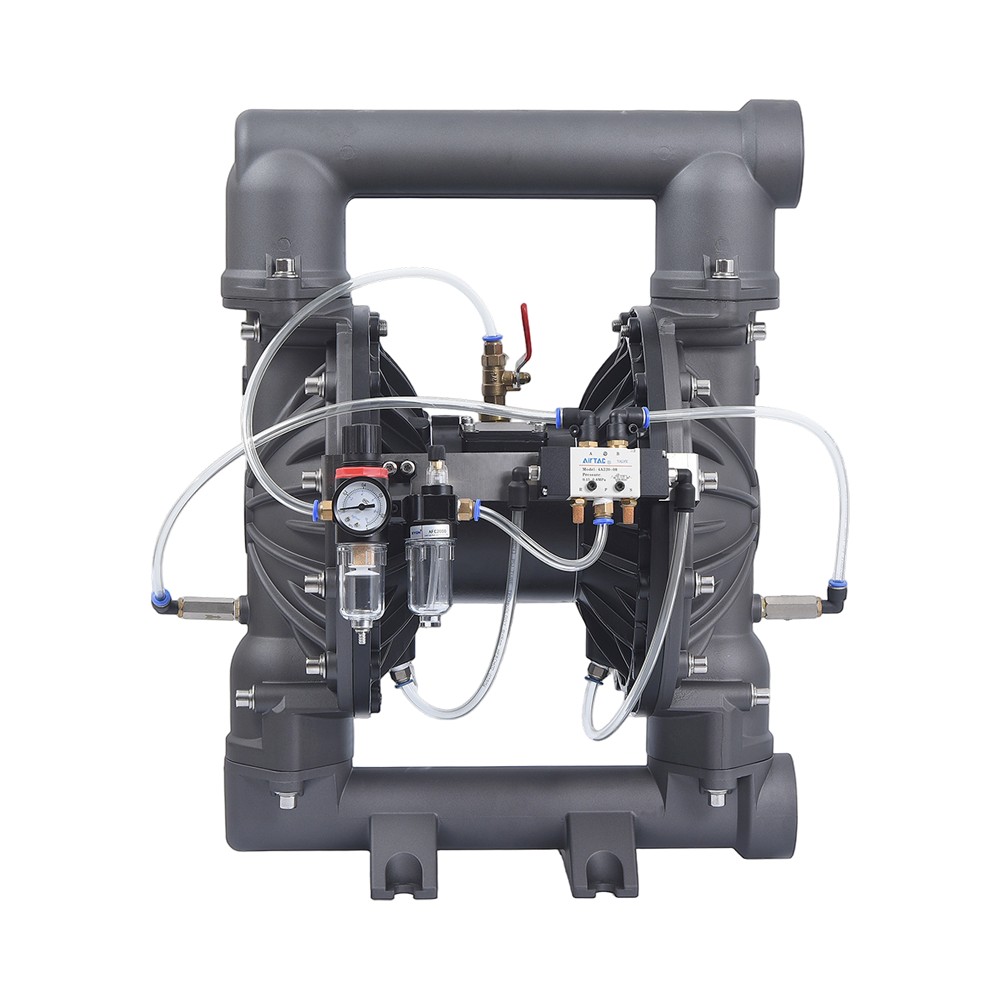
Two driving principles dominate the market. In an air-operated double-diaphragm (AODD) pump, compressed air alternately pressurizes two chambers and reciprocates the diaphragms. In an electric diaphragm pump, a motor drives an eccentric mechanism or a dedicated linear actuator to flex the diaphragm.
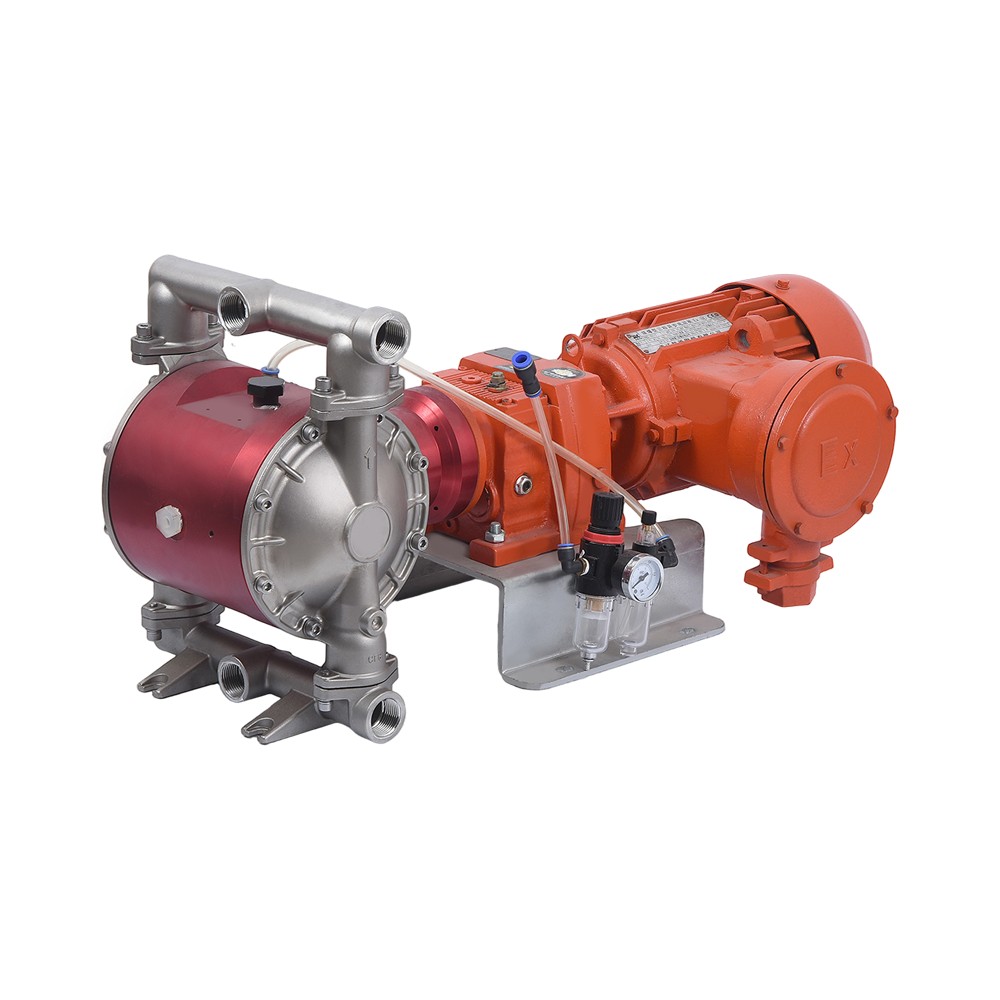 High-Flow Electric Diaphragm Pump for Water TransferThis self-priming electric diaphragm pump offers high flow for water and non-corrosive liquids, with a compact design and thermal protection. Its material options support compatibility across industrial and residential uses.View Product →
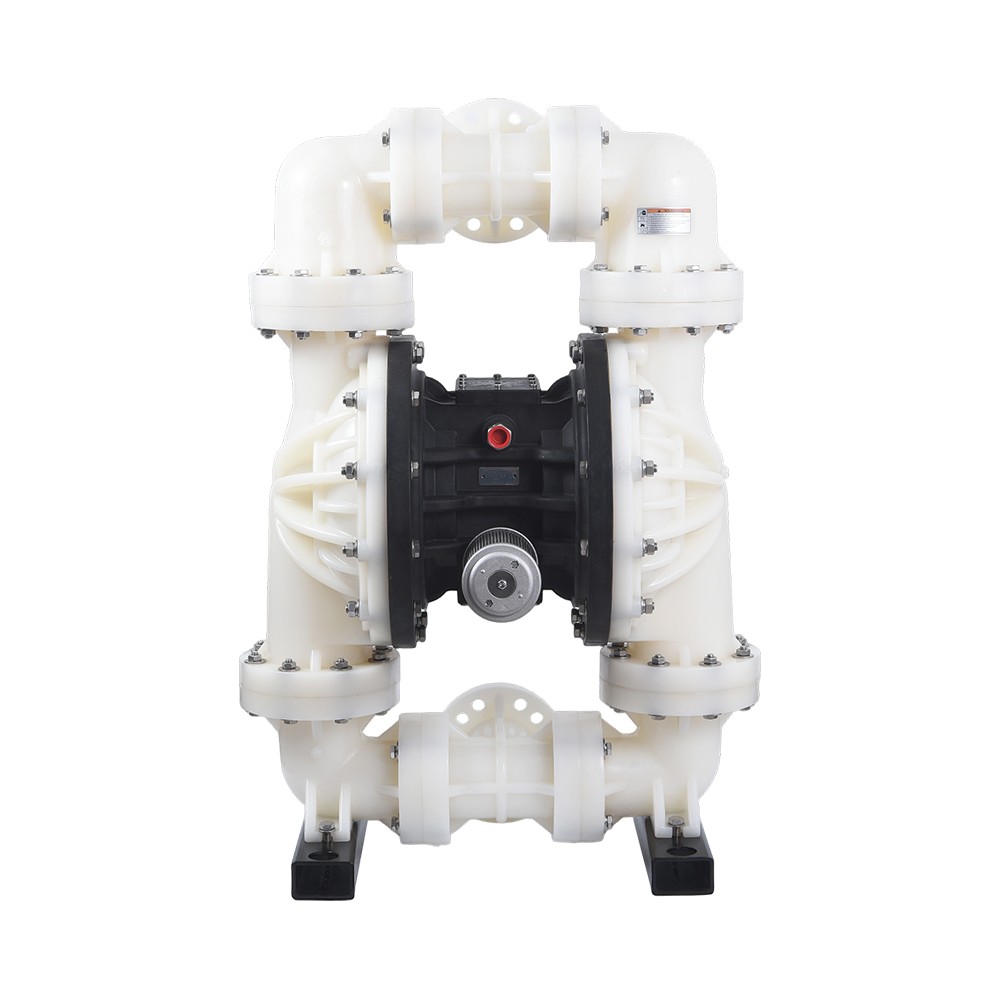
Because the fluid only touches the diaphragm, the valve balls, and the wetted housing, material choice controls compatibility. Aluminum, stainless steel, polypropylene, and PVDF cover most industrial fluids.
Advantages and Disadvantages: The Direct Comparison
Diaphragm pumps win on self-priming, dry-run tolerance, chemical compatibility, and leak-free operation, but they lose on flow ceiling, pressure ceiling, and energy cost; the two lists below show exactly how each trade-off plays out in practice.
Key Advantages of Diaphragm Pumps
- Self-priming: A dry pump pulls liquid into the chamber from a suction lift without a separate priming system.
- Dry-run tolerance: The pump can run without liquid for reasonable periods without catastrophic failure, unlike a centrifugal pump that will damage its mechanical seal.
- Leak-free design: With no rotating shaft seal, hazardous or costly liquids stay inside the piping.
- Wide chemical compatibility: PP, PVDF, and PTFE wetted parts resist many acids, bases, and solvents.
- Explosion safety: An air-driven pump generates no sparks and is safe in explosive atmospheres.
- Solids handling: Valve design allows slurries with abrasive particles up to nearly the ball size.
- Low shear: Gentle pumping suits shear-sensitive liquids such as latex, paint, or food.
- Simple maintenance: The diaphragm, ball valves, and seats are modular and replaceable on site.
Key Disadvantages of Diaphragm Pumps
- Limited flow and pressure: Most AODD pumps peak around 8–10 bar and a few hundred cubic meters per hour, far below centrifugal ranges.
- Pulsating discharge: Each stroke creates a pressure and flow spike; a pulsation dampener is often mandatory.
- High energy consumption: Compressed air costs several times more than electricity for the same work.
- Diaphragm fatigue: The membrane cycles constantly and eventually fails by pinhole or rupture.
- Temperature limits: Elastomer technology sets an upper boundary around 120–150°C depending on material.
- Pressure pulsation stress: Pipe vibration downstream can loosen fittings and damage instruments.
Where Pulsation Hurts and How to Fix It
The pulsing discharge is the most common complaint among new diaphragm pump users, so treat it as a design condition rather than a surprise.
Pulsation appears because the diaphragm moves fluid only during half of each stroke. Installing a pulsation dampener smooths the discharge curve and protects flow meters, filters, and downstream piping.
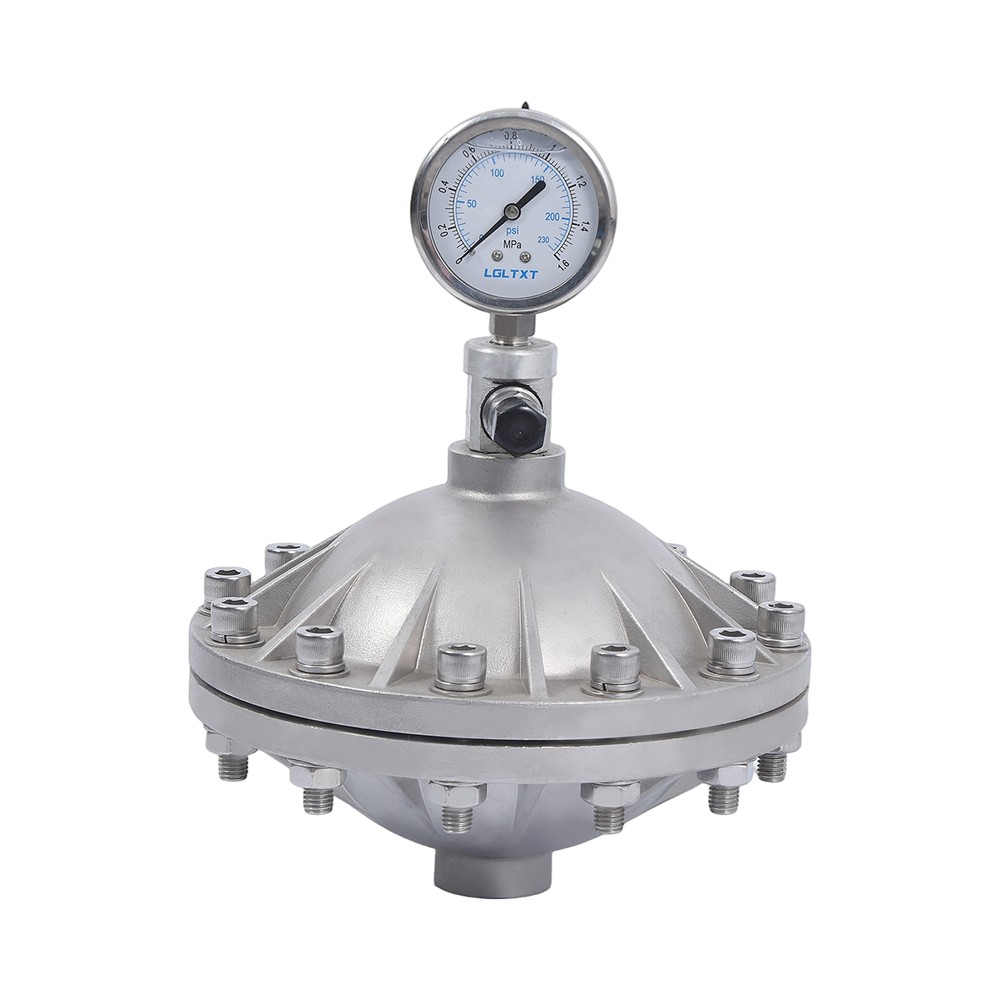 Pulsation Dampener for Smoothing Discharge FlowBy smoothing the pulsing flow inherent to diaphragm pumps, this dampener protects downstream meters and filters. It is especially valuable in dosing and coating processes where consistent discharge quality matters.View Product →
In dosing or coating applications, an undamped pulsing flow directly affects process quality, so the dampener pays for itself quickly.
Diaphragm Pump vs. Centrifugal Pump: A Structural Comparison
The real selection question in most plants is not "which diaphragm pump model" but "diaphragm or centrifugal." The table below gives the decision-relevant differences.
| Parameter | Diaphragm pump | Centrifugal pump |
|---|---|---|
| Self-priming | Yes, 3–7 m lift | Usually no |
| Dry run | Tolerated for short periods | Damages seal quickly |
| Max pressure | Around 8–10 bar (AODD) | Up to 50+ bar multistage |
| Max flow | Tens to low hundreds m³/h | Thousands m³/h |
| Solids handling | Excellent, up to 10 mm | Poor, clogs easily |
| Viscosity range | Up to 20,000 cP practical | Below 200 cP recommended |
| Shear damage | Low | Moderate to high |
| Seal leakage | None | Potential |
| Energy efficiency | Low in air-driven type | High at best efficiency point |
| First cost | Moderate | Lower for large flows |
Use the table as a screening tool only; always verify the final point against the actual pump curve.
Two performance numbers deserve extra attention. The pressure ceiling of most air-operated diaphragm pumps sits near 8–10 bar, so a 20 bar water supply is outside this family. The flow ceiling is also modest: a 3-inch AODD pump typically moves around 40–60 m³/h, while an inexpensive 3-inch centrifugal pump can move several hundred m³/h. When your operating point stays under these ceilings, the diaphragm pump is usually the superior technical solution.
When to Choose a Diaphragm Pump and When Not To
Choose a diaphragm pump when the fluid is aggressive, viscous, abrasive, or prone to leaking, or when the site is explosion-classified; avoid it when the duty demands steady high flow at low cost.
Good candidates for diaphragm pumps
- Acid and chemical transfer in the chemical and pharmaceutical industries
- Slurry, mud, sewage, and mining fluid transport
- Paint, ink, ceramics slip, and food products
- Solvent and oil transfer in tank farms and marine service
- Dosing where positive displacement accuracy matters
Poor candidates for diaphragm pumps
- Cooling water circulation with high flow demand
- Clean high-pressure water feed above 15 bar with large volume
- Long-distance pipeline transfer where centrifugal or multistage pumps are standard
- Continuous duty where every watt of efficiency is cost-critical
Material selection directly follows the liquid: polypropylene body for most acids, PVDF for stronger solvents and higher temperature, aluminum for low-cost oil and water, stainless steel for food, pharmaceutical, or aggressive wet chemicals. If you standardize on one wetted body, you lose the cost or compatibility window of the other three.
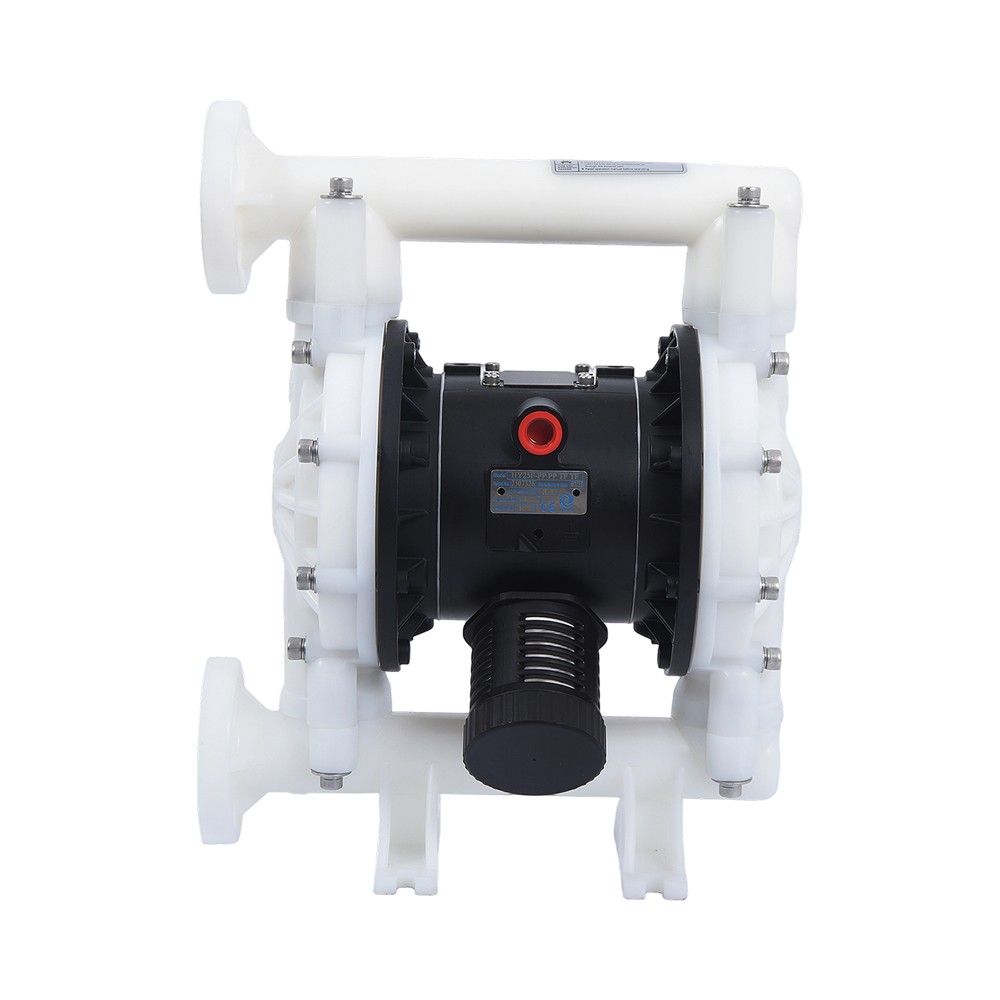
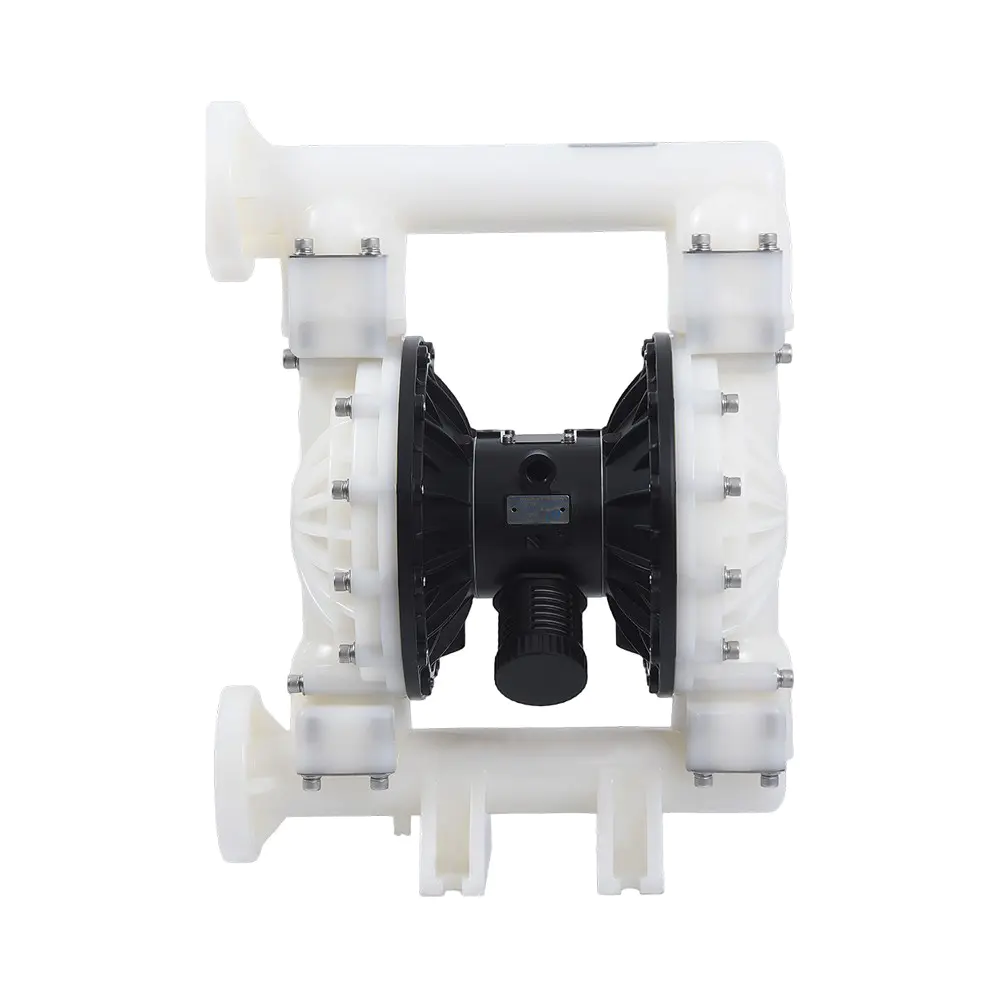
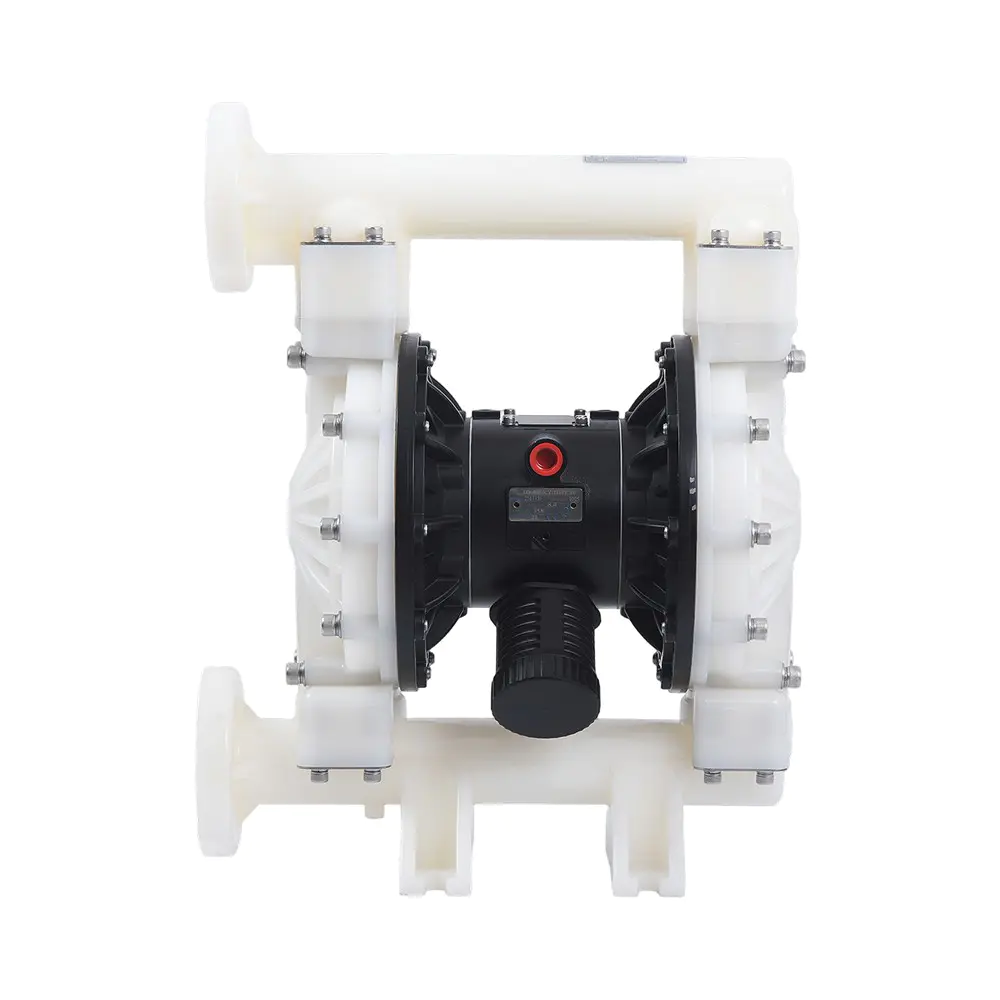
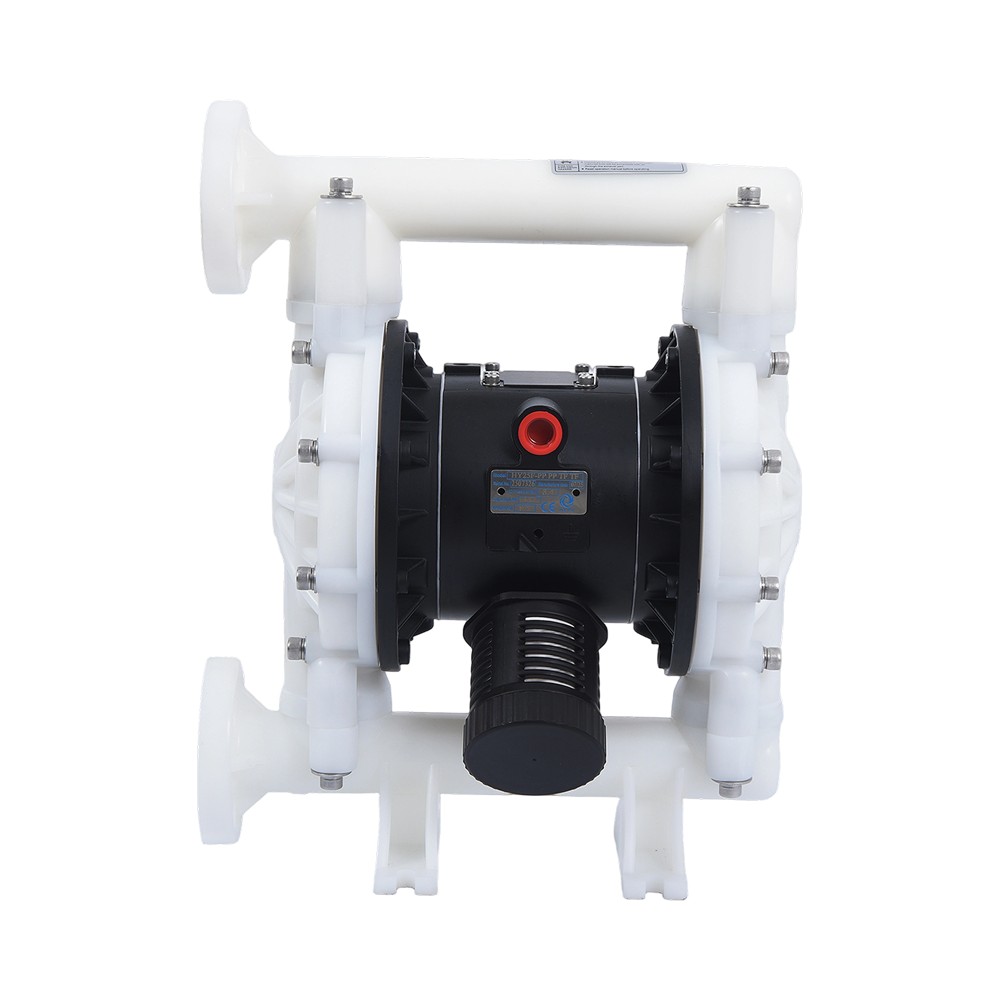 1-Inch Polypropylene Diaphragm Pump for Chemical TransferThis 1-inch polypropylene pump is suited for handling acids and many chemicals, with material-dependent suction and temperature limits. Review elastomer compatibility to match diaphragm performance with your fluid.View Product →
Beyond the body material, the diaphragm itself defines the maximum temperature and chemical compatibility. PTFE diaphragms resist almost all chemicals but are stiffer; EPDM and NBR give longer flex life in benign fluids. Check the elastomer compatibility chart before finalizing a pump.
Maintenance, Failure Modes, and Service Life
Diaphragm pumps fail mainly through diaphragm rupture, valve-ball wear, and air-valve clogging; scheduled inspections at fixed intervals are the most effective countermeasure.
Common failure modes are diaphragm rupture, worn check valve balls, clogged air valve, and degraded elastomer from chemical attack. The earliest warning signs are decreased flow, louder air exhaust, erratic cycling, and liquid in the exhaust air.
Preventive maintenance follows simple rules:
- Inspect diaphragms and ball valves every 500 operating hours or per the manufacturer's schedule.
- Keep the compressed air clean and lubricated with a filter-regulator-lubricator unit for AODD pumps.
- Avoid overpressure that overstresses the diaphragm at its end point.
- Store spare diaphragms and valve kits considering the recommended shelf life of rubber parts.
| Failure mode | Warning signs | Corrective action |
|---|---|---|
| Diaphragm rupture | Loss of flow, liquid in exhaust air | Replace diaphragm; verify chemical compatibility |
| Ball valve wear | Output drops, erratic cycling | Replace valve balls and seats |
| Air valve clogging | Stalls or hesitates in stroke | Clean air valve; service filter-regulator-lubricator |
| Discharge hose collapse | High pressure, low flow | Use reinforced hose and pulsation dampener |
Industrial users report relatively low annual spending on diaphragm replacement parts for small pumps, a number worth comparing with the cost of a sealed centrifugal pump overhaul. For real-world failure trends and benchmarking, the industry news archive tracks maintenance topics that apply to your site.
Frequently Asked Questions
What are the main advantages of a diaphragm pump?
The main advantages are self-priming capability, dry-run tolerance, leak-free construction without shaft seals, wide chemical compatibility, and safe operation in explosive atmospheres when air-driven.
What are the main disadvantages of a diaphragm pump?
The main disadvantages are limited maximum flow and pressure, pulsating discharge, higher energy consumption in the air-operated type, diaphragm wear, and temperature restrictions caused by elastomer materials.
Can a diaphragm pump run dry?
Yes, an air-operated diaphragm pump can run dry for extended periods, while an electric diaphragm pump may have a shorter dry-run window depending on the design. Dry running is one of the strongest reasons to choose this pump type.
How long does a diaphragm pump last?
The mechanical frame of a diaphragm pump often lasts 10 years or more with periodic replacement of consumables such as diaphragms, valve balls, and seats. The diaphragm itself may last 500 to 8,000 hours depending on the chemical, temperature, stroke frequency, and quality of the elastomer.
Which is better: a diaphragm pump or a centrifugal pump?
Neither is categorically better. A diaphragm pump wins for self-priming, dry-run, viscous fluids, solids, and hazardous areas; a centrifugal pump wins for large continuous flows, clean liquids, and energy efficiency at low operating cost.
Are diaphragm pumps good for viscous fluids?
Yes, diaphragm pumps handle viscosities up to about 20,000 cP in practical industrial service, and some designs reach higher. The main penalty is reduced flow rate because stroke frequency and suction fill time become limiting.
The decision pattern is consistent: identify the liquid, the flow and pressure envelope, the site hazards, and the acceptable maintenance cost. Then compare the diaphragm pump family with the alternatives that share the same envelope, not with a pump designed for a completely different duty. Visit the product overview to map these criteria against real pump materials and sizes before you buy.