

 EN
 English
 Français
 Español
 عربى
A diaphragm pump keeps working day after day for one reason: the right parts are doing their job in the right combination. In practice, the components that wear out first are the diaphragm, valve balls, valve seats, O-rings, and the air spool on pneumatic models. When you understand what each part does, how it fails, and what material it should be made of, you can schedule replacements instead of reacting to breakdowns.
A diaphragm pump is a positive-displacement pump that flexes a flexible membrane back and forth to move fluid. The wetted end — the side that touches your product — is simple by design, but the tolerances are tight. A worn valve seat of less than a millimetre can cut flow noticeably, and a pinhole in the diaphragm can ruin an entire batch. This guide explains the key diaphragm pump parts, the warning signs of wear, and the material choices that decide service life. You can compare the full component range across our diaphragm pump product line.
Content
Core Diaphragm Pump Parts and What They Do
The six groups of parts listed below are the spare-part categories you should plan around. When you know which group a failure belongs to, you can order the right kit and estimate downtime accurately instead of guessing.
- Diaphragm — creates the pumping action and isolates the process fluid from the drive side.
- Valve balls and valve seats — direct flow through the pump as a two-way check-valve system.
- O-rings and gaskets — seal the body, the chambers, and the manifold joints.
- Air valve spool and pilot valves — control air distribution on pneumatic pumps.
- Centre block, connecting rod, and fasteners — transmit the driving force to both diaphragms.
- Manifold and body — contain the flow passages and protect the internal parts.
The Diaphragm
The diaphragm is the heart of the pump. It separates the driving force from the process fluid, flexes to create suction and discharge, and must resist chemical attack and repeated flexing at the same time. Most diaphragms used in industrial service are multi-layer, with an elastomer core and a PTFE or fabric backing that adds flex life and dimensional stability.
Valve Balls, Valve Seats, and O-Rings
Valve balls and seats form the check-valve system that directs flow. The ball lands on the seat under pressure, sealing against leakage from the discharge side back to the suction side. O-rings seal the joints between the outer body, the inner chamber, and the manifold, and they are the most common source of external drips.
Air-Side Components on Pneumatic Pumps
Air-operated diaphragm pumps use an air valve spool, pilot valves, and a centre section that alternately pressurises the two diaphragm chambers. These parts do not touch the process fluid, but they still wear and collect water, scale, and dirt from the compressed-air supply, which is why they deserve a separate place in your maintenance plan.
| Part | Main function | Typical failure mode | Typical service life |
|---|---|---|---|
| Diaphragm | Separates air from fluid; creates pumping action | Tearing, stretching, permeation, stiffness | 6–24 months |
| Valve balls | Open and close the flow path as check valves | Wear, deformation, solvent absorption | 6–12 months |
| Valve seats | Provide the sealing surface for valve balls | Pitting, erosion, foreign-object damage | 6–12 months |
| O-rings | Seal body, chamber, and manifold joints | Hardening, swelling, cuts during assembly | Every overhaul |
| Air valve spool | Directs compressed air between two chambers | Sticking, scoring, contamination | 12–24 months |
| Centre block and manifold | Support moving parts and form flow passages | Cracks from freezing, over-torque, or impact | Replacement only when damaged |
Early Warning Signs That Parts Need Replacement
Sudden diaphragm pump failure is rarely sudden in hindsight. Four symptoms cover most cases: lower flow, pressure fluctuation, fluid appearing in the air exhaust, and leaks at the housing joint. The moment you see any of these, stop the pump and inspect the related parts instead of increasing the air supply to compensate.
| Symptom | Part most likely at fault | Inspection checklist |
|---|---|---|
| Flow rate drops gradually | Diaphragm, valve balls, valve seats | Check for cracks, stretch, embedded debris, and uneven seating marks. |
| Air bubbles in discharge; fluid at the air exhaust | Diaphragm | Remove the pump chamber and inspect both faces of the diaphragm for pin holes. |
| Irregular pulsation or stalling | Air valve spool, pilot valves | Clean the air side; look for scoring, dried oil, and water residue. |
| Drip under the pump body | O-rings, manifold seal | Check joint faces for imprints; verify that body bolts are at the correct torque. |
| Discharge pressure below set point | Valve seats, worn diaphragm stroke | Re-seat or replace the entire valve system as a matched set. |
Material Selection: Matching Parts to the Fluid
Match the wetted material to the fluid at its worst operating condition — temperature, concentration, and solids content. A chemically compatible part still fails if it softens at your maximum temperature, while an incompatible one can fail in days. Prioritise the diaphragm, valve balls, and valve seats, because these parts face chemical and mechanical stress simultaneously.
Elastomer and Body Material Choices
The most common diaphragm and seal materials are EPDM, NBR, PTFE, and FKM fluororubber. EPDM handles water, acids, and alkalis well; NBR suits oils and fuels; PTFE offers broad chemical resistance with reduced flexibility, so it is often laminated to an elastomer backing; FKM covers high-temperature and solvent-heavy duty. On the wetted body itself, polypropylene and PVDF cover most corrosive chemical services, while 316L stainless steel is preferred for food, dairy, and pharmaceutical lines.
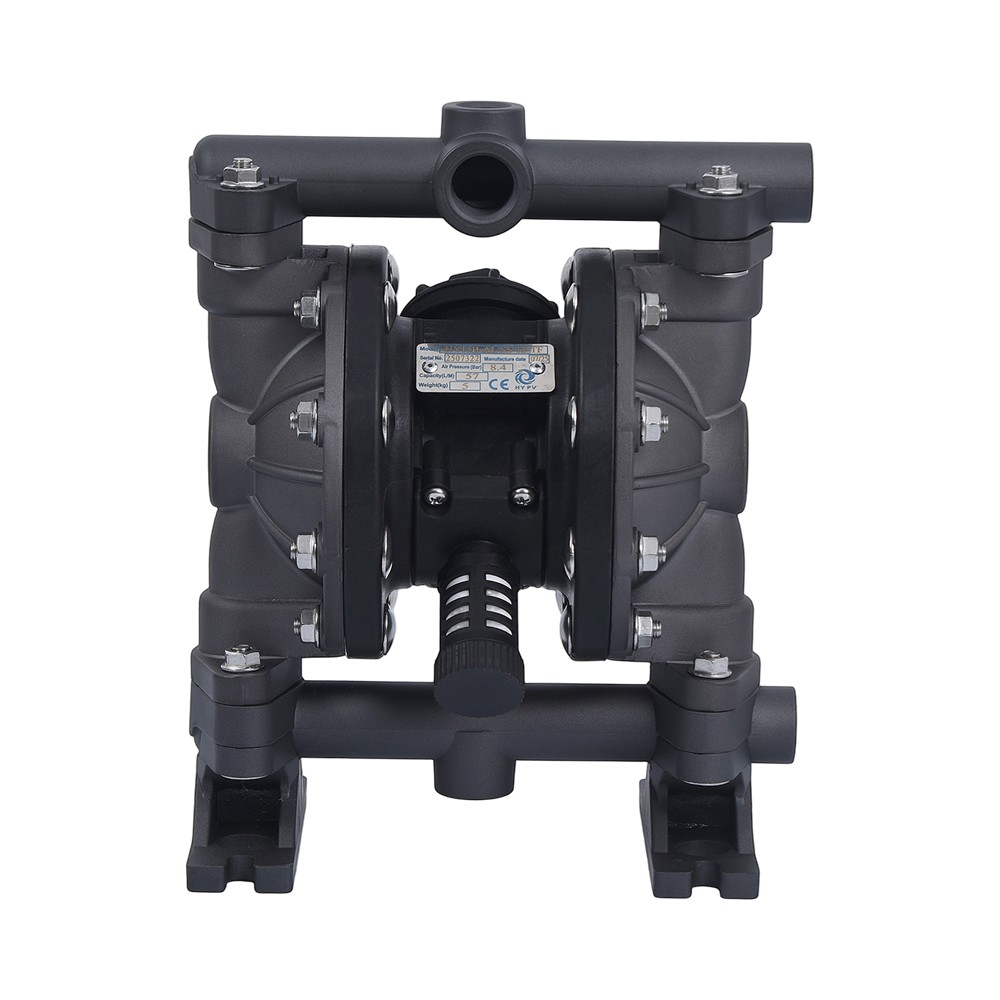
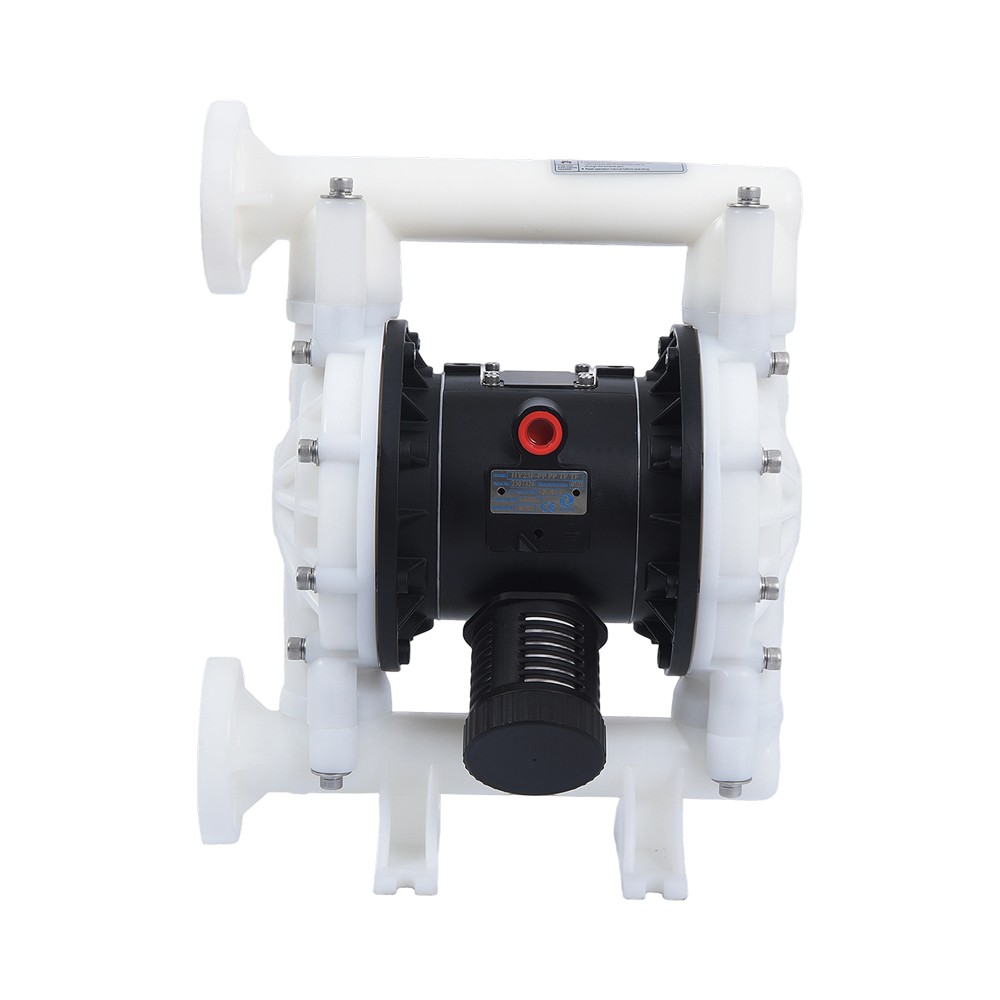 1-Inch Polypropylene Air-Operated Double Diaphragm PumpThis polypropylene-bodied pump suits corrosive chemical transfer where material compatibility matters. Its listed technical parameters cover suction lift, particle size, and air consumption, making it a practical choice for service where the upstream discussion on elastomer and metal selection applies.View Product →
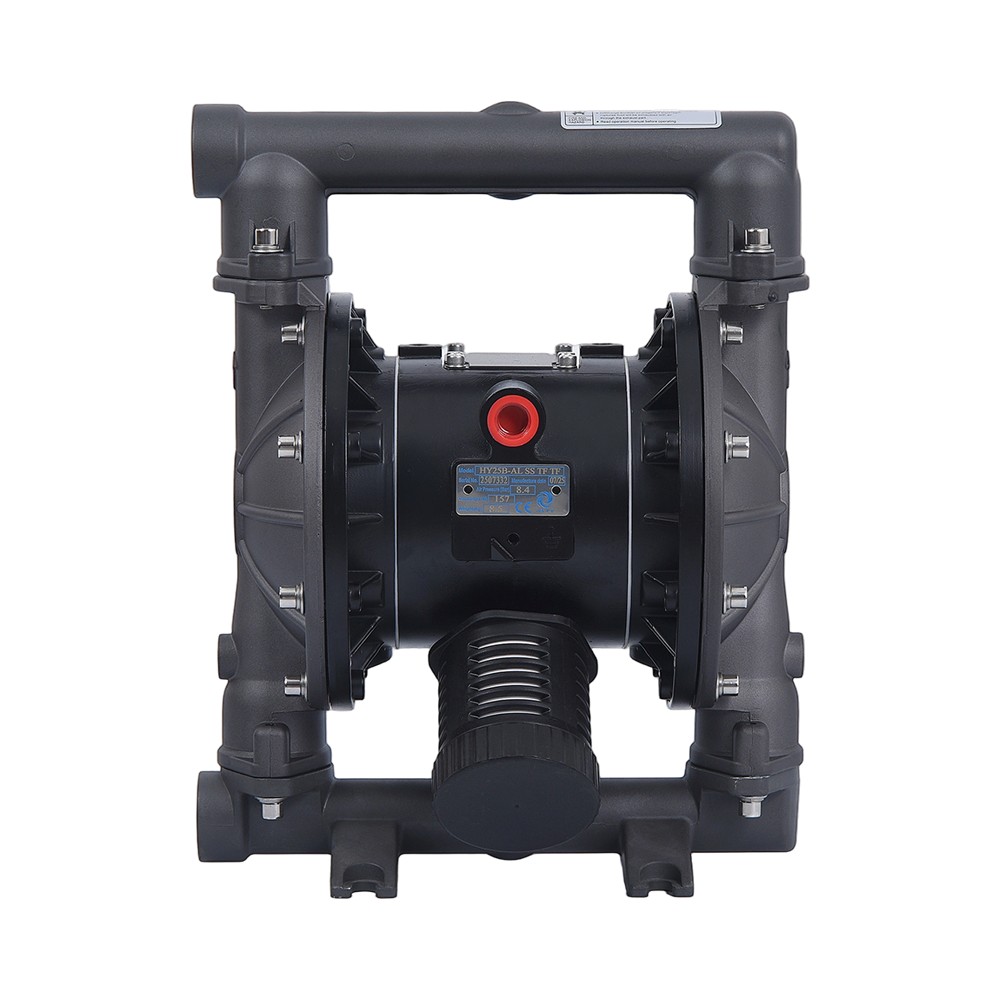
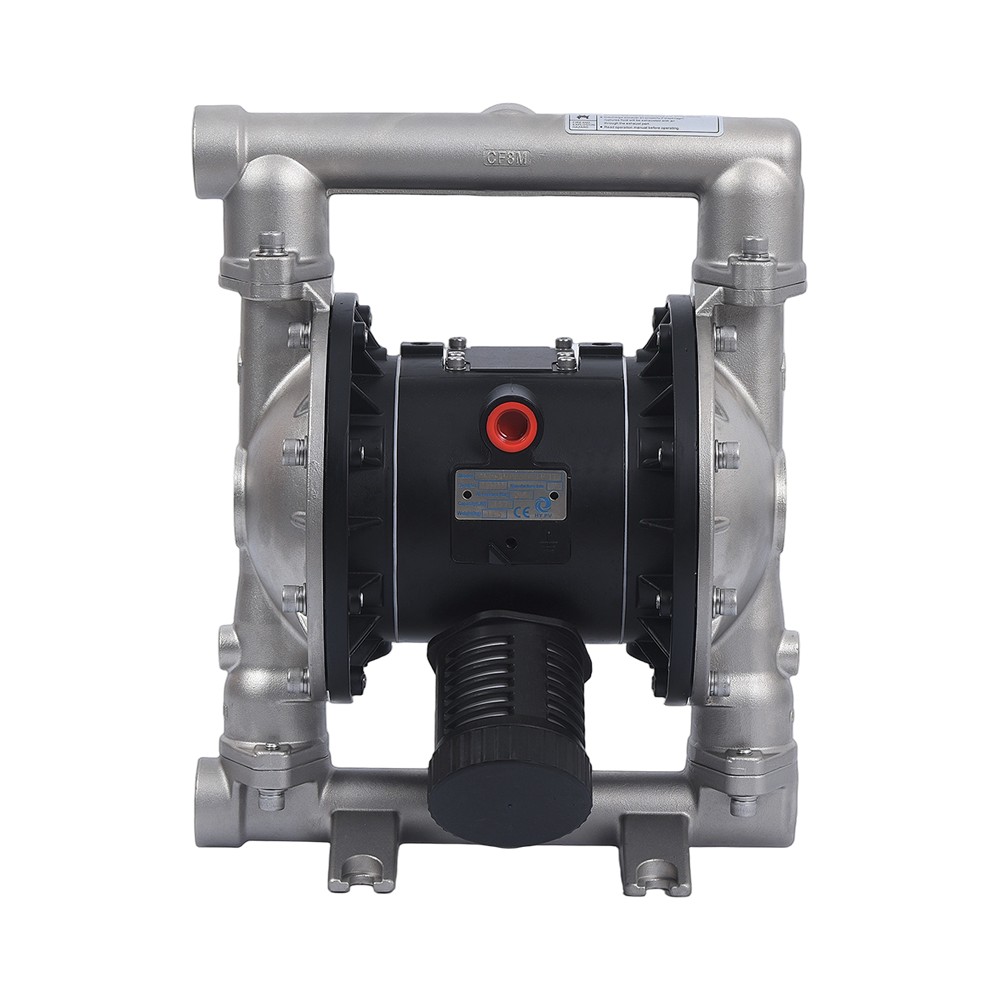 1-Inch Stainless Steel Air-Operated Double Diaphragm PumpBuilt with 316L-grade stainless steel wetted parts, this pump fits food, dairy, and pharmaceutical lines requiring hygiene and corrosion resistance. Key specifications like suction lift and air inlet pressure are provided, supporting selection for applications where sanitation and predictable performance are critical.View Product →
| Material | Good for | Typical temperature range | Relative cost |
|---|---|---|---|
| EPDM | Water, mild acids, alkalis, food washdown | −40 to 130 °C | Low |
| NBR | Oils, diesel, lubricants, water | −20 to 100 °C | Low |
| PTFE backed | Aggressive chemicals, solvents, high-purity fluids | −20 to 150 °C | High |
| FKM | High-temperature fluids, aromatic hydrocarbons | −20 to 200 °C | High |
| Polypropylene body | Plating baths, acids, waste streams | 0 to 80 °C | Low |
| PVDF body | Strong acids, halogens, ultrapure water | −20 to 120 °C | Medium |
| 316L stainless body | Food, beverage, pharmaceutical, cosmetics | Process dependent | Medium to high |
Factory-Matched Parts vs. Generic Spares
For critical duty, factory-matched spare parts give predictable fit, elastomer quality, and service life, while generic parts save money but require careful verification. The compromise is rarely worth it when the pump runs a process that cannot tolerate unplanned downtime.
When we machine a pump body, we machine the seat bores, bolt patterns, and face tolerances in the same setup and against the same gauges. Replacement components for the HY-series pumps are checked for Shore hardness, surface finish, and dimensional fit before they leave the factory. Ordering an equivalent part from an unverified source means you take responsibility for those tolerances and the resulting wear pattern yourself.
Ancillary Components That Protect the Pump
A pulsation dampener is not a conventional spare part, but it protects the parts that are. It smooths the pressure spikes from each diaphragm stroke, reduces vibration in the discharge line, and extends the life of seats and diaphragms by stabilising back-pressure. On metering and spray applications, it also improves repeatability.
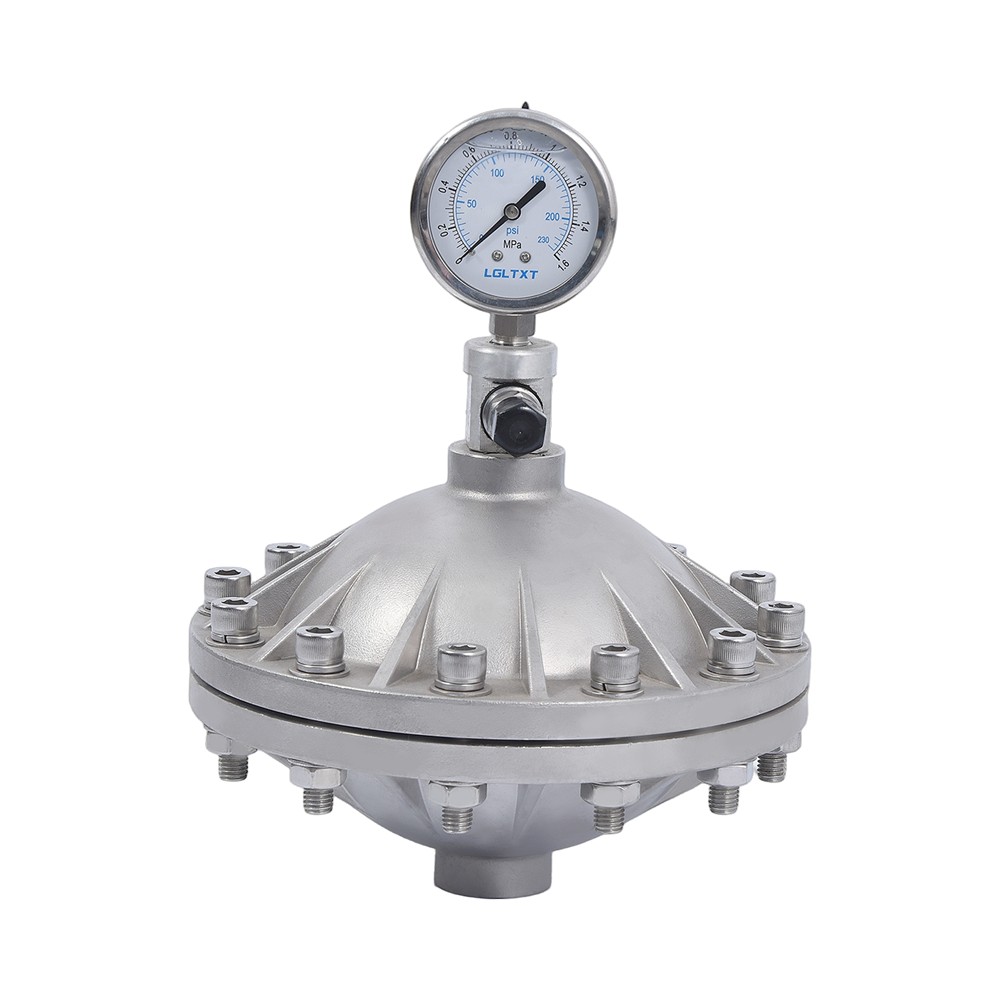 Pulsation Dampener for Diaphragm PumpsThis dampener smooths pressure spikes from each diaphragm stroke, reducing vibration and stabilizing back-pressure to extend seat and diaphragm life. It also improves repeatability in metering and spray duties, making it a valuable add-on for processes that cannot tolerate unplanned downtime.View Product →
Maintenance Practices That Extend Part Life
Most premature failures come from a small set of avoidable causes: contaminated air supply, dry running, over-tightening, and letting the pump deadhead against a closed valve. Fix those four, and the same diaphragm pump parts will commonly last twice as long.
- Filter and dry the compressed air on pneumatic pumps; water and scale in the air line are the top cause of air-valve sticking and spool wear.
- Never run the pump without liquid for more than a few seconds; dry running flexes the diaphragm at full stroke with no cooling, which leads to heat build-up and tearing.
- Tighten body bolts with a torque wrench in a criss-cross sequence; uneven clamping distorts the chambers and accelerates diaphragm wear.
- Flush the pump after handling slurries, resins, or crystallising liquids so abrasive and sticky residues do not sit on valve seats overnight.
- Keep a wet-end service kit — diaphragm, balls, seats, and O-rings — in stock so a 30-minute repair does not become a two-day shutdown.
- Log operating hours and air pressure; a predictable replacement rhythm beats reacting to failures. Follow the service notes in our operation and maintenance updates.
Frequently Asked Questions About Diaphragm Pump Parts
How often should I replace diaphragm pump parts?
There is no universal interval, because chemical compatibility, stroke rate, and temperature all shift the timeline. For continuous chemical duty, many users budget for a wet-end rebuild every 12 months; for light water service, the same parts can last three years or more. Track flow and discharge pressure rather than relying on calendar time alone.
What causes a diaphragm to fail early?
Chemical incompatibility, dry running, and over-pressure cause most early failures. A diaphragm that softens in the wrong solvent or operates above its rated temperature loses flex life quickly, while a pump that runs dry builds heat into the membrane and tears it from the centre outward.
Should I replace only the diaphragm or the full set of parts?
Replacing the full wet-end set is usually cheaper and more reliable than replacing only the diaphragm. When one part wears, the adjacent valve balls and O-rings are usually at a similar age, and mixing a new diaphragm with old seats leaves the pump with inconsistent seating pressure and unpredictable performance.
Why is my air-operated diaphragm pump leaking fluid from the exhaust?
Fluid at the air exhaust almost always means the diaphragm is ruptured on one side. Stop the pump, open the suspect chamber, and replace the diaphragm together with its backing plate; while the pump is open, inspect the opposite diaphragm for imminent failure as well.
Which parts should I keep in stock?
Keep at least one set of diaphragms, valve balls, valve seats, and O-rings for every pump size in your facility. These four groups account for the large majority of diaphragm pump parts failures, and they are inexpensive to hold compared with the cost of an unplanned line stoppage.
Diaphragm pump parts fail in predictable patterns once you know what to look for. Define your duty, choose compatible elastomer and body materials, watch the tell-tale symptoms, and stock the four critical spare groups. That routine will outperform any amount of emergency ordering, and it is the difference between a pump that occasionally stops production and one that supports it.