

 EN
 English
 Français
 Español
 عربى
At 2 a.m., an air-operated diaphragm pump on a batch line stops moving product, and the first instinct on the floor is to open the wet end. That is usually the wrong move. In field service, four subsystems account for almost every complaint: the air supply, the check valves, the diaphragms, and the suction line. Check them in that order and you will normally find the fault in under fifteen minutes, without draining the pump.
Start with three readings you can take without opening anything: inlet air pressure at the pump, cycle rate, and discharge pressure. Those numbers separate an air-side problem from a wet-end problem, and they tell you whether to reach for a wrench at all.
| Symptom | Most likely cause | First check | Typical fix |
|---|---|---|---|
| Pump does not start or does not cycle | Insufficient air volume, closed discharge valve | Air gauge at the inlet; filter-regulator | Restore 4 to 7 bar (60 to 100 psi); replace undersized hose with 3/4 in minimum on a 1 in pump |
| Cycles but moves no liquid | Lost prime, blocked suction, dry run | Suction strainer, tank level, foot valve | Re-prime, clean the strainer, keep the suction flooded |
| Low flow, slow cycling | Worn diaphragms, leaking check valves | Cycle rate against the flow curve | Replace diaphragms as a set; clean or replace balls and seats |
| Erratic or uneven strokes | Moisture or icing in the air line, worn air valve | Air filter and dryer, exhaust muffler | Dry the air, clean the muffler, service the air valve spool |
| Fluid weeping at the manifold | Uneven torque, swollen gasket | Bolt torque and gasket condition | Re-torque in a cross pattern to spec; fit a compatible gasket |
| Banging or heavy vibration | Undamped pulsation, cavitation | Discharge line, suction NPSH margin | Fit a pulsation dampener, shorten the suction run, add supports |
Content
- 1 What a diaphragm pump is, and where faults cluster
- 2 Air supply problems: the first stop on pneumatic pumps
- 3 The pump cycles but delivers low flow or nothing
- 4 Stalling, icing and erratic cycling
- 5 Leaks, diaphragm failures and wetted-material choice
- 6 Noise, vibration and pulsation
- 7 Electric diaphragm pumps: split the fault in two
- 8 A maintenance routine that prevents repeat failures
- 9 Frequently asked questions
What a diaphragm pump is, and where faults cluster
A diaphragm pump is a positive-displacement pump that moves fluid with two flexible diaphragms flexing in and out of two liquid chambers, with check valves controlling flow direction. An air valve drives a pneumatic unit; a motor and reduction gear drive an electric one. Because the fluid touches only the diaphragms, valve seats and chamber walls, the wear list is short and predictable.
- Drive side: air valve spool, pilot valve, muffler, or on electric units the capacitor, timer and gearbox.
- Valves: check balls, seats, o-rings and flap valves, usually the victims of debris and dry running.
- Diaphragms: the only flexible component, and the part most affected by chemistry and temperature.
- System: suction lift, NPSH margin, discharge pressure, pulsation and pipe support.
If you can name which of those four changed since the pump last ran well, you have found the fault.
Air supply problems: the first stop on pneumatic pumps
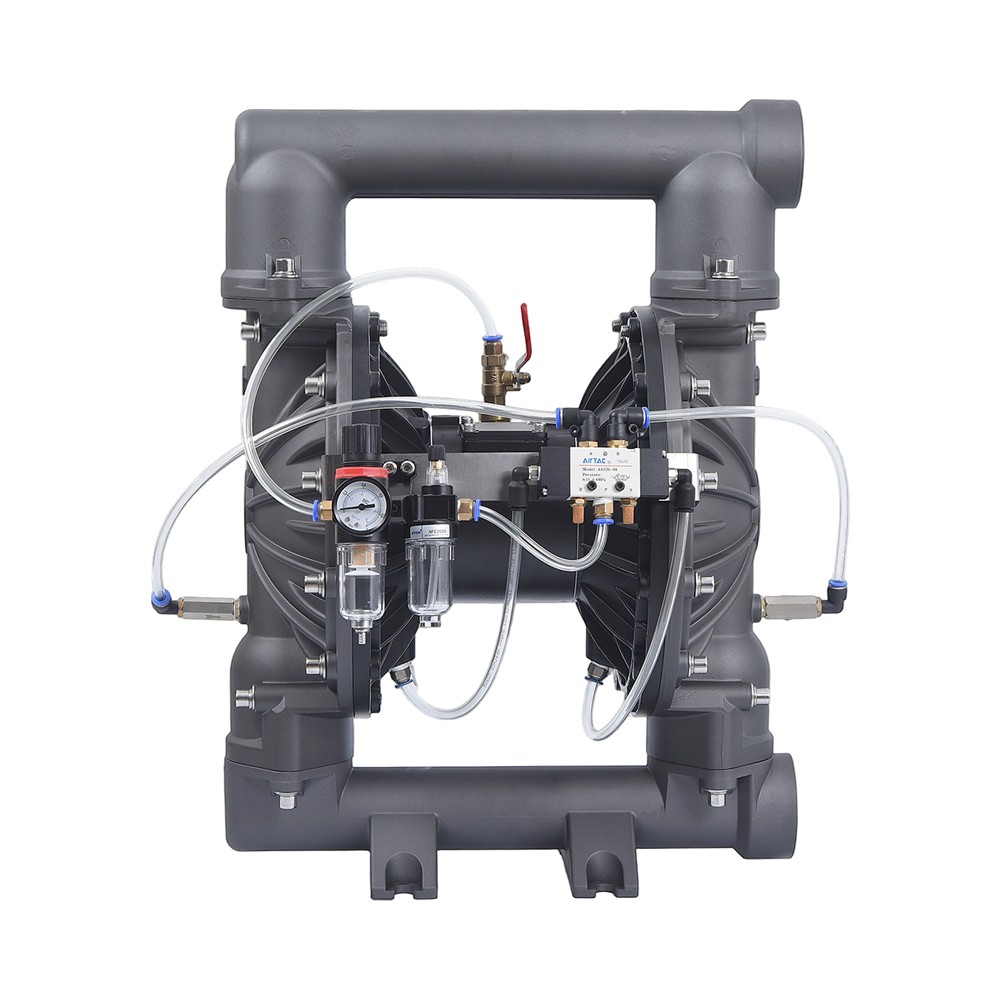
Two out of three air-operated double-diaphragm service calls end at the air line, not inside the pump. A 1 in AODD pump typically needs 3/4 in or larger air hose and a clean 4 to 7 bar supply to reach rated flow. Feed it through 1/4 in tubing, a half-closed valve, or a filter bowl that has not been drained in months, and you get the symptoms people blame on the pump.
- Measure air pressure at the pump inlet while it is running. A drop of more than roughly 0.5 bar between rest and running points means the line is undersized or restricted.
- Drain the filter-regulator and check the moisture trap. Water and compressor oil in the air valve are the most common cause of icing and erratic strokes in cold weather.
- Inspect the exhaust muffler or exhaust piping. A clogged muffler raises back pressure and slows the pump noticeably.
- Confirm the discharge valve is open and that no closed valve, clogged filter or blocked nozzle is stalling the pump against its pressure limit.
- If air flow and pressure are correct and the pump still sticks, service the air valve; worn spools and dried o-rings cause both stalling and uneven strokes.
The pump cycles but delivers low flow or nothing
If the pump strokes normally and discharge pressure stays flat, the fault is in the wet end, the suction line, or the process itself.
- Confirm prime. Air in the suction chamber is the number one cause of no-flow on a pump that ran fine yesterday.
- Run a deadhead test: close the discharge briefly. If pressure climbs to the rated figure, the pump is healthy and the problem is downstream. If it stays low, look inside.
- Check the valves. Debris under a ball, a swollen seat, or a ball installed backwards will pass fluid in both directions and cut capacity sharply.
- Inspect the diaphragms. Product in the air exhaust, or capacity that fades over a few shifts, points to a pinhole rupture rather than a valve problem.
- Recheck the system: viscosity and specific gravity above the pump's curve, discharge pressure above the air-side capability, or a suction lift that exceeds the pump's dry-lift limit.
Stalling, icing and erratic cycling
A pump that stalls at random, or that runs fine in the morning and crawls after lunch, is usually reacting to air quality or temperature rather than to wear. Expansion cooling of moist compressed air freezes the air valve; a worn pilot spool or damaged shaft o-rings produce the same stop-start behaviour. High-viscosity or gelled product can also stall a pump that is otherwise in good condition.
Leaks, diaphragm failures and wetted-material choice
A diaphragm that fails in a few weeks instead of a few months is a material-selection or assembly problem, not a manufacturing defect. Read the failure signature before you order parts.
- Cracks radiating from the centre: normal flex fatigue. Check cycle rate and consider a larger pump running slower.
- Swollen, blistered or sticky surface: chemical attack, meaning the elastomer is wrong for the fluid, temperature or concentration.
- Tears at the clamping edge: over-torqued or unevenly torqued manifold bolts.
- A clean-edged pinhole or cut: debris or a sharp object left in the chamber.
Re-torque manifold bolts in a cross pattern to the manufacturer's figure using a torque wrench. On plastic pumps, over-tightening distorts the chamber and pinches the diaphragm, producing leaks that look like material failure but are assembly errors.
| Wetted material | Best suited to | Watch out for | Relative cost |
|---|---|---|---|
| Aluminum | Water, oils, non-aggressive solvents, general transfer | Acids, alkalis, food and pharmaceutical contact | Lowest |
| Stainless steel 316 | Solvents, higher temperatures, food and washdown areas | Chlorides at elevated temperature, which pit the surface | Higher |
| Polypropylene (PP) | Acids, alkalis, plating baths, waste water | Temperature limits, typically moderate; some solvents swell it | Low to moderate |
| PVDF (Kynar) | Strong acids, chlorinated solvents, high-purity service | Softer material, so check torque values; highest unit price | Highest |
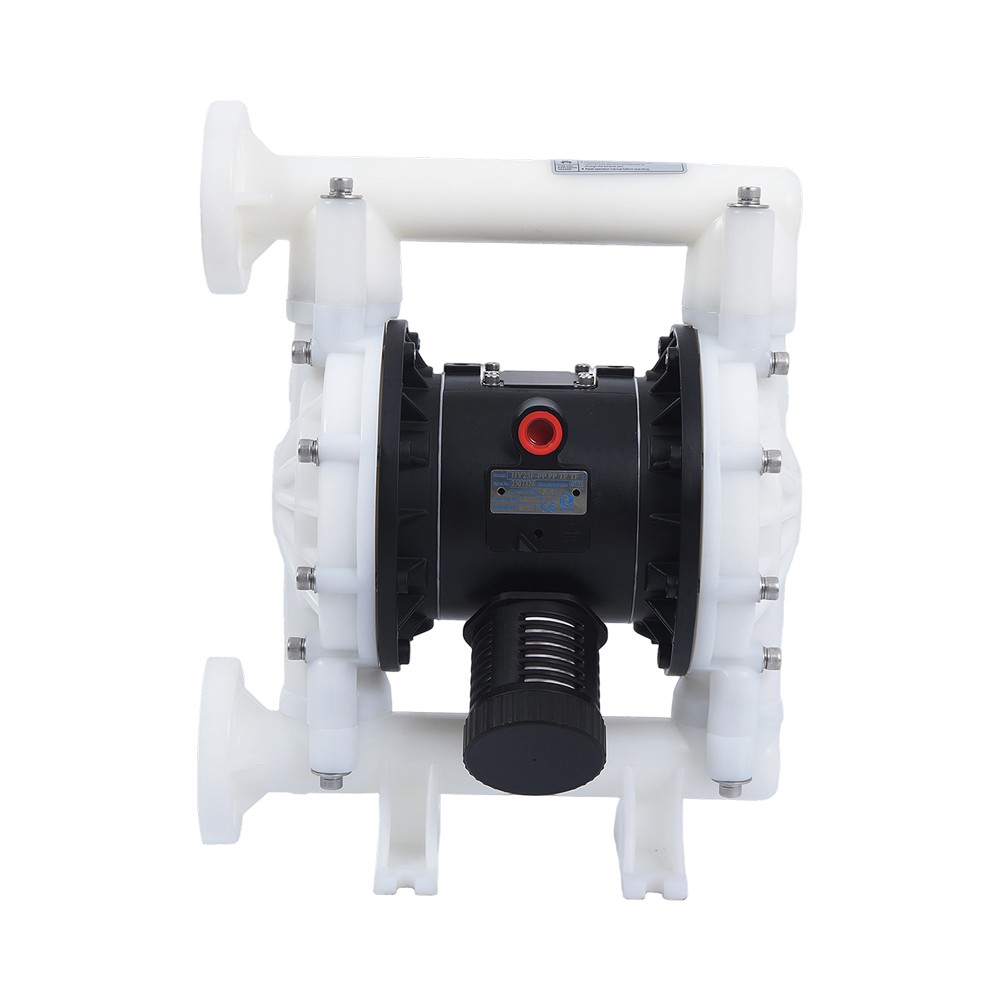
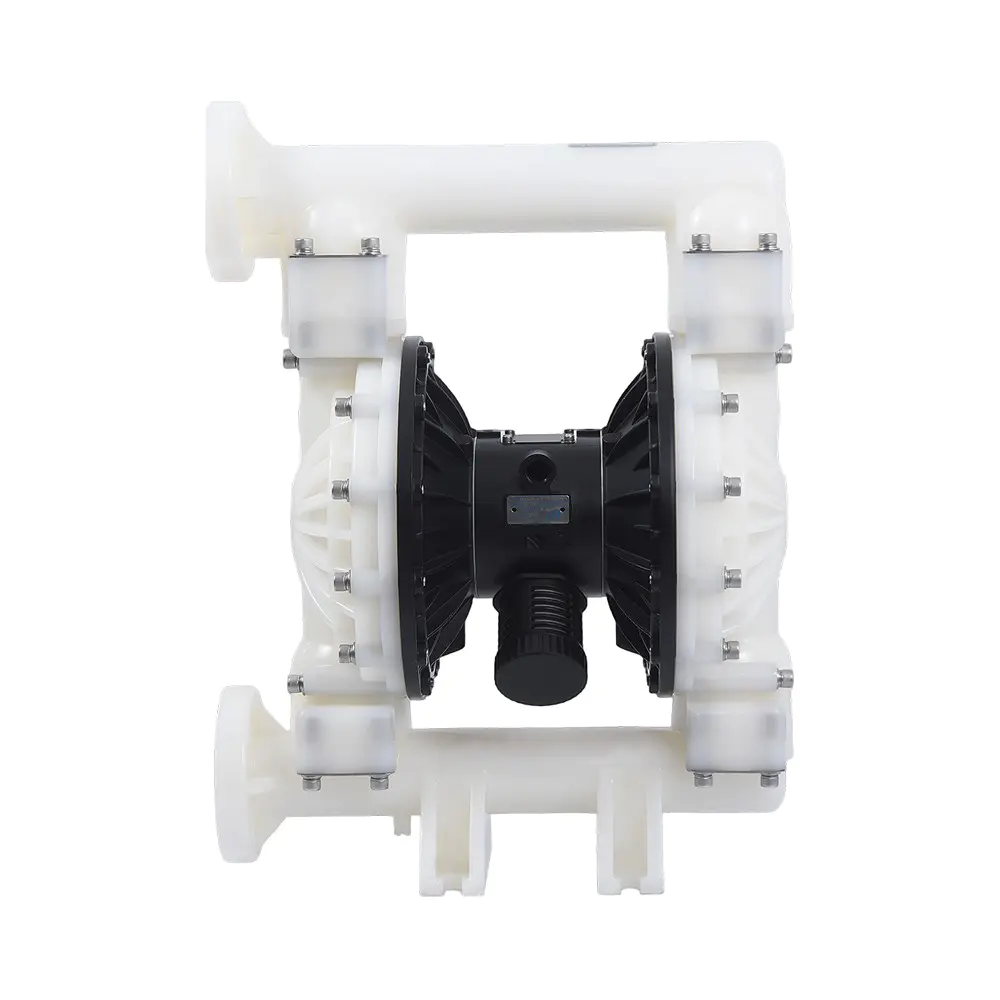
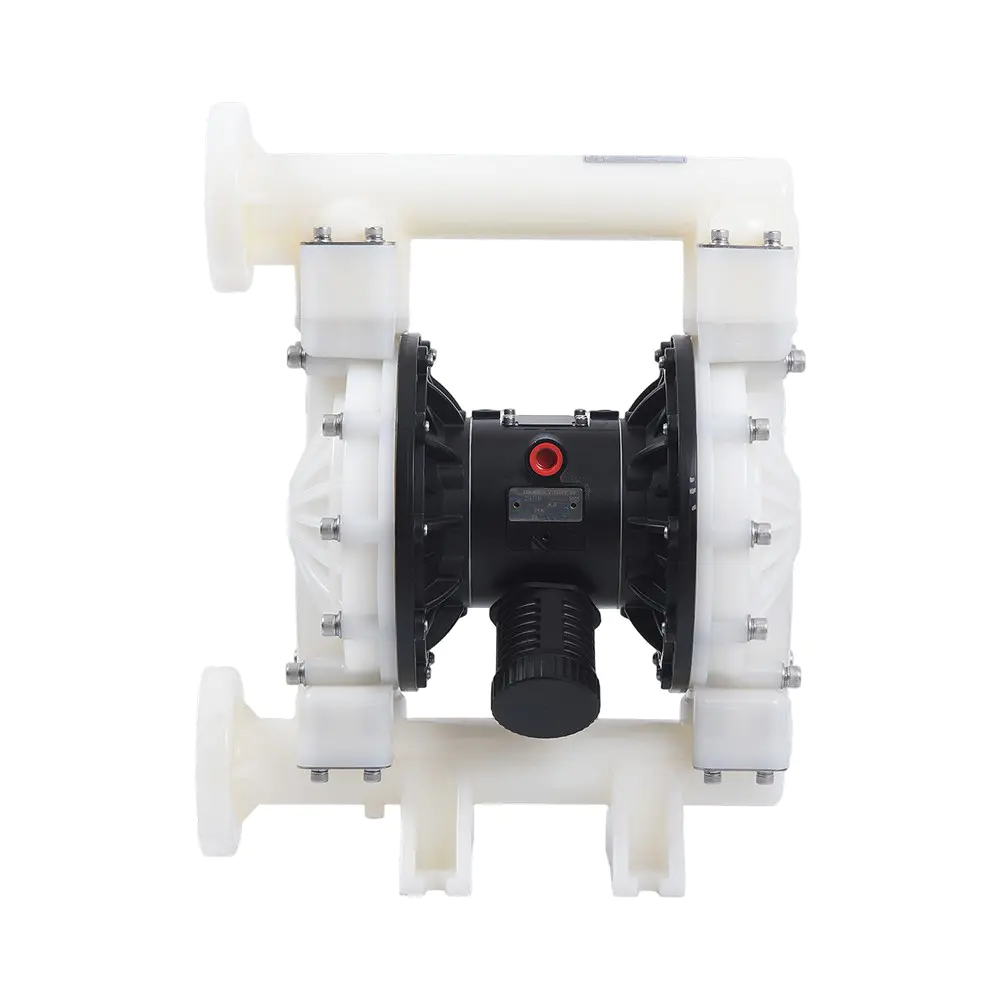
 1-Inch PVDF Air-Operated Diaphragm PumpA 1-inch air-operated PVDF diaphragm pump with 157 L/min max flow, 84 m head, and 8.4 bar air pressure for comparing pump specifications.View Product →
Noise, vibration and pulsation
Diaphragm pumps pulse by nature; noise becomes a problem when pulsation is undamped or when the suction side is starved. Heavy knocking on discharge usually means check valves slamming shut against an undamped pressure wave. A gravel-like rattle on the suction side is cavitation, caused by a restricted or undersized suction line.
- Fit a pulsation dampener on the discharge and charge it to roughly 60 to 80 percent of line pressure.
- Use flexible connectors and support the pipework so vibration is not transmitted to the structure.
- Shorten the suction run, remove unnecessary fittings, and keep the suction strainer clean.
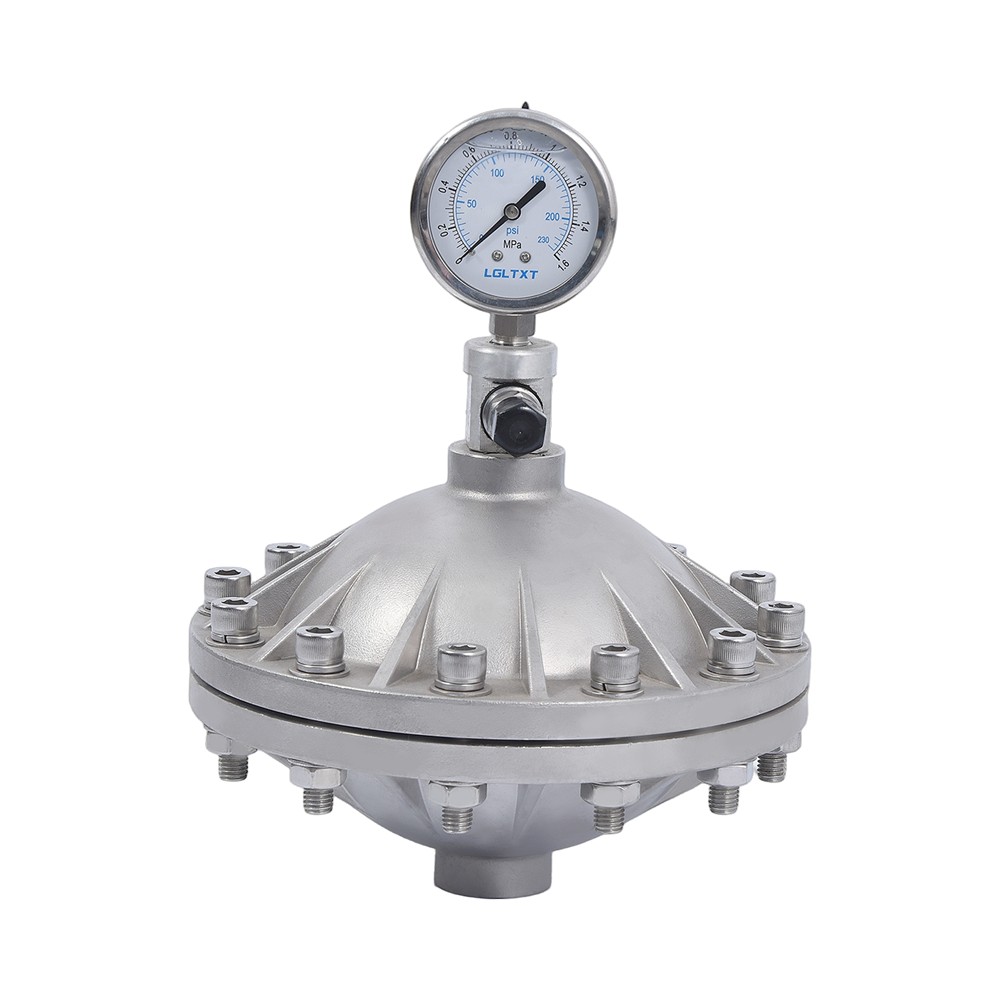 Pulsation Dampener for Diaphragm Pump SystemsA pulsation dampener accessory for diaphragm pump setups; it relates to undamped pulsation and discharge noise, though visible specifications are limited.View Product →
Electric diaphragm pumps: split the fault in two
On an electric diaphragm pump, the first question is whether the motor turns at all; every later check matches the pneumatic procedure. Work from the plug backwards:
- Power side: fuse, breaker, and a thermal overload tripped by high viscosity or a stuck diaphragm.
- Single-phase motors: a failed capacitor produces a hum without rotation.
- Controller: speed and timer settings that were changed by accident, or a failed relay.
- Mechanical side: gearbox oil level and leaks, where the model uses an oil bath.
- Wet end: prime, valves, diaphragms and discharge pressure, exactly as for an air-driven unit.
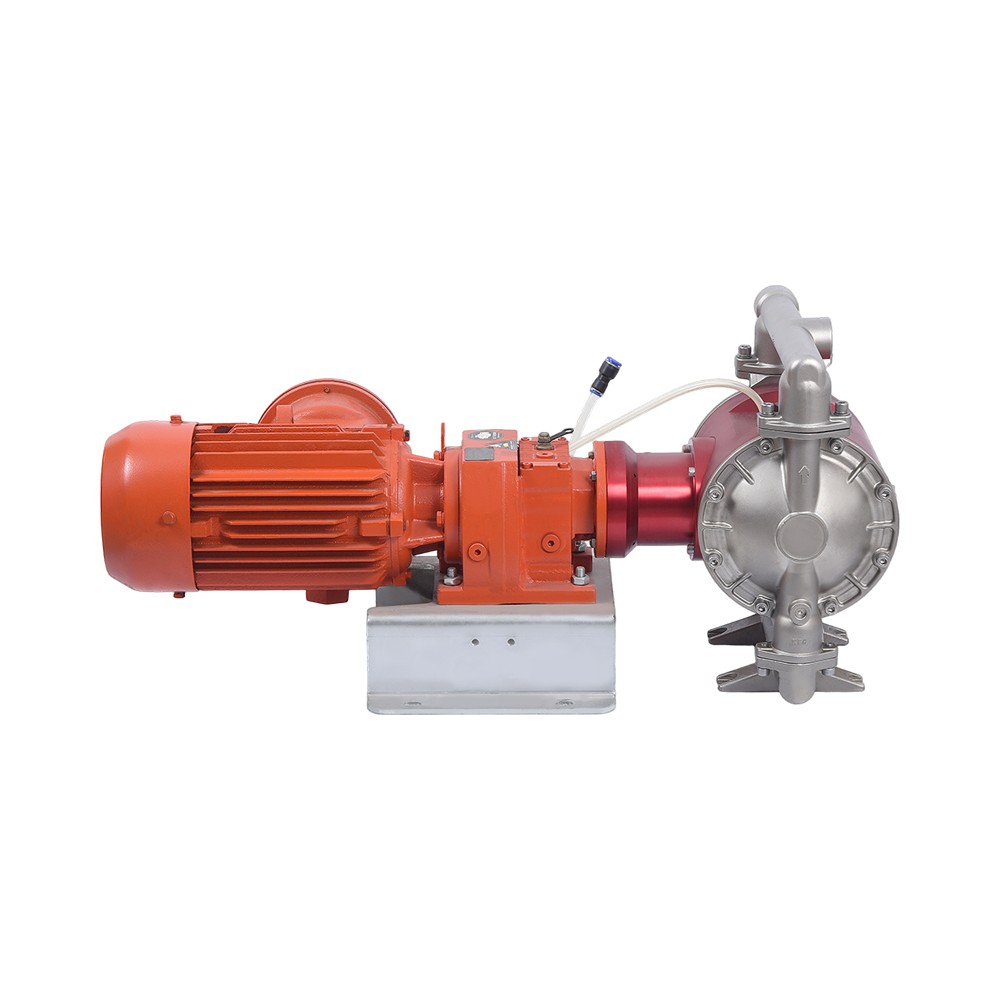
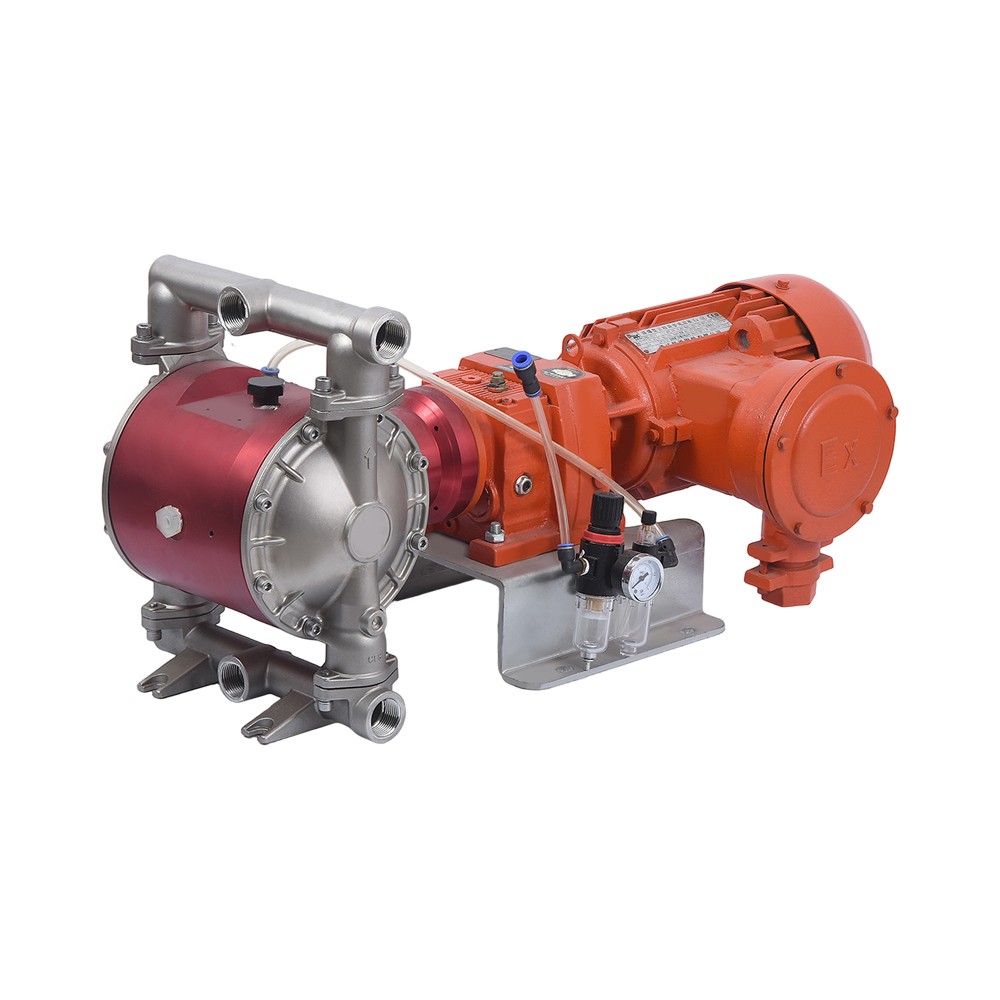 Electric Diaphragm Pump for Water Transfer and IrrigationA self-priming electric diaphragm pump with up to 60 L/min flow, 3.5 bar pressure, and 12V/24V options for water transfer and irrigation.View Product →
A maintenance routine that prevents repeat failures
Most diaphragm pumps fail on a schedule you can predict, which means you can plan around them instead of reacting at 2 a.m.
- Daily: glance at cycle rate, discharge pressure and any weeping at the manifold, and log the figures.
- Weekly: drain moisture traps, clean or replace air filters, and check mufflers.
- Monthly: torque manifold and chamber bolts to spec, inspect the suction strainer, listen for new noise.
- Planned service: change diaphragms as a set, inspect check balls and seats, and verify dampener precharge.
- Spares: keep a kit matched to the fluid, including diaphragms, balls, seats and gaskets.
Frequently asked questions
Why does my diaphragm pump keep losing prime?
Usually a suction-side air leak, a worn foot valve, a clogged strainer, or running the pump until the tank empties. Diaphragm pumps lift poorly when dry; a flooded suction is always the better arrangement.
How do I tell whether the check valves or the diaphragms are worn?
Run a deadhead test. If the pump builds rated pressure but delivers no flow, suspect the check valves. If pressure stays low or product appears in the air exhaust, the diaphragms are the problem.
Can I run a diaphragm pump dry?
Air-operated models tolerate brief dry running, but the diaphragms overheat and stiffen. Electric models should not be run dry at all without manufacturer approval.
What air pressure should I set?
Start at the pump's rated pressure, commonly 4 to 7 bar (60 to 100 psi), then adjust down until flow is stable. Excess pressure shortens diaphragm life without adding much flow.
Should you repair or replace? Repair makes sense when the fault is a single wear part and the housing and chambers are sound. Replacement, or a material upgrade, makes more sense when bodies are cracked or swollen, when the same diaphragm fails every few weeks, or when the repair bill approaches half the price of a new unit.
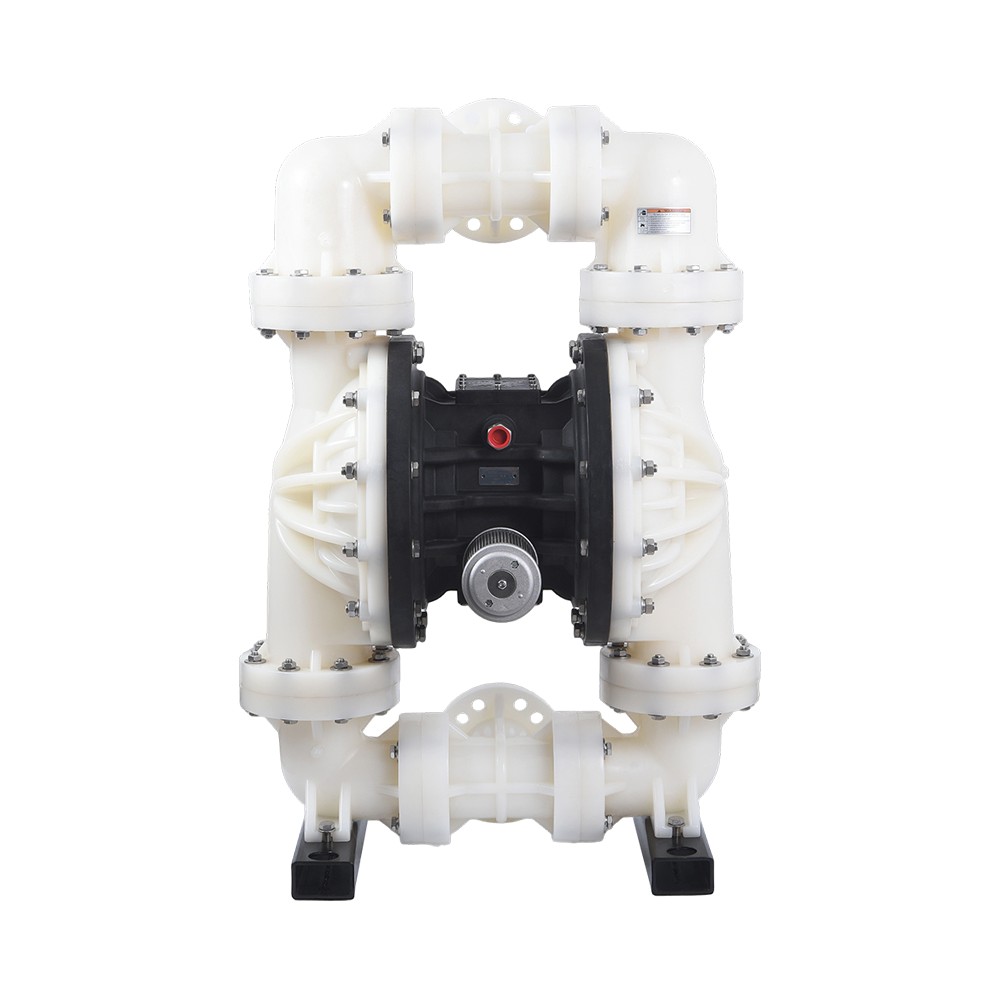
Our HY series pneumatic diaphragm pumps are built in aluminum, stainless steel, polypropylene and PVDF with ports from 1/4 in to 3 in, so moving to a more compatible body material usually costs less than a year of repeated diaphragm replacements. If a new fluid or a tighter discharge specification sits behind your recent faults, the application notes in our industry news section are worth reading before you order parts.