

 EN
 English
 Français
 Español
 عربى
A 4,000 cps acrylic coating, an IBC tote that has to be emptied, and a spare centrifugal pump on the shelf. The centrifugal unit cavitates, the coating comes out sheared and thinner, and the seal starts weeping within a few weeks. Move the same job to a diaphragm pump and it self-primes from the tote, survives a short dry run, and passes the pigment through without grinding it down.
That single example carries most of the argument, but the honest answer is not that diaphragm pumps are simply better. Viscosity, solids, shear sensitivity, head, flow and suction conditions decide the question. What follows explains the difference in practical terms, then gives you a selection path you can defend to a maintenance team and a purchasing department.
Content
- 1 The Short Answer: Which Pump Do You Need?
- 2 What Each Pump Actually Is
- 3 Side-by-Side Comparison
- 4 Where a Centrifugal Pump Wins
- 5 Where a Diaphragm Pump Earns Its Place
- 6 When Compressed Air Is Not Available
- 7 Flow, Pressure and Control in Practice
- 8 Wetted Materials and Wear Parts
- 9 A Five-Step Selection Path
- 10 FAQ
- 11 The Practical Takeaway
The Short Answer: Which Pump Do You Need?
Choose a centrifugal pump when the fluid is thin and clean, roughly under 200 cps, when you need high flow at a modest and fairly stable head, and when the duty runs continuously. Choose a diaphragm pump when the fluid is viscous, abrasive, shear-sensitive or full of solids, or when you need self-priming, dry-run tolerance, high pressure from a low-flow pump, repeatable dosing, or air-driven operation in a hazardous area.
Both designs are mature and reliable. Failures are almost never caused by the pump type itself, but by a pump sized for a duty it was never built for.
What Each Pump Actually Is
Centrifugal pumps: kinetic energy, then pressure
A centrifugal pump is a rotodynamic machine. An impeller spins the liquid outward, turning shaft speed into velocity and then into pressure inside the casing. Because it adds kinetic energy instead of displacing a fixed volume, its output follows the system curve rather than a fixed displacement.
- Flow rises as head falls, so throttling the discharge valve is a normal control method.
- It is not self-priming in standard form; the casing must be flooded, or you need a self-priming variant.
- Shear is high, so emulsions, long-chain polymers and some coatings do not survive the impeller.
- Viscosity is the hard limit: performance falls steeply beyond roughly 200 to 500 cps.
- Efficiency is high, often 60 to 80 percent at the duty point, which is why it dominates high-volume water duty.
Diaphragm pumps: a fixed volume, pushed by a flexing membrane
A diaphragm pump is positive displacement. A flexible diaphragm is driven by compressed air in an air-operated double diaphragm (AODD) unit, or by a motor and crank in an electric model. Two check valves, ball or flapper type, keep the flow moving one way, and every stroke moves a fixed volume.
- Flow stays close to constant as discharge pressure rises, so output is predictable and dosing by stroke count is practical.
- Self-priming suction lift is typically 4 to 6 m dry, and more once the pump is wet.
- Dry running is tolerated because no seal face depends on the liquid for lubrication.
- Shear is low, so batter, latex, sludge and paint move without losing their structure.
- Discharge is pulsating, which is why dampeners are common on filling and dosing lines.
- Energy use is higher, particularly with compressed air, and that is a genuine operating cost.
Side-by-Side Comparison
| Point of comparison | Centrifugal pump | Diaphragm pump |
|---|---|---|
| Operating principle | Impeller adds kinetic energy | Diaphragm displaces a fixed volume |
| Viscosity range | Comfortable to about 200 cps | 1,000 cps and well beyond |
| Solids handling | Small, soft particles only | Limited mainly by valve seat size |
| Self-priming | Special variants only | Standard, 4 to 6 m dry lift |
| Dry running | Damages seals and wear rings | Tolerated for extended periods |
| Shear on product | High | Low |
| Flow versus head | Flow falls as head rises | Flow barely changes with head |
| Efficiency | 60 to 80 percent at duty point | Lower, lowest on compressed air |
| Overpressure risk | Self-limiting | Needs a relief valve or bypass |
| Hazardous area | Requires protected electrics | Air-driven version is inherently safe |
Where a Centrifugal Pump Wins
There is no reason to pay for a positive displacement pump when the duty is clean and fast.
- Clean water at high volume: cooling, circulation, irrigation and general transfer.
- Long continuous duty where electrical efficiency is metered and matters.
- Low-viscosity, solids-free chemicals with no shear sensitivity.
- Budget and footprint: at equal flow, a centrifugal pump is usually smaller and cheaper.
- Existing systems already designed around a head-flow curve with VFD control.
Where a Diaphragm Pump Earns Its Place
Whenever the fluid fights back, the positive displacement design stops being a compromise and becomes the only sensible option.
- Viscous and paste-like media: adhesives, inks, resins, chocolate and sludge.
- Abrasive or solids-laden slurries that would erode an impeller.
- Shear-sensitive products that must keep their texture or particle size.
- Suction duty that runs dry: drums, totes, sumps and tank bottoms.
- Hazardous areas where an air-driven unit avoids electrics entirely.
- Transfer and dosing where a constant volume per stroke gives repeatable results.
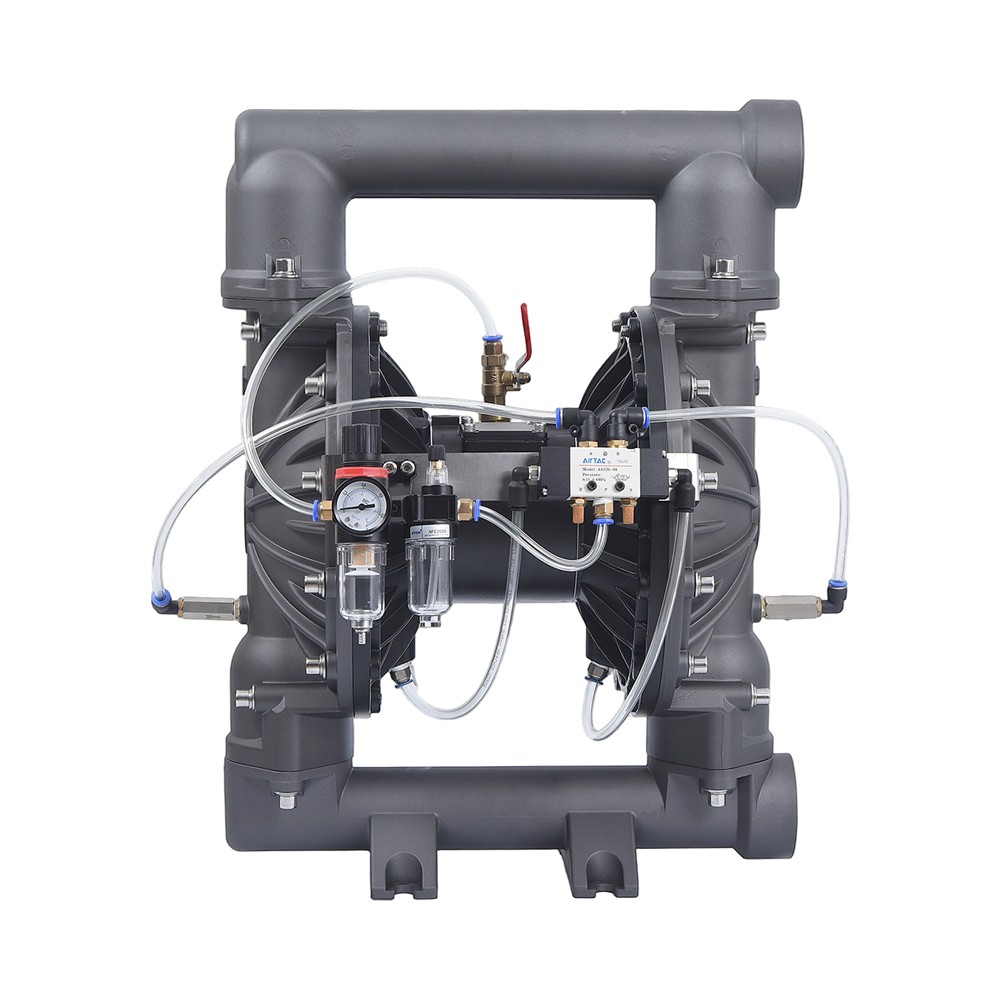
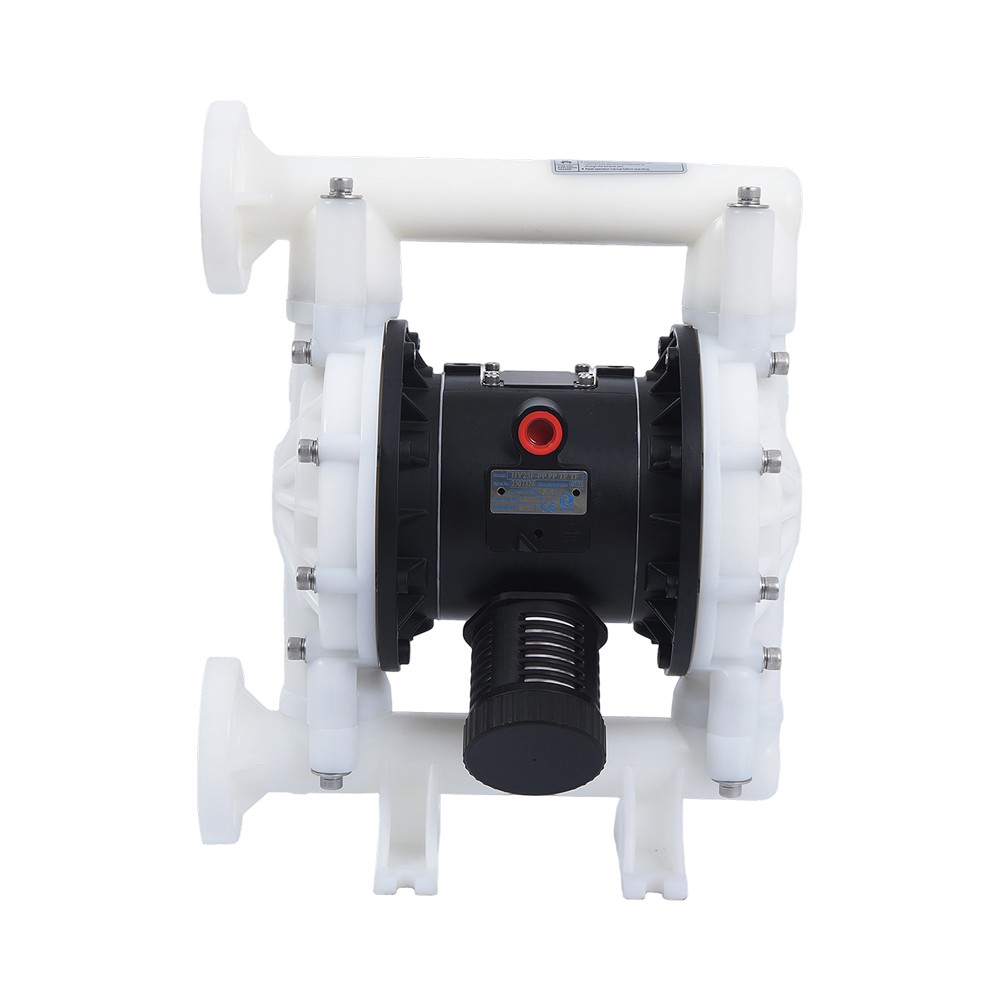
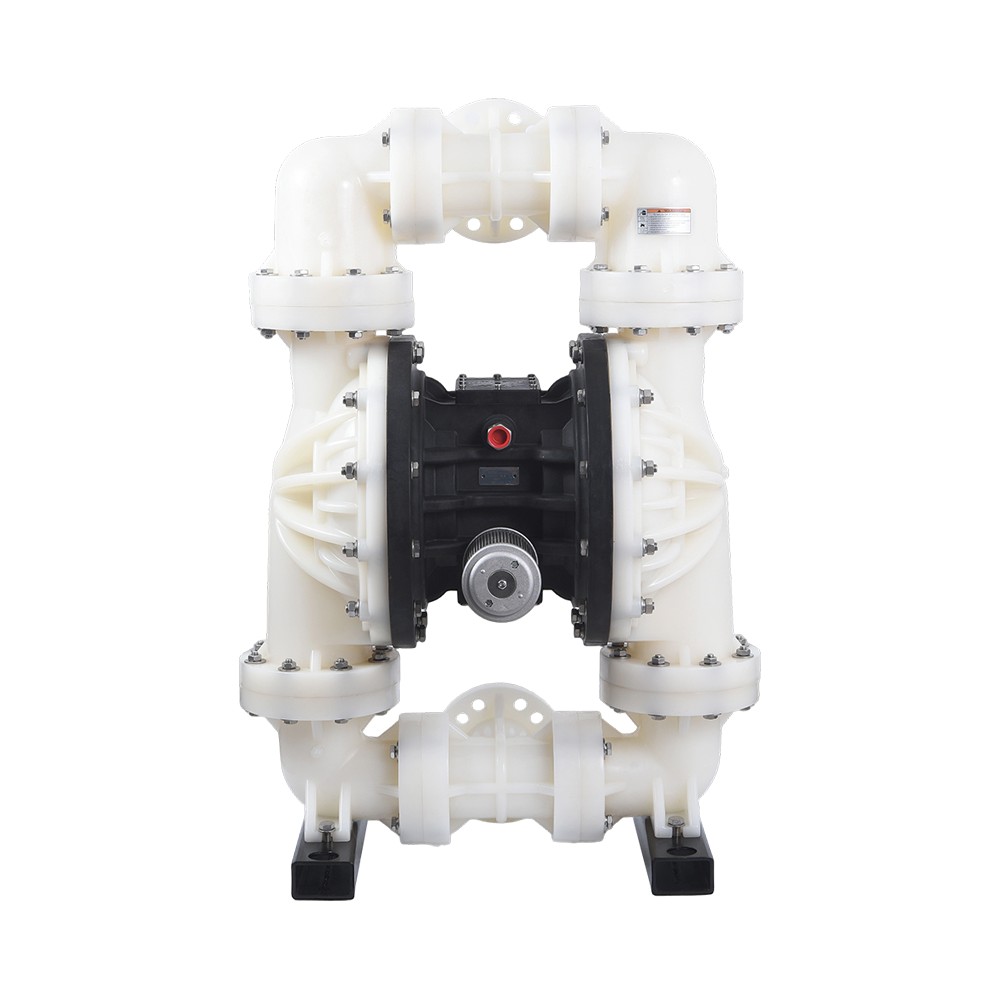
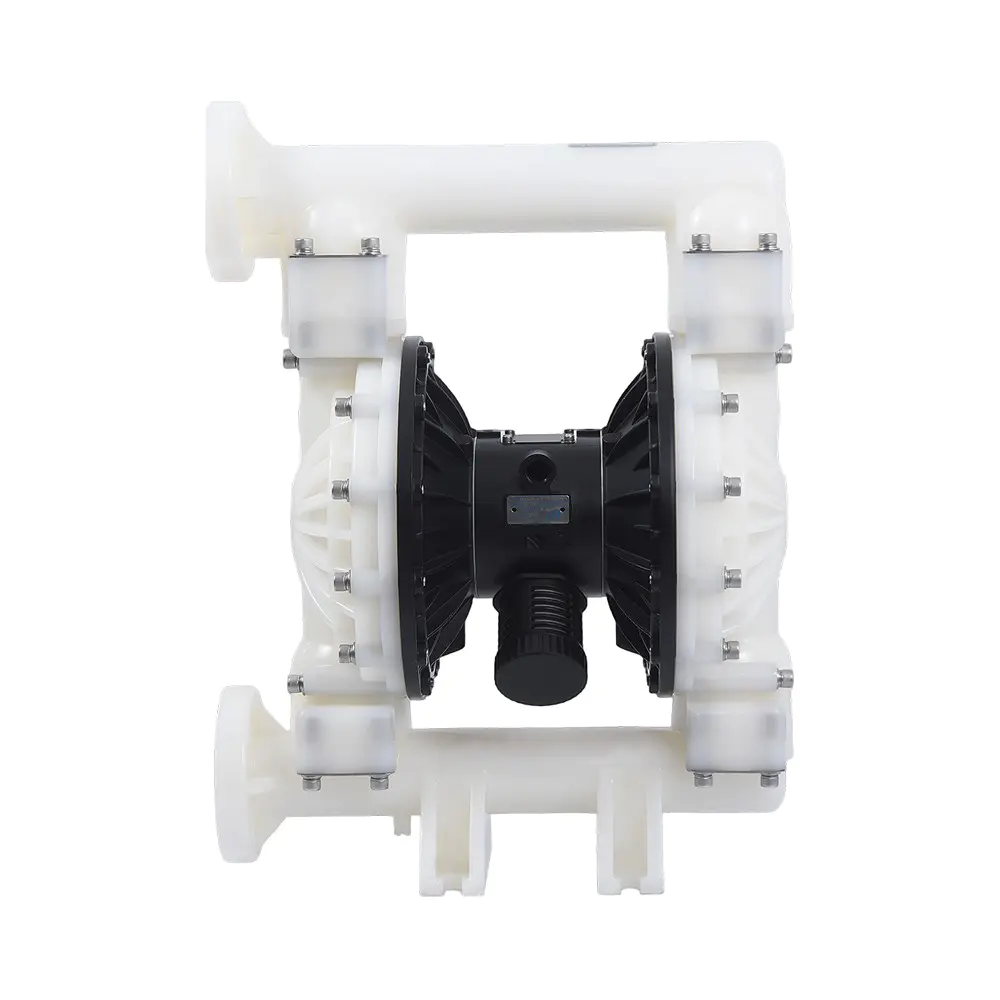
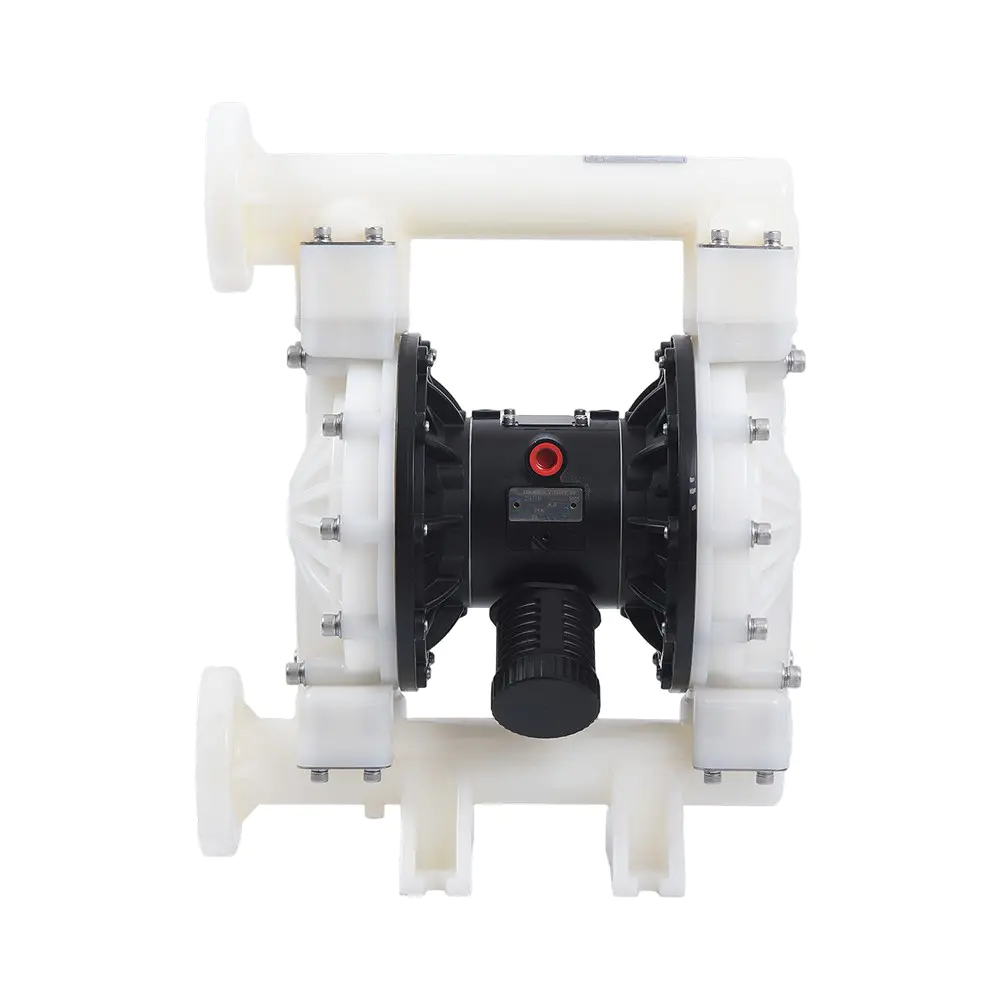
Air-operated units are the usual starting point for these duties: no motor, no rotating seal, and a wetted path that can be matched to the chemical.
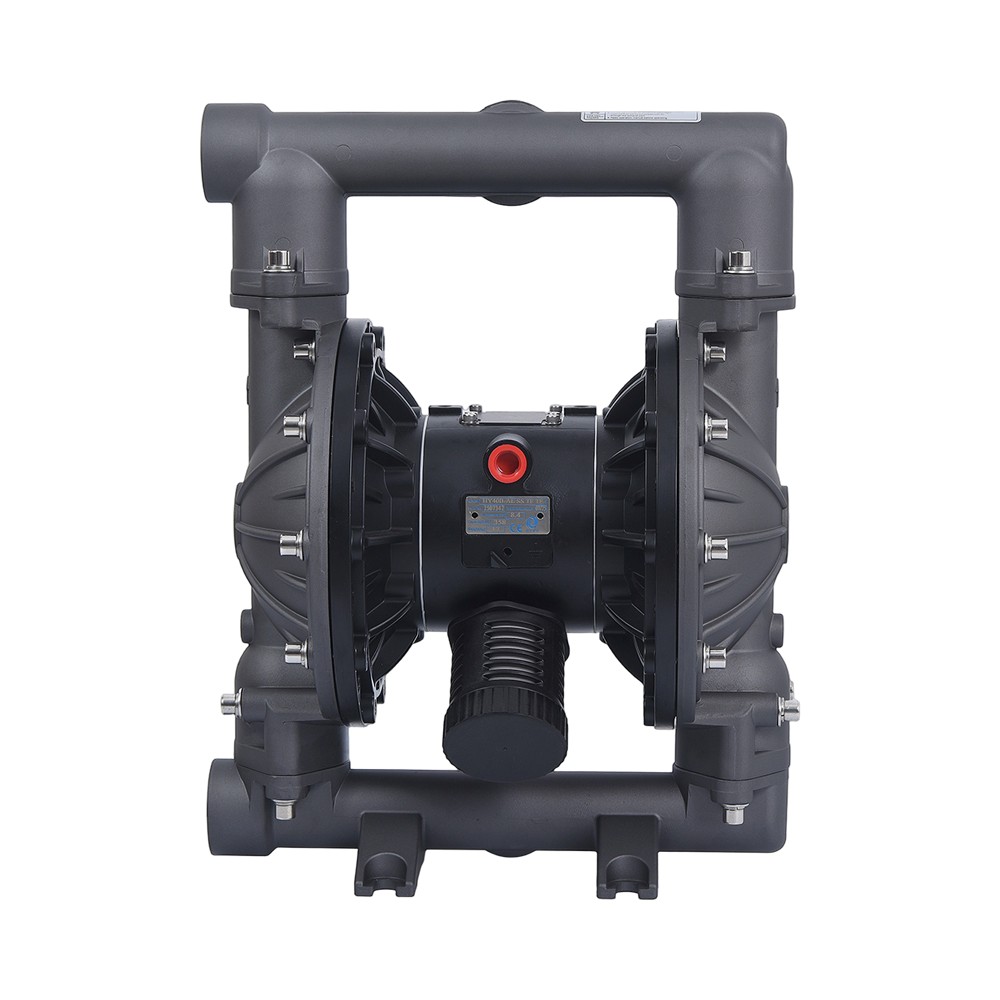 Pneumatic Diaphragm Pump Category for Industrial Fluid TransferReview air-operated diaphragm pump models by wetted material and port size before weighing electric alternatives for plant air constraints.View Product →
When Compressed Air Is Not Available
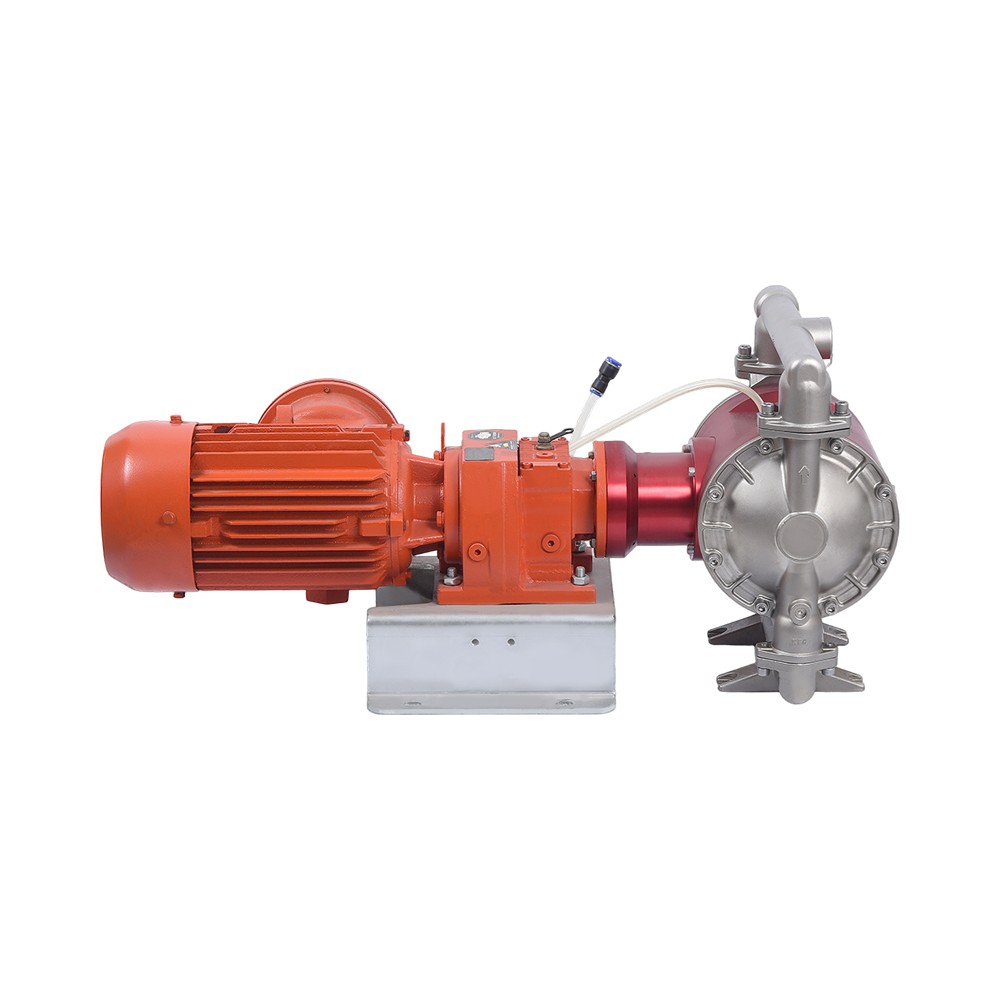
If the plant has no reliable air line, or the compressor is already loaded, an electric diaphragm pump does the same job through a geared motor and crank. You keep self-priming, dry-run tolerance and low shear, but energy use maps to electricity rather than to cubic metres of compressed air, and speed control through a VFD becomes straightforward. What you give up is the inherent explosion protection of an air-driven unit.
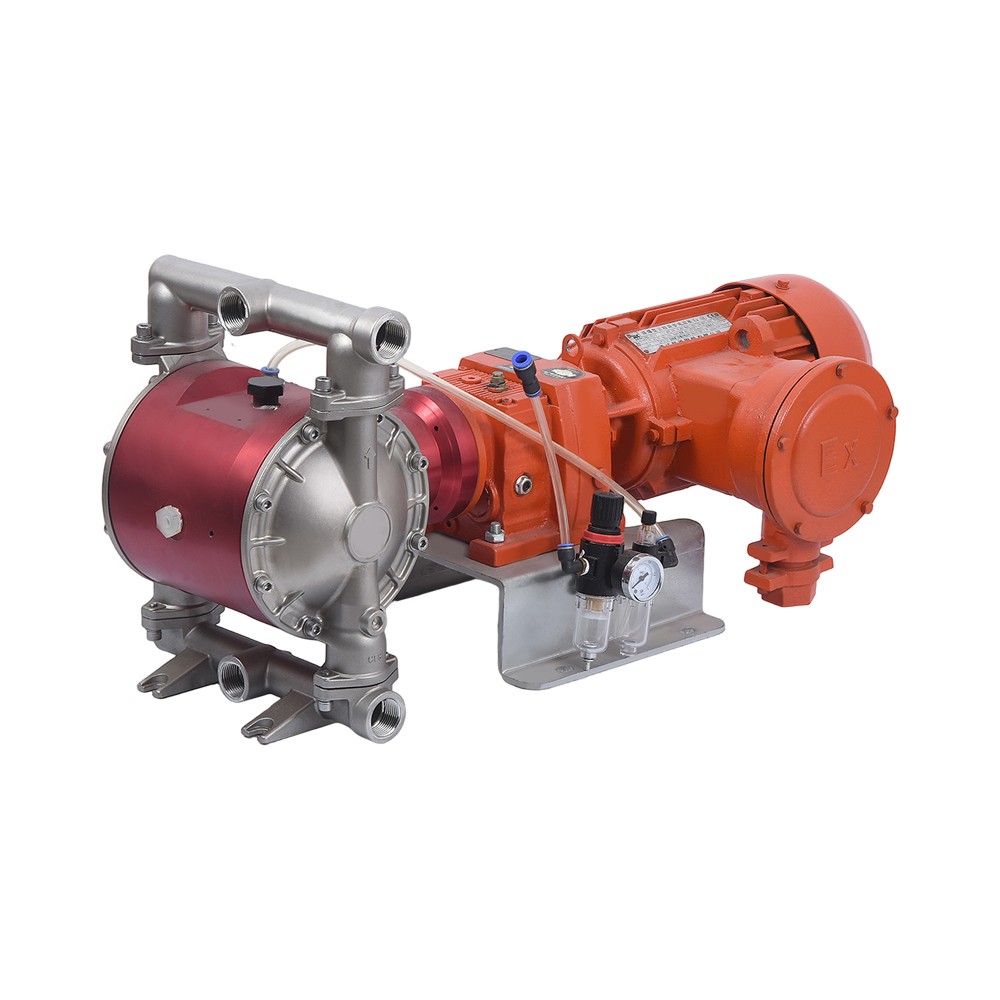 Electric Diaphragm Pump for High-Flow Water TransferSelf-priming 12V/24V DC pump up to 60 L/min and 3.5 bar for water transfer, irrigation, and dewatering without plant air.View Product →
Flow, Pressure and Control in Practice
Control is where the two types diverge most. A centrifugal pump is normally throttled or speed-controlled, and closing a valve simply moves it left along its curve. A diaphragm pump behaves the other way round: because flow barely changes with head, closing a valve raises pressure instead of reducing flow, so a relief valve or bypass is mandatory, and flow is set by air pressure, stroke speed or a VFD.
Pulsation is the second practical difference. An AODD pump delivers flow in peaks and troughs, which shows up as pipe movement, noisy filling and unstable readings on flow meters. A dampener fitted close to the discharge smooths those peaks and protects the instrumentation behind it.
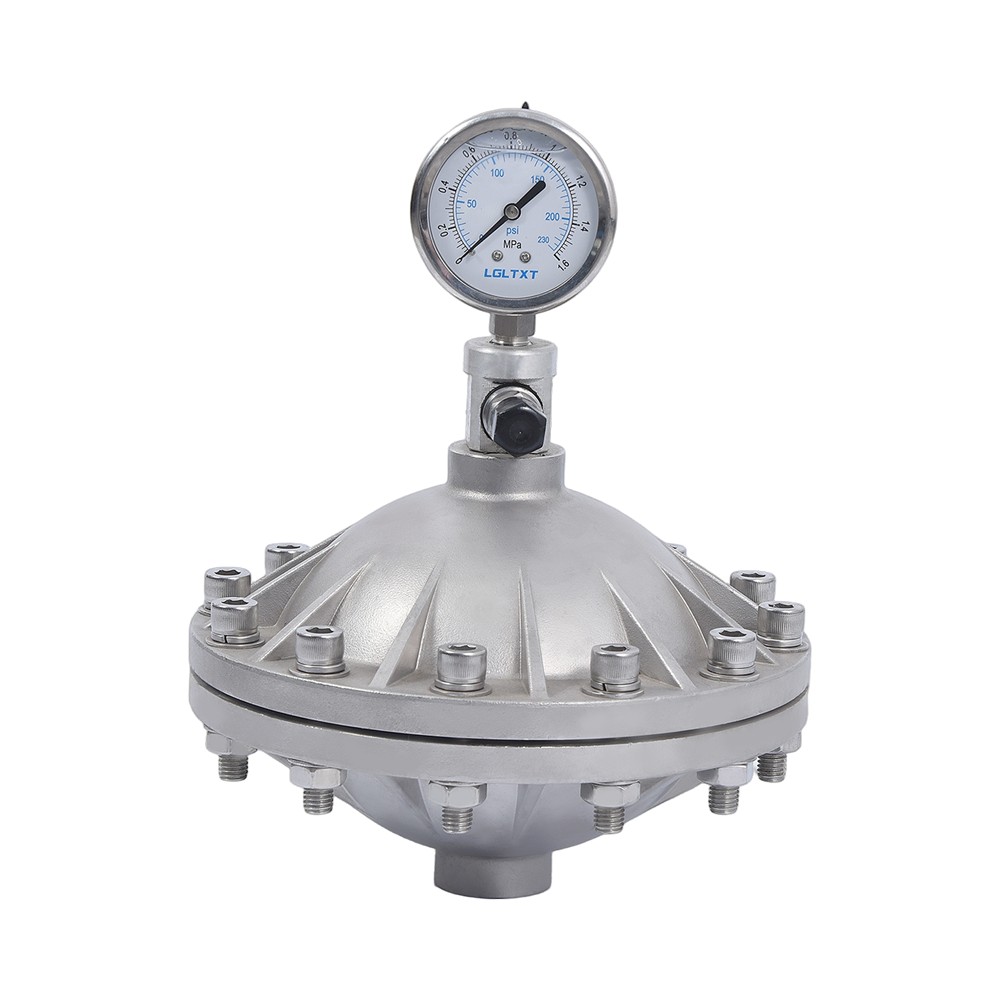 Pulsation Dampener for Air-Operated Diaphragm Pump DischargeAccessory placed near pump discharge to smooth flow peaks and protect downstream instrumentation from pulsation.View Product →
Wetted Materials and Wear Parts
Material choice usually decides whether the pump lasts five years or five months, and it matters more on a diaphragm pump because the wetted path includes the diaphragm itself and the check valves.
| Material | Typical duty | Watch out for |
|---|---|---|
| Aluminium | Oils, solvents, water-based fluids, mild slurries | Not for acids or alkalis; check abrasion |
| 316 stainless steel | Solvents, mild acids, food and pharmaceutical duty | Chloride stress cracking; higher cost and weight |
| Polypropylene | Acids, bases, plating baths, wastewater | Temperature limit of roughly 80 C |
| PVDF | Strong acids, chlorine, aggressive solvents, high-purity work | Highest material cost; limit around 120 C |
Diaphragm and valve elastomers matter just as much: PTFE for chemical resistance, Santoprene or EPDM for abrasion and water, nitrile for oils. We cover aluminium, stainless steel, polypropylene and PVDF wetted paths across our diaphragm pump range, and material selection is normally the first question we ask. Treat the diaphragm as a wear part, confirm the replacement interval and price before you order, and keep one spare set in stores.
A Five-Step Selection Path
- Characterise the fluid: viscosity at pumping temperature, specific gravity, solids size and concentration, shear sensitivity, corrosivity and the temperature range it will actually see.
- Fix the duty point: required flow, suction lift, discharge head, and whether the duty is continuous or intermittent.
- Check the site: is dry, clean compressed air available, is the area hazardous, and is there space for a relief valve and a dampener?
- Compare total cost: add energy or air consumption, diaphragm and valve replacement intervals, and downtime risk to the purchase price.
- Confirm wetted materials and spares, and quote diaphragm and valve part numbers with the pump itself.
FAQ
Can a centrifugal pump handle viscous liquid?
Partly. Up to roughly 200 cps it works with a derated curve. Beyond 500 cps, head and efficiency fall away sharply, and oversizing the pump to compensate simply wastes energy while the flow still disappoints.
Is a diaphragm pump more expensive to run?
Per litre moved, an air-operated unit usually is, because compressed air is an inefficient energy carrier. The comparison changes when the alternative is a centrifugal pump failing every few weeks on an abrasive or viscous duty; then the diaphragm pump wins on total cost of ownership.
Do I need a pulsation dampener?
Not always, but filling, dosing, coating and flow-metered systems benefit most, because smoother flow protects instruments and reduces pipe movement.
The Practical Takeaway
Write the duty down before you choose. Thin, clean fluid at a high, steady flow points to a centrifugal pump controlled by a VFD. Thick, abrasive, shear-sensitive or solids-laden fluid, or a suction line that regularly runs dry, points to a diaphragm pump with the diaphragms treated as a planned wear item. Getting the type right costs nothing at the specification stage, and getting it wrong shows up in the maintenance log every month.