

 EN
EN
 English
 Français
 Español
 عربى
عربىA diaphragm pump achieves true leak-free performance through the combination of a hermetically sealed diaphragm membrane, zero dynamic shaft seals, chemically resistant wetted materials, and precision-engineered check valves — eliminating every potential leakage pathway that conventional pump designs leave exposed.
In industrial environments handling corrosive chemicals, hazardous solvents, pharmaceutical fluids, or food-grade liquids, leak-free diaphragm pumps are not merely a preference — they are a safety and compliance imperative. A single leak can trigger environmental violations, costly downtime, product contamination, or life-threatening exposure. Understanding the engineering principles behind a genuinely leak-free pump helps procurement engineers, plant managers, and maintenance teams make decisions that protect operations and people.
Content
- 1 The Core Principle: Why Diaphragm Pumps Are Inherently Leak-Resistant
- 2 Five Engineering Factors That Determine True Leak-Free Performance
- 3 Diaphragm Pump vs. Other Industrial Pump Types: Leak Risk Comparison
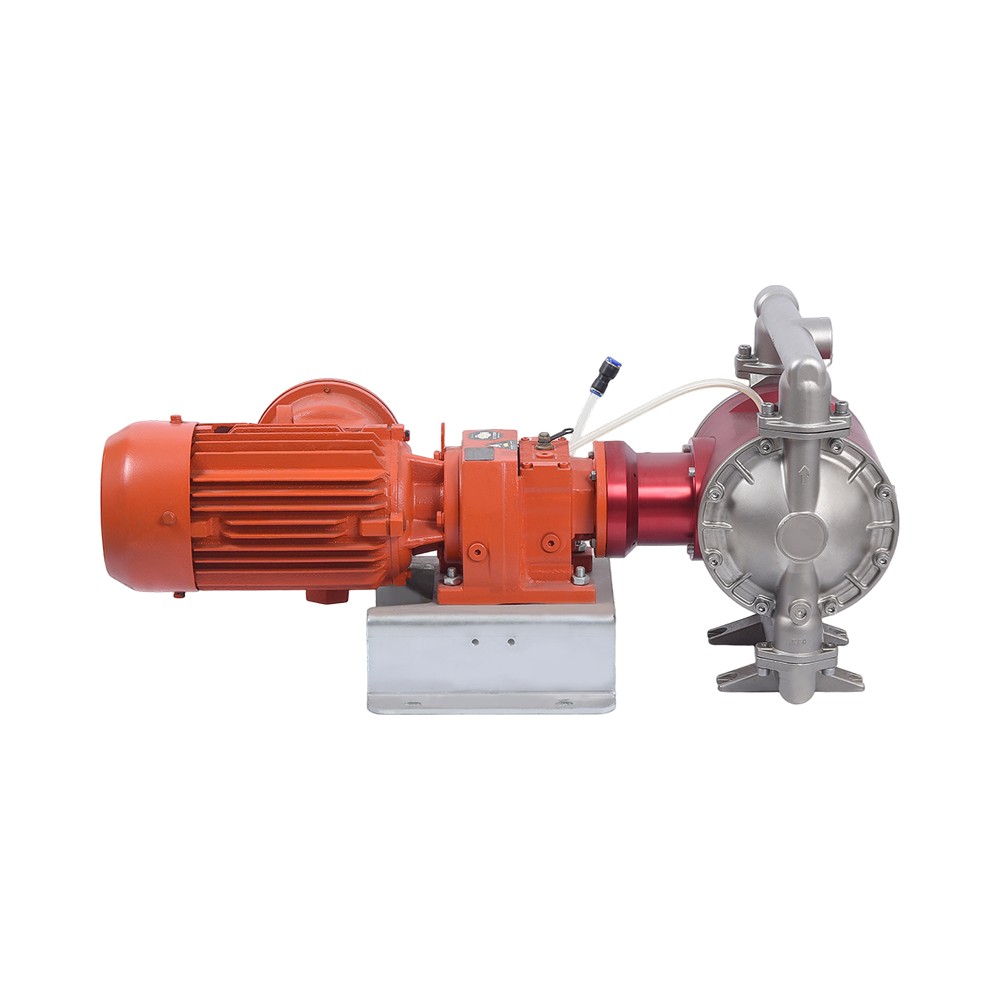
- 4 AODD vs. Electric Motor Diaphragm Pumps: Which Offers Better Leak-Free Reliability?
- 5 Industry-Specific Leak-Free Requirements and Diaphragm Pump Specifications
- 6 How to Verify Leak-Free Performance Before Installation
- 7 Common Mistakes That Compromise Diaphragm Pump Leak-Free Performance
- 8 Frequently Asked Questions: Leak-Free Diaphragm Pumps
- 9 Conclusion: Engineering Leak-Free Into Every Layer
The Core Principle: Why Diaphragm Pumps Are Inherently Leak-Resistant
The fundamental reason a diaphragm pump resists leakage is the complete physical separation between the fluid chamber and the mechanical drive system. Unlike centrifugal pumps or gear pumps, which rely on rotating shafts that pass through the pump casing — creating a dynamic seal interface that wears over time — a diaphragm pump uses a flexible membrane to displace fluid with no shaft penetrating the wetted zone.
This design philosophy eliminates the single most common source of leakage in industrial pumps: the mechanical shaft seal. According to industry surveys, shaft seal failures account for approximately 60–70% of all pump leakage incidents in chemical processing facilities. By removing this component entirely, diaphragm pumps structurally prevent the most frequent failure mode before it can occur.
The diaphragm itself acts as both the pumping element and the containment barrier. When it flexes, it creates positive displacement on one side while remaining sealed on the other — a dual function that no rotating component can replicate without risk.
Five Engineering Factors That Determine True Leak-Free Performance
Achieving zero leakage requires attention to five interdependent engineering parameters — any one of which, if compromised, can defeat the others.
1. Diaphragm Material Selection
The diaphragm membrane material is the single most critical determinant of long-term leak-free reliability. If the membrane degrades due to chemical incompatibility, fatigue, or thermal stress, containment fails regardless of the quality of every other component.
Common diaphragm materials and their industrial use cases include:
- PTFE (Polytetrafluoroethylene): Chemically inert to virtually all industrial solvents and acids; preferred for pharmaceutical, semiconductor, and aggressive chemical applications; operating temperature range up to 200°C.
- EPDM (Ethylene Propylene Diene Monomer): Excellent resistance to water, steam, and mild alkalis; widely used in food-grade and water treatment applications; flexible at low temperatures.
- Santoprene (TPE): Combines rubber flexibility with thermoplastic chemical resistance; suitable for dilute acids and many organic fluids.
- Neoprene: Cost-effective general-purpose material for oils, fuels, and mild chemicals.
- PVDF-backed PTFE composite: Laminated diaphragms offering superior mechanical fatigue life (often exceeding 10 million cycles) combined with PTFE's chemical resistance — the gold standard for demanding industrial duty.
Mismatched diaphragm material is the leading cause of premature membrane failure and subsequent leakage in field installations. Always cross-reference the fluid's pH range, temperature, concentration, and any solvent content against the manufacturer's chemical compatibility chart before specifying a diaphragm material.
2. Check Valve Precision and Seating Integrity
High-quality check valves are equally as important as the diaphragm itself — a worn or poorly seated check valve allows backflow that can manifest as external leakage at pipe connections and fittings. In air-operated double diaphragm (AODD) pumps, four check valves (two inlet, two outlet) must all seat perfectly across the full pressure and viscosity range of the application.
Ball-type check valves offer reliable seating for clean or lightly contaminated fluids. Flap-type valves provide lower pressure drop and better performance with high-viscosity materials such as slurries, adhesives, and pastes. For sanitary applications, tri-clamp mounted check valves with elastomeric seats conforming to USP Class VI or FDA 21 CFR standards ensure both leak-free operation and regulatory compliance.
3. Housing and Manifold Sealing System
Even a perfect diaphragm cannot prevent leakage if the pump housing, manifold joints, or port connections are improperly sealed or manufactured to loose tolerances. The fluid path runs through multiple assembled components, and every joint represents a potential leak point.
Industrial-grade diaphragm pumps use precision-machined mating surfaces with controlled surface roughness (typically Ra ≤ 1.6 μm for sanitary models), combined with captive O-ring grooves or gaskets compressed to exact specifications. Torque-controlled bolted assemblies ensure uniform clamp load across the diaphragm perimeter — uneven clamping is a documented cause of early-life membrane edge failures. Die-cast or injection-molded pump bodies in polypropylene, PVDF, or aluminum alloy maintain dimensional stability across thermal cycles, preventing joint distortion that could compromise seals over time.
4. Air Distribution Valve Design (AODD Pumps)
In air-operated double diaphragm pumps, the air distribution valve must completely isolate the air side from the fluid side — a failure here can result in fluid contamination of the air exhaust or, in worst cases, cross-contamination of process streams.
Modern AODD air valves use a spool-and-sleeve design with precision-lapped surfaces, achieving leak rates below 0.5 standard cubic centimeters per minute (sccm) under normal operating pressure. PTFE-coated spool valves reduce friction and extend valve life, while pilot-operated designs eliminate external pilot air lines that could themselves become leak sources. For hazardous fluid applications, a secondary containment chamber between the diaphragm and the air valve provides an early-warning leak detection zone.
5. Diaphragm Fatigue Life and Predictive Maintenance
A diaphragm pump is only leak-free as long as the membrane remains intact — predictive maintenance based on cycle count monitoring is the most effective strategy to prevent in-service diaphragm ruptures.
Leading pump designs now incorporate diaphragm rupture detectors — pressure sensors or conductivity probes in the intermediate chamber that trigger an alarm and automatic shutdown within milliseconds of membrane failure, before any process fluid reaches the exhaust or environment. Manufacturers typically specify diaphragm replacement intervals based on cycle counts rather than calendar time: for example, 2 million cycles for standard elastomers, or 10+ million cycles for PTFE composite membranes under recommended operating conditions.
Diaphragm Pump vs. Other Industrial Pump Types: Leak Risk Comparison
Compared to centrifugal, gear, and peristaltic pumps, diaphragm pumps offer the most favorable combination of leak-free performance, chemical compatibility, and dry-run tolerance in industrial settings.
| Pump Type | Shaft Seal Required | Primary Leak Risk | Dry-Run Safe | Typical Seal Service Life | Chemical Compatibility |
|---|---|---|---|---|---|
| Diaphragm Pump | No | Membrane fatigue / check valve wear | Yes | 2–10+ million cycles | Excellent (PTFE/PVDF) |
| Centrifugal Pump | Yes | Mechanical shaft seal failure | No | 8,000–20,000 hours | Moderate |
| Gear Pump | Yes | Shaft seal + gear backlash clearances | No | 4,000–10,000 hours | Limited |
| Peristaltic Pump | No | Hose rupture | Yes | 500–2,000 hours (hose life) | Good (hose-dependent) |
| Magnetic Drive Pump | No | Containment shell cracking under thermal stress | No (bearing damage) | Containment shell: 3–7 years | Good |
Table 1: Comparative leak risk and operational characteristics of common industrial pump technologies. Service life figures are indicative and vary by application conditions.
AODD vs. Electric Motor Diaphragm Pumps: Which Offers Better Leak-Free Reliability?
Both air-operated double diaphragm (AODD) and electrically driven diaphragm pumps can achieve leak-free operation, but they differ in how they manage energy transfer, stall behavior, and explosion-proof compliance.
| Feature | AODD Pump | Electric Diaphragm Pump |
|---|---|---|
| Drive medium | Compressed air | Electric motor (AC/DC) |
| Stall-safe behavior | Yes — stalls safely at line pressure | Requires overload protection |
| ATEX / explosion-proof | Inherently safe (no electrical parts near fluid) | Requires certified ATEX motor |
| Flow control precision | Moderate (air pressure regulation) | High (VFD-controllable) |
| Energy efficiency | 25–35% (compressed air losses) | 60–80% |
| Diaphragm leak detection | Intermediate chamber sensor optional | Intermediate chamber sensor optional |
Table 2: AODD versus electric diaphragm pump comparison across key leak-free and operational parameters.
For hazardous area classifications (ATEX Zone 1/2 or NEC Class I Division 1/2), AODD pumps provide an inherent safety advantage because there are no electrical components in proximity to the fluid. For high-precision dosing in pharmaceutical or semiconductor fabs, electrically driven diaphragm metering pumps with servo-controlled stroke length offer superior repeatability (typically ±0.5% of set point), with leak-free performance maintained through the same diaphragm-based containment principles.
Industry-Specific Leak-Free Requirements and Diaphragm Pump Specifications
Different industries impose distinct standards for what constitutes "leak-free," and diaphragm pumps must be specified to meet the relevant regulatory framework for each application sector.
Chemical Processing
ATEX/IECEx certification for explosive atmospheres, fugitive emission compliance per ISO 15848-1, and secondary containment are standard requirements. PTFE-lined pump bodies with PVDF-backed PTFE diaphragms are preferred for concentrated acids and strong oxidizers. Leak rates must meet EPA Method 21 volatile organic compound (VOC) thresholds — typically below 500 ppm at the pump envelope.
Pharmaceutical and Biotech
FDA 21 CFR Part 11 traceability, USP Class VI or USP <661> extractable/leachable compliance for wetted elastomers, and 3-A Sanitary Standards (where dairy/food-contact applies) define the leak-free standard. Electropolished 316L stainless steel pump bodies with EPDM or silicone diaphragms validated for CIP/SIP cycles at 135°C are typical. Diaphragm rupture detectors are mandatory in many GMP environments.
Mining and Slurry Handling
Abrasion-resistant wetted materials (natural rubber, polyurethane, or Buna-N diaphragms) combined with large-bore ball check valves that can pass solids up to 75mm diameter characterize leak-free diaphragm pump designs in mineral processing. The pump's stall-safe behavior under deadhead conditions is particularly valued, as pipeline blockages are common — an AODD pump will simply stop rather than building pressure that ruptures seals.
Semiconductor and Electronics Manufacturing
Ultra-high-purity (UHP) diaphragm pumps for semiconductor wet processing use all-PTFE or all-PVDF fluid paths, with particle generation limits below 50 particles per milliliter at 0.1 μm and extractable metal ion levels in the sub-ppb range. Weld-free, all-compression-fit fluid circuits with diaphragm rupture detection ensure zero process fluid contamination of the fab environment.
How to Verify Leak-Free Performance Before Installation
Factory acceptance testing (FAT) with hydrostatic pressure testing to 1.5× maximum operating pressure, combined with helium mass spectrometer leak testing for critical applications, provides quantifiable verification that a diaphragm pump meets its leak-free specification before it enters service.
A robust pre-installation verification protocol should include:
- Hydrostatic pressure test: Hold at 1.5× maximum allowable working pressure (MAWP) for 30 minutes with zero pressure drop tolerance.
- Check valve seat test: Apply back-pressure at rated working pressure and measure leakage past each valve — acceptable limit is typically < 0.01% of rated flow per minute.
- Diaphragm rupture detector functional test: Introduce a controlled pressure signal to the intermediate chamber and verify alarm and auto-shutdown response within the specified time (typically < 500 ms).
- Operational run test: Minimum 2-hour continuous run at rated conditions with UV-fluorescent tracer dye to detect any micro-weeping at joints or fittings.
- Material certification review: Confirm diaphragm material lot certificates, O-ring compound certifications, and housing material mill test reports against specification.
Common Mistakes That Compromise Diaphragm Pump Leak-Free Performance
Most in-service diaphragm pump leaks are preventable — they trace back to specification errors, installation oversights, or maintenance lapses rather than inherent design flaws.
- Incorrect diaphragm material for the fluid: The most common specification error. Always verify full chemical compatibility including concentration, temperature, and any trace impurities.
- Operating beyond rated pressure: Exceeding MAWP accelerates diaphragm fatigue exponentially. Even brief pressure spikes from downstream valve closures can initiate micro-cracking in the membrane flex zone.
- Improper pipe support: Unsupported pipe weight induces bending stress at pump inlet/outlet connections, deforming gasket surfaces and creating leak paths. All pump connections should be independently supported within 300mm of the pump port.
- Frozen or iced air supply (AODD pumps): Moisture in the compressed air supply can freeze the air valve at sub-zero ambient temperatures, causing erratic operation and rapid diaphragm wear from unbalanced cycling.
- Neglecting diaphragm replacement intervals: Operating beyond the manufacturer's specified replacement cycle treats the maintenance budget as more important than containment integrity — a false economy when processing hazardous fluids.
Frequently Asked Questions: Leak-Free Diaphragm Pumps
Conclusion: Engineering Leak-Free Into Every Layer
A truly leak-free diaphragm pump is not the result of any single feature — it is the outcome of correctly specifying, installing, operating, and maintaining every element of the pump system.
The diaphragm membrane provides the foundational containment. The check valves ensure directional integrity. The housing and manifold assembly maintain joint sealing across thermal and mechanical cycles. The air distribution system (in AODD designs) or servo drive (in electric diaphragm pumps) delivers energy without penetrating the fluid boundary. And diaphragm rupture detection closes the loop by converting the rare event of membrane failure from a silent leak into an immediate, controlled shutdown.
For plant engineers evaluating industrial diaphragm pump options, the questions to ask are not simply "does this pump have a diaphragm?" but rather: Is the diaphragm material compatible with every constituent of my process fluid across its full temperature range? Are check valves sized and typed for my fluid's viscosity and particulate content? Does the housing tolerate my site's thermal cycling? Is diaphragm rupture detection included or available? And does the maintenance program include cycle-count-based diaphragm replacement?
Answer those questions correctly, and a diaphragm pump will deliver the leak-free performance that industrial processes demand — not just on day one, but reliably across years of demanding service.