

 EN
EN
 English
 Français
 Español
 عربى
عربىThe short answer: how to choose a diaphragm pump starts with defining your fluid’s viscosity, chemical composition, solids content, and required flow and pressure. Then match those parameters to the right pump materials, drive type, port size, and operating environment – not the other way around. A pump that works flawlessly with water will fail in hours with abrasive slurry if you ignore material compatibility and fluid dynamics.
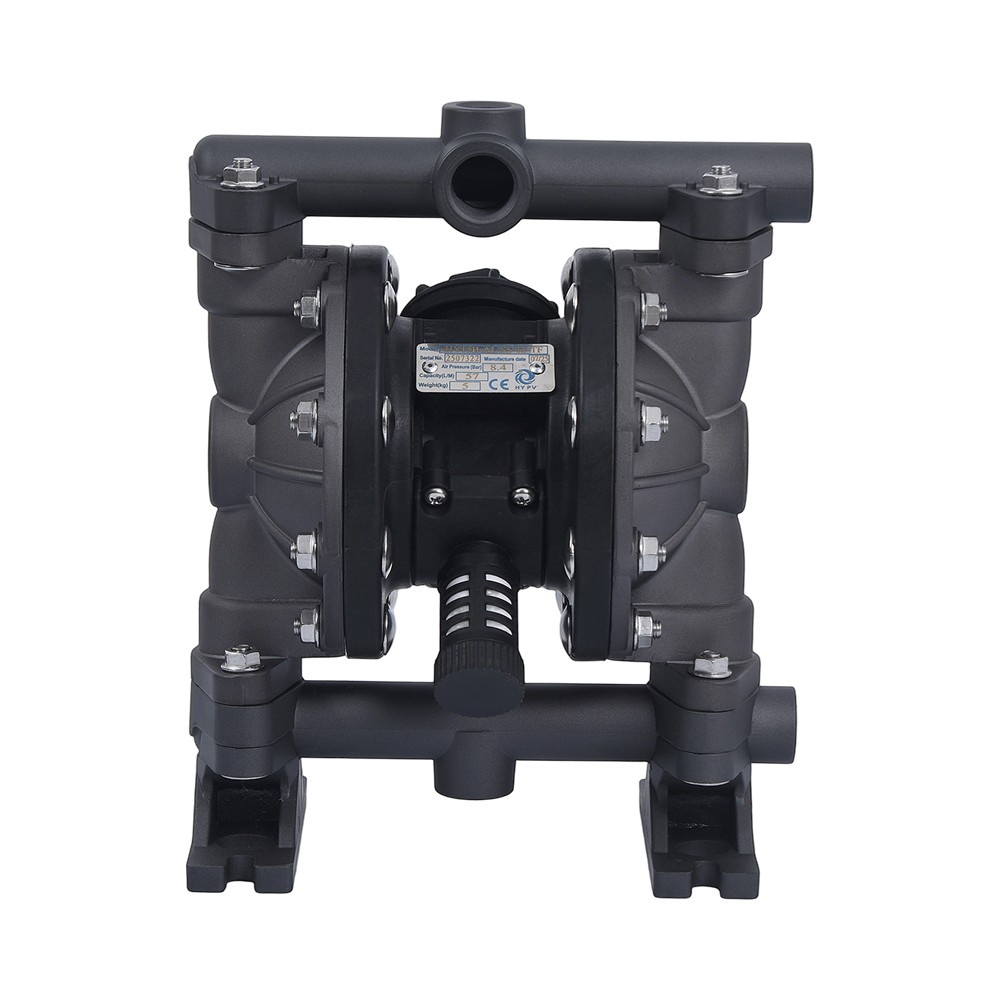
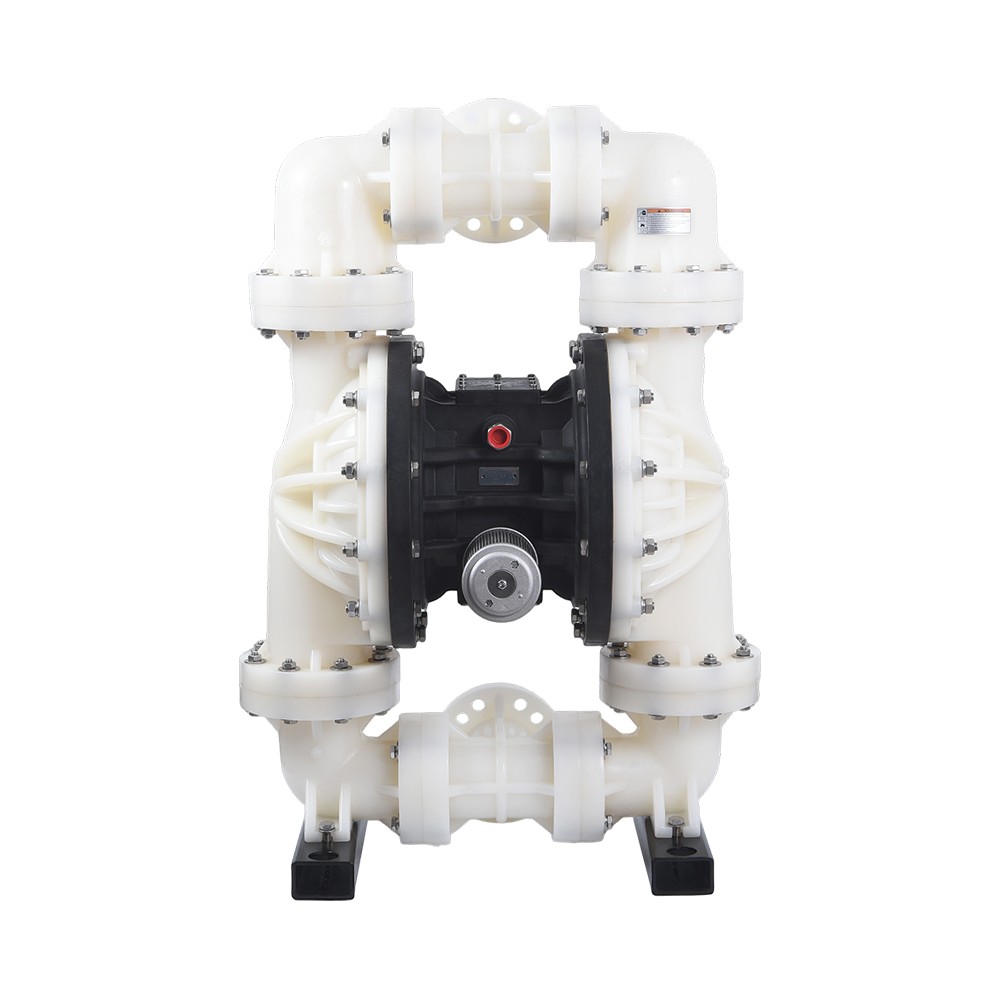
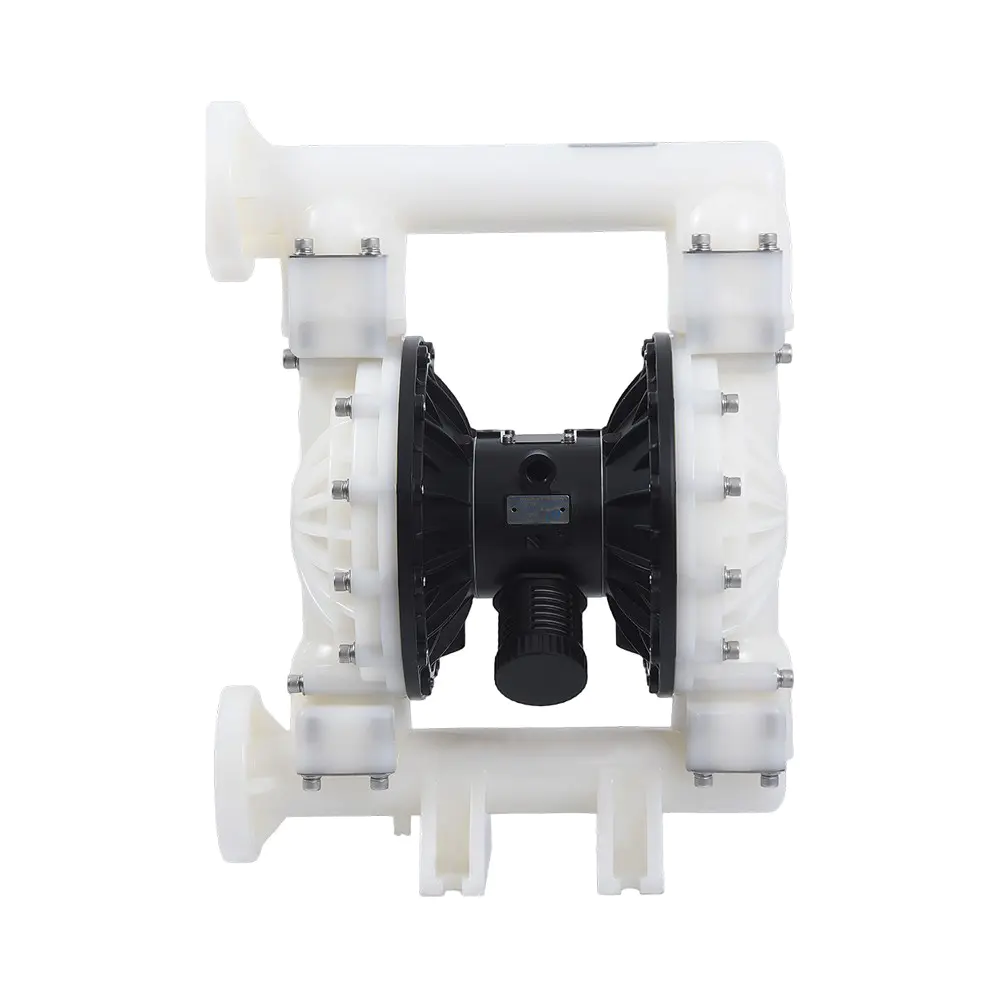
A diaphragm pump is a positive displacement pump that uses a reciprocating diaphragm to move fluid. The diaphragm is flexed by mechanical, hydraulic, or compressed‑air action, creating a vacuum that draws fluid in, then pushes it out through a check valve system. Because there are no rotating seals or shafts exposed to the liquid, diaphragm pumps are inherently leak‑free and can run dry without damage, making them indispensable for chemical transfer, mining dewatering, food processing, and pharmaceutical applications.
Every year, facilities waste an estimated 15–30% of pump‑related energy and maintenance budgets simply because they select a diaphragm pump based on price or brand familiarity rather than engineering fit (Hydraulic Institute, 2022 Pump Life Cycle Cost guide). This article gives you a data‑driven, step‑by‑step framework on how to choose a diaphragm pump that will actually perform, with concrete numbers, comparison tables, and no filler.
Content
- 1 1. Profile the Fluid Before You Look at a Single Pump
- 2 2. Pin Down Required Flow Rate and Discharge Pressure
- 3 3. Choose Diaphragm and Check Valve Materials for Life, Not Just Price
- 4 4. Decide Between Air‑Operated and Electric Diaphragm Pumps
- 5 5. Match Port Size and Connection Type to Real Piping
- 6 6. Calculate Life Cycle Costs, Not Just Purchase Price
- 7 7. Audit Noise, Pulsation, and Installation Constraints
- 8 Frequently Asked Questions on How to Choose a Diaphragm Pump
- 9 Summary: The Diaphragm Pump Selection Flow
1. Profile the Fluid Before You Look at a Single Pump
The fluid determines 80% of the pump selection. Ignore the fluid chemistry and physical properties, and you will choose the wrong diaphragm, wrong body material, and wrong check valve geometry. Start with these three physical parameters.
Viscosity and Suspended Solids
Diaphragm pumps can handle from 1 cP (water) to over 100,000 cP, but the flow characteristics change dramatically above 5,000 cP. At low viscosity, an air‑operated double‑diaphragm (AODD) pump easily achieves 90% of its rated flow. At 20,000 cP (similar to honey at room temperature), the same pump may lose 40–60% of its maximum flow due to friction losses in the check valves and manifold. For high‑viscosity fluids, you need ball‑style check valves with larger clearance and slower cycle rates. If the fluid contains solids, measure the maximum particle size. Standard diaphragm pumps pass solids up to 1/8 inch (3.2 mm) with standard ball checks. For slurries containing particles up to 3 inches (76 mm), select a pump with flap‑valve or duckbill check designs and an open flow path. Data from the U.S. Department of Energy’s Pumping System Assessment Tool indicates that a 1‑inch solids passage requires at least a 2‑inch port pump to avoid clogging when solids concentration exceeds 8% by weight.
Chemical Compatibility and Temperature
Match the diaphragm and body material to the fluid’s pH, solvent content, and operating temperature, not just a generic compatibility chart. A fluid that is harmless to stainless steel at 70°F can become corrosive at 180°F. For example, sulfuric acid at concentrations below 70% and 100°F can be handled by polypropylene body with PTFE diaphragm, but at 93% concentration and 150°F, it requires PVDF body and PTFE‑lined diaphragm with EPDM backup. Use the Chemical Compatibility Database from the National Association of Corrosion Engineers (NACE) or manufacturer‑specific immersion test data for concentrations above 30%. The table below summarizes common material families for the wetted path.
| Wetted Material | Best for | Temp. Limit | Avoid |
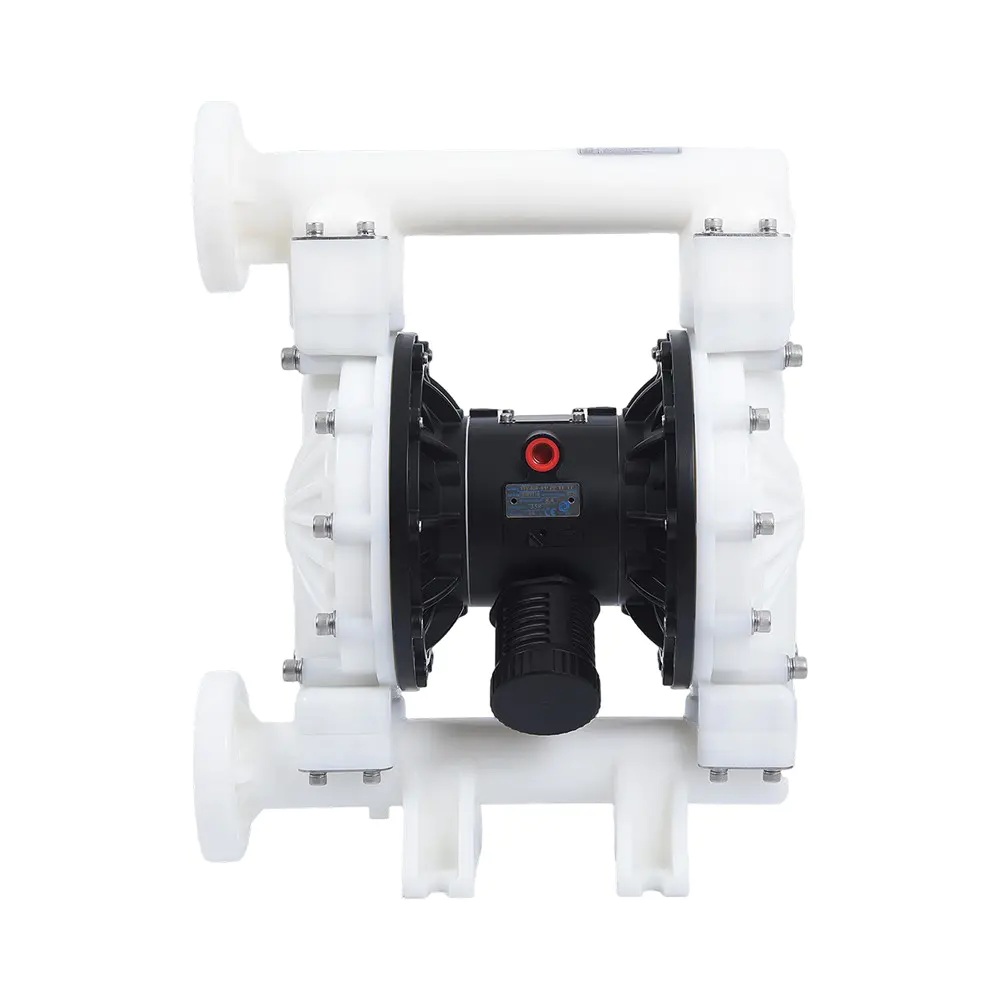
| Polypropylene (PP) | Acids, bases, aggressive chemicals | 180°F (82°C) | Strong oxidizers, aromatics |
| PVDF (Kynar) | Strong acids, halogens, high temp. | 220°F (104°C) | Fuming sulfuric acid, ketones |
| Aluminum | Non‑corrosive oils, fuels | 300°F (149°C) | Water‑based fluids, caustics |
| Stainless Steel 316 | Sanitary, high‑purity water, solvents | 350°F (177°C) | Hydrochloric acid, chlorides |
Table: Common diaphragm pump body materials and their basic application envelopes. Always verify with an immersion test at process concentration and temperature.
2. Pin Down Required Flow Rate and Discharge Pressure
Never size a diaphragm pump by horsepower alone – calculate the actual system curve from flow and total dynamic head. AODD pumps are typically rated up to 284 GPM (1,075 L/min) and 125 psi (8.6 bar) discharge pressure, while mechanically driven diaphragm pumps can reach 1,200 GPM and 350 psi. But real‑world flow drops sharply when you push against system backpressure. At 80 psi air inlet, a 2‑inch AODD pump will deliver approximately 150 GPM at 20 psi discharge, but only 90 GPM at 70 psi discharge (based on performance curves for a standard 2:1 ratio air section). To avoid under‑delivery, map your system’s total pressure loss: static lift + friction losses in piping + any filter/valve resistance. Add a 10% safety factor. Then match the pump’s mid‑range performance curve point, not its maximum. According to the Hydraulic Institute (ANSI/HI 10.1‑10.5), operating a diaphragm pump between 40% and 80% of its maximum rated capacity yields the longest diaphragm life and lowest pulsation.
If your process needs 30 GPM at 40 psi, a 1‑inch AODD pump with 1.5‑inch manifolds will operate near 60% stroke rate, giving you room to increase flow without oversizing. Oversizing leads to excessive cycling, accelerated diaphragm fatigue, and wasted compressed air. For continuous chemical dosing at 5 GPM against 60 psi, an electric‑driven diaphragm pump with variable speed control consumes 70% less energy than a continuously cycling AODD pump, per a 2021 U.S. Department of Energy case study on chemical feed systems.
3. Choose Diaphragm and Check Valve Materials for Life, Not Just Price
The diaphragm material dictates maintenance intervals and chemical resistance, not the pump brand. A low‑cost neoprene diaphragm may last 500 hours in a mild chemical but fail in 20 hours with acetone. Use the data below to select a diaphragm that gives at least 4,000–8,000 hours under your conditions.
| Diaphragm Material | Flex Life (relative) | Temp. Range | Ideal Fluids | Avoid |
| Buna‑N (Nitrile) | High (8,000+ h) | ‑20°F to 180°F (‑29°C to 82°C) | Oils, fuels, non‑polar solvents | Strong oxidizers, ketones |
| PTFE (Teflon) | Moderate (2,000–5,000 h) | ‑40°F to 220°F (‑40°C to 104°C) | Aggressive acids, solvents, pure chemicals | Molten alkali metals, some fluorine compounds |
| Santoprene | Very high (10,000+ h) | ‑10°F to 200°F (‑23°C to 93°C) | Abrasives, water‑based, acids | Strong solvents, aromatics |
| EPDM | High (7,000+ h) | ‑30°F to 250°F (‑34°C to 121°C) | Hot water, steam, polar solvents | Oils, hydrocarbons |
Table: Diaphragm material selection guide based on flex life data from accelerated life testing and published chemical compatibility charts. Flex life hours are approximate for clean fluids at moderate temperature and pressure.
Check valves follow the same material logic. Abrasive slurries demand hardened stainless steel or tungsten carbide balls and seats, while hygienic applications need 316L stainless steel or EPDM‑encapsulated balls. For semi‑solids with stringy materials, use flap valves that pass debris without jamming. The valve material choice alone can extend mean time between repairs from 500 hours to over 5,000 hours in kaolin clay transfer (data from a 2023 mining operation audit in Western Australia).
4. Decide Between Air‑Operated and Electric Diaphragm Pumps
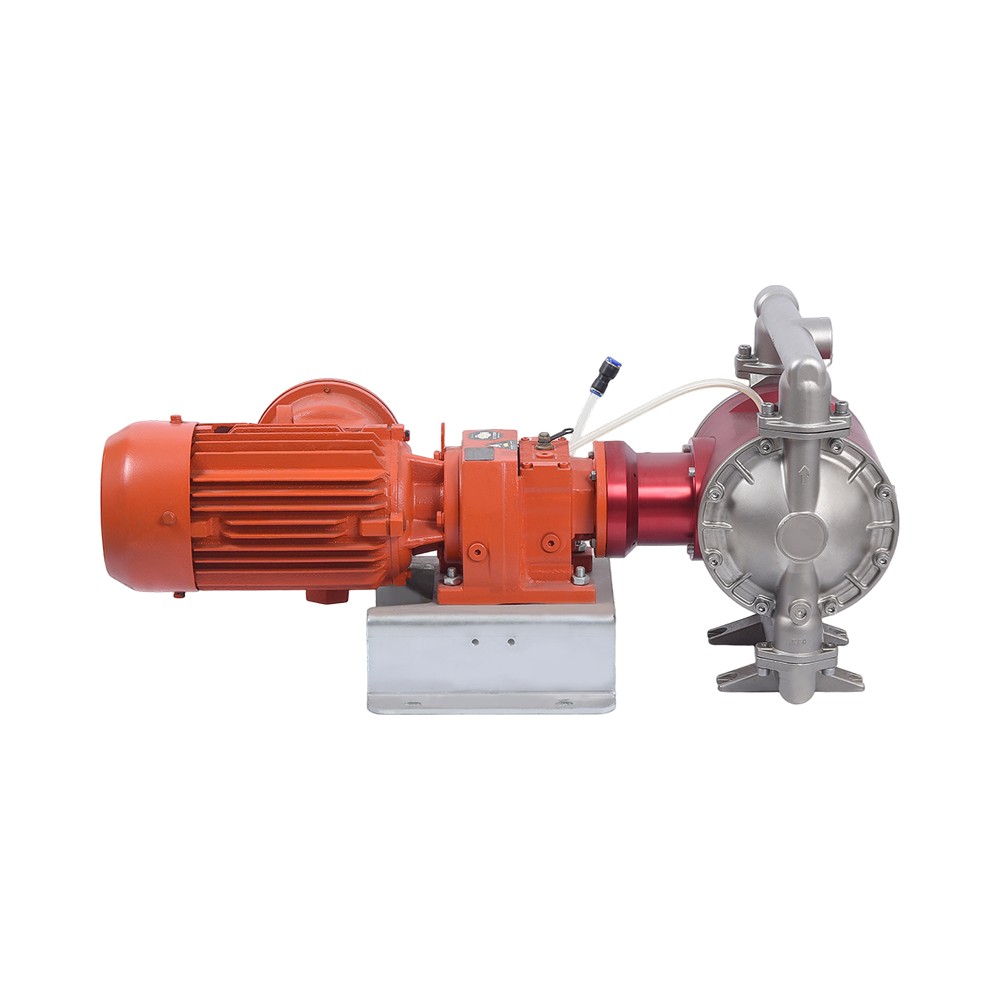
For portability and explosion‑proof operation, choose an AODD pump; for energy efficiency and precise metering, choose an electric diaphragm pump. The operating cost difference is stark: a 1‑inch AODD pump consuming 20 SCFM of compressed air at 100 psi costs roughly $1.80 per hour in electricity (assuming $0.08/kWh and compressor efficiency of 4 SCFM per HP). An equivalent electric diaphragm pump delivering the same flow costs about $0.35 per hour – an 80% reduction. But AODD pumps remain the primary choice in chemical plants and refineries because they are intrinsically safe, can run dry, and have no electrical components to certify. The table below highlights the practical differences.
| Factor | AODD Pump | Electric Diaphragm Pump |
| Drive | Compressed air | Electric motor with eccentric or hydraulic drive |
| Energy cost per 100 GPM | $4.50 – $6.80 | $0.90 – $1.60 |
| Max pressure typical | 125 psi (8.6 bar) | 350 psi (24 bar) |
| Flow control | Adjust air pressure/flow | VFD or stroke adjustment |
| Dry‑run capable | Yes, unlimited | Yes, but check oil‑lubricated drives |
| ATEX / explosion proof | Inherently safe | Requires certified motor |
Table: Head‑to‑head comparison of AODD and electric diaphragm pump characteristics. Energy cost estimates based on U.S. average industrial electricity and compressed air costs (2024).
5. Match Port Size and Connection Type to Real Piping
Port size is not the same as pump capacity – it is a velocity governor. A 2‑inch port on an AODD pump can pass 160 GPM, but if the discharge pipe is 1.5 inches, the fluid velocity exceeds 25 ft/s, causing massive friction loss and potential water hammer. For thin, non‑abrasive fluids, keep suction velocity under 4 ft/s and discharge velocity under 8 ft/s. For abrasive slurries, cap both at 3–5 ft/s to extend pipe and valve life. Using a simple rule from the Cameron Hydraulic Data book: a 2‑inch schedule 40 pipe carries 100 GPM at 8.3 ft/s. If your target is 100 GPM, a 2‑inch flanged connection works. For 50 GPM, a 1.5‑inch connection is better.
Connection type matters for maintenance. Tri‑clamp (sanitary) connections are mandatory for food, pharma, and biotech. Flanged connections (ANSI 150#) simplify maintenance on large industrial pumps. Threaded NPT/BSP connections work for smaller, fixed installations but become a maintenance headache if you swap pumps frequently. Quick‑coupling systems reduce downtime by 60% in portable dewatering setups, according to field data from a European rental pump fleet.
6. Calculate Life Cycle Costs, Not Just Purchase Price
The purchase price of a diaphragm pump is only 10–15% of its 10‑year total cost of ownership. Energy and maintenance dominate. An AODD pump with a $1,200 price tag can consume $15,000 in compressed air over 5 years if operated continuously at high pressure. Electric diaphragm pumps cost 2–3 times more upfront but recover the difference in 12–18 months through energy savings alone. Map your expected runtime: if the pump runs more than 2,000 hours per year, the electric option almost always wins on net present value. Use this checklist to estimate true cost:
- Energy cost per hour – calculate air consumption (SCFM) times electricity cost per HP‑hour for AODD, or motor kW times rate for electric.
- Diaphragm replacement interval – typical 2,000 to 8,000 hours; labor + part cost per event.
- Check valve and seat replacement – every 1–3 diaphragm changes for abrasive service.
- Downtime cost – if the pump feeds a continuous process, lost production can exceed $10,000 per hour.
- Disposal cost – spent diaphragms and seats in hazardous service must be handled as regulated waste.
For instance, a food plant transferring tomato paste at 50 GPM saw diaphragm failure every 600 hours with a standard Buna‑N diaphragm. Switching to a food‑grade EPDM diaphragm with a PTFE overlay extended life to 2,200 hours, reducing annual maintenance cost from $11,400 to $3,100 (based on $85 labor rate and $120 diaphragm cost). The material upgrade paid back in 4 months.
7. Audit Noise, Pulsation, and Installation Constraints
A diaphragm pump that meets hydraulic specs but violates noise or pulsation limits will cause operator complaints and pipe fatigue. A typical 2‑inch AODD pump generates 85–92 dBA at 3 feet, exceeding the OSHA 8‑hour TWA limit of 90 dBA without hearing protection. If installed in an occupied area, you must specify an integral muffler or install a remote exhaust system. Electric diaphragm pumps typically produce 68–75 dBA, well within continuous exposure limits.
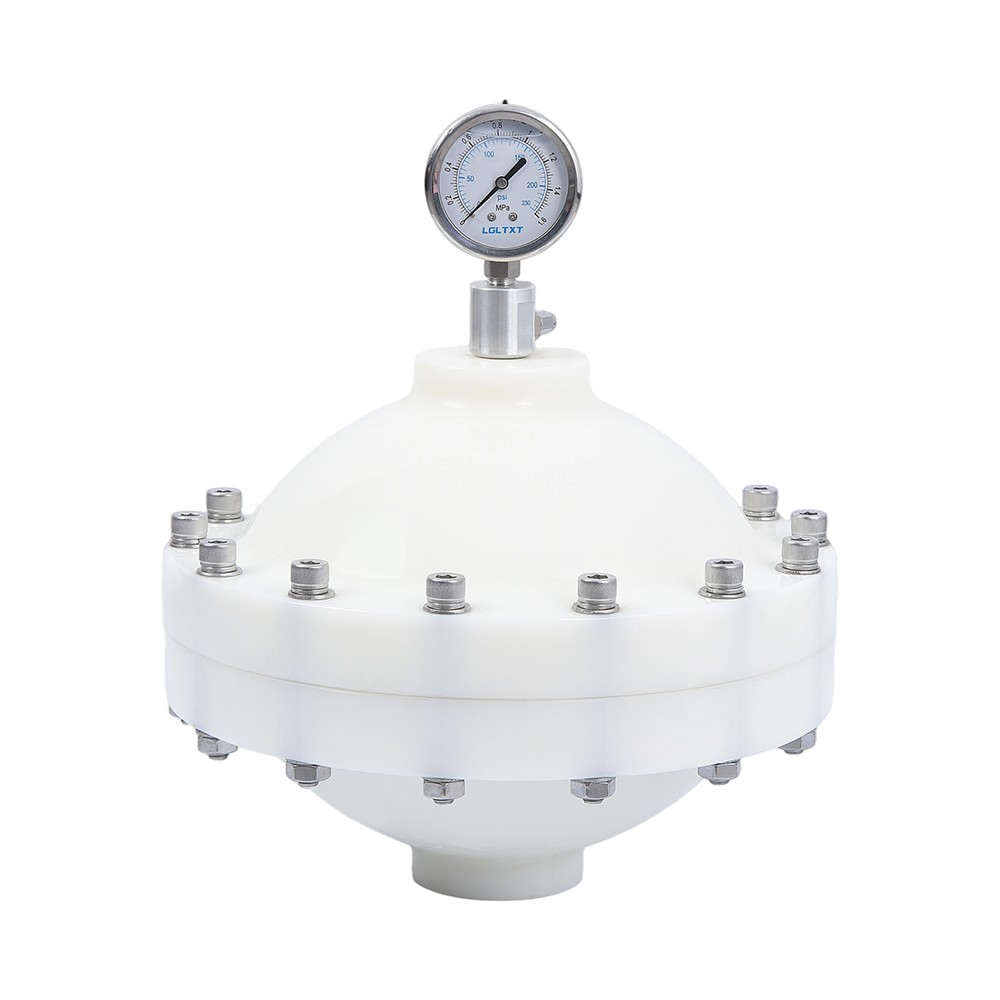
Pulsation is inherent to reciprocating positive displacement pumps. A single‑diaphragm pump creates up to 15% flow variation; dual‑diaphragm AODD designs reduce this to 5–8%. For precision spray or metering applications, add a pulsation dampener or surge suppressor sized at 10–15 times the pump’s displacement per stroke. A 2020 technical paper from the Fluid Sealing Association showed that a properly sized dampener reduces peak pressure spikes by 70% and extends downstream pipe and valve life by 3–5 years.
Mounting orientation also affects diaphragm life. Most AODD pumps can be mounted in any orientation, but vertical discharge‑up configurations can trap air and cause erratic cycling if not properly primed. In submersible applications, ensure the air exhaust is piped above the liquid level to prevent water ingestion.
Frequently Asked Questions on How to Choose a Diaphragm Pump
Can a diaphragm pump run dry?
Yes, diaphragm pumps can run dry indefinitely without damage, which is one of their biggest advantages over centrifugal pumps. This makes them ideal for tank emptying, sump dewatering, and applications where the fluid supply is intermittent. However, prolonged dry running of electric diaphragm pumps may cause overheating in the drive mechanism if not properly ventilated.
What is the maximum solids size a diaphragm pump can pass?
With flap‑valve configurations, large AODD pumps can pass solids up to 3 inches (76 mm) in diameter. Standard ball‑check pumps are limited to about 1/4 inch to 1/2 inch, depending on port size. For stringy or fibrous solids, flap or duckbill valves are necessary to prevent clogging.
How often should diaphragms be replaced?
Diaphragm life ranges from 500 to over 10,000 hours depending on material, fluid abrasiveness, temperature, and cycle rate. A preventive maintenance schedule based on your measured stroke count (e.g., replace every 20 million cycles) is more reliable than calendar‑based intervals. Most industrial users replace Buna‑N diaphragms annually in abrasive service and PTFE diaphragms every 2–3 years in clean chemical service.
Should I choose a metallic or plastic pump body?
Plastic bodies (PP, PVDF) are preferred for chemical resistance and cost; metallic bodies (aluminum, stainless steel, cast iron) are chosen for high temperature, pressure, and abrasive resistance. For example, 316 stainless steel is required for sanitary processes and can handle 350°F, while polypropylene is limited to 180°F but costs 40–60% less. Abrasive slurries with high solids loading (>20%) demand hardened metal components.
Summary: The Diaphragm Pump Selection Flow
To choose a diaphragm pump that lasts, always map fluid → system curve → materials → drive → connections → lifetime cost, in that order. Start with the fluid’s viscosity, chemistry, and solids. Then calculate the required flow and total dynamic head. Match wetted materials from the diaphragm outward, then decide AODD versus electric based on energy cost and environment. Size ports to keep velocities in check, and finally verify that the pump fits your noise, pulsation, and space constraints. This sequence prevents the most common and expensive mistake: buying a pump that works on paper but fails in the actual process.
References: Hydraulic Institute standards; U.S. DOE Pumping System Assessment Tool; Cameron Hydraulic Data; NACE chemical compatibility data; Fluid Sealing Association technical papers; field maintenance audits from industrial pump users (2020–2024).