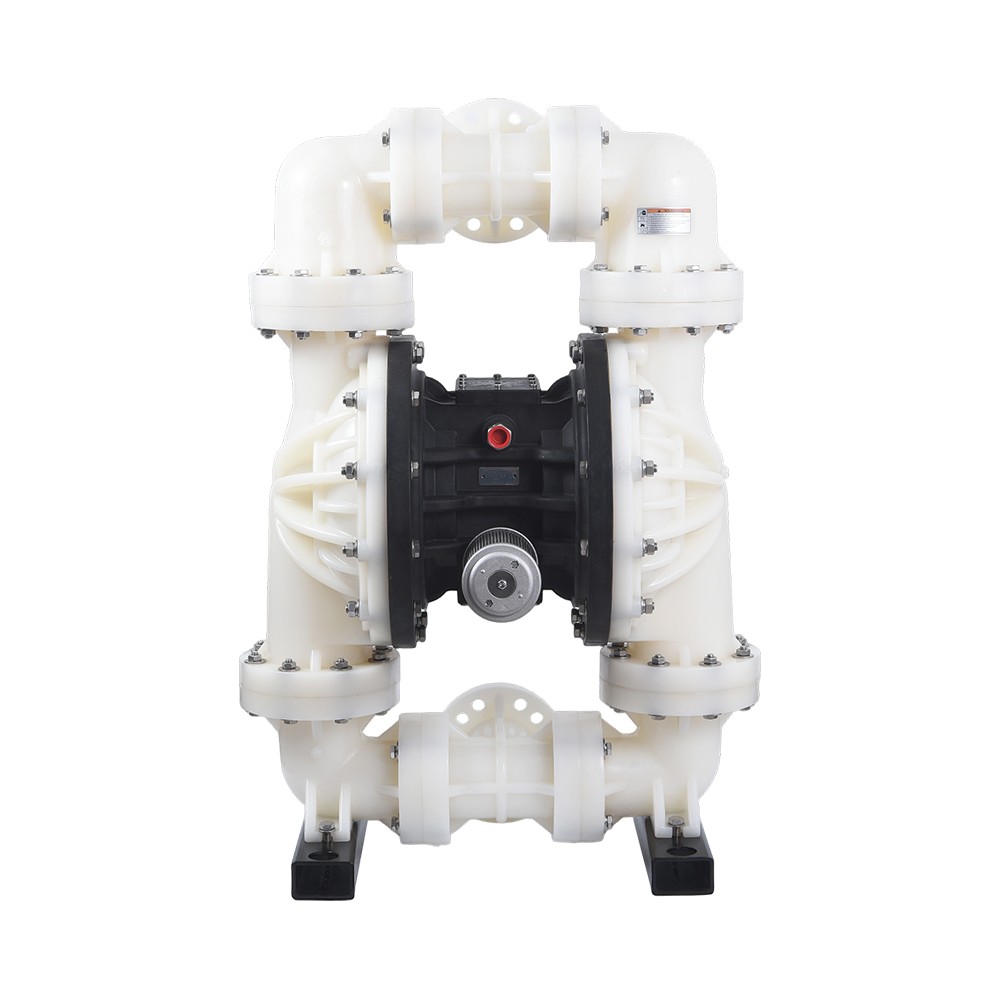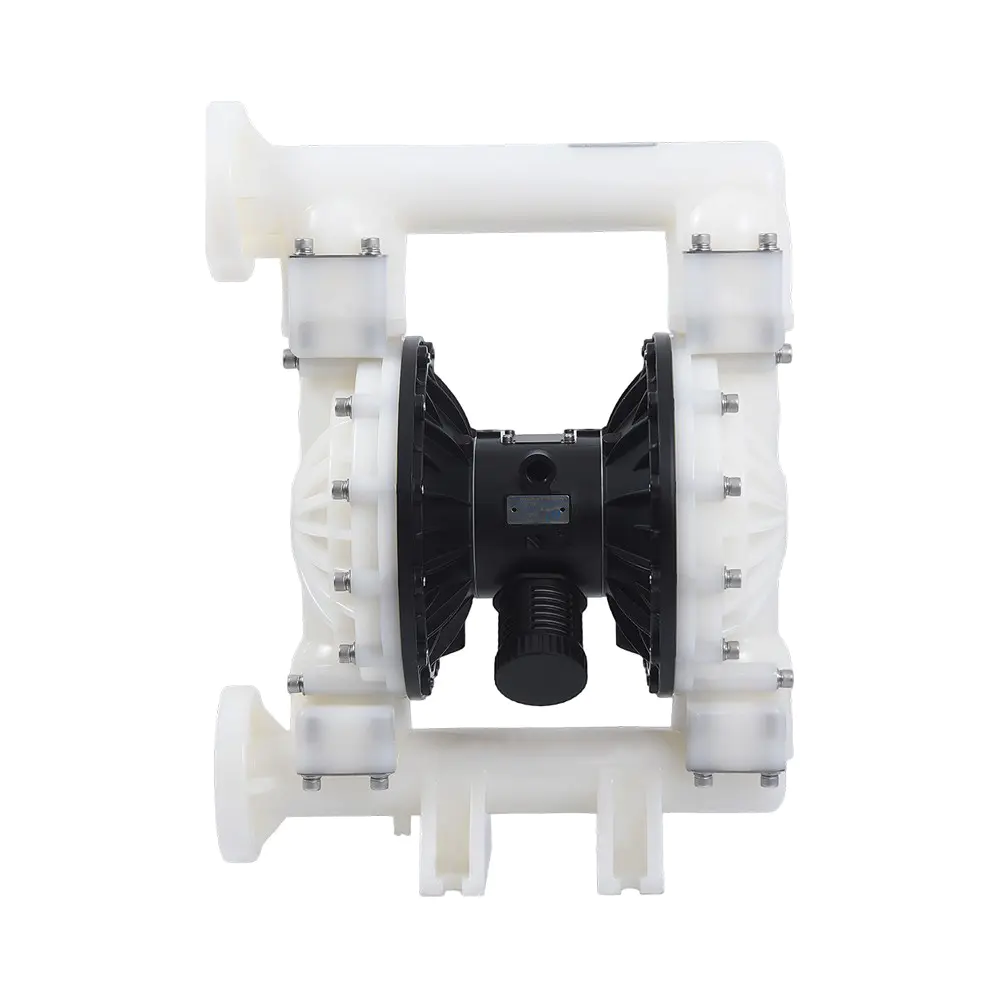


 EN
EN
 English
 Français
 Español
 عربى
عربىRun a hydraulically actuated diaphragm pump against a closed discharge valve and the pressure gauge will keep climbing: past the normal working pressure, past the pump's rated pressure, and straight toward the burst rating of the diaphragm. That is why the hydraulic diaphragm pump is the type of diaphragm pump that requires a pressure relief valve. A hydraulic diaphragm pump, also called a hydraulically actuated diaphragm metering pump, uses a motor-driven piston to push hydraulic fluid against a flexible diaphragm, which in turn displaces the process liquid. Because the piston keeps delivering energy even when the discharge line is blocked, the pump must be protected by a pressure relief valve. Air-operated double diaphragm (AODD) pumps, by contrast, usually do not need one, because they stall safely at deadhead.
Content
- 1 The Hydraulic Diaphragm Pump: A Relief Valve Is Mandatory
- 2 Air-Operated Double Diaphragm Pumps: No Relief Valve Required
- 3 Electric Diaphragm Pumps: Bypass or Relief Valve Determines the Answer
- 4 Diaphragm Pump Types and Relief Valve Requirements at a Glance
- 5 How to Set and Install the Pressure Relief Valve
- 6 Frequently Asked Questions
- 6.1 Does an air-operated double diaphragm pump need a pressure relief valve?
- 6.2 Why does a hydraulic diaphragm pump require a pressure relief valve?
- 6.3 Where should the relief valve be set?
- 6.4 What happens if the relief valve is undersized?
- 6.5 Is a pulsation dampener the same as a pressure relief valve?
- 7 Selecting the Right Pump and Protection Package
The Hydraulic Diaphragm Pump: A Relief Valve Is Mandatory
A hydraulically actuated diaphragm pump must be fitted with a pressure relief valve on the discharge side. When the discharge is closed, the piston continues to stroke, and because hydraulic fluid is nearly incompressible, the pressure spike is fast and destructive. The relief valve is the only component that can cap that pressure at a safe level.
Without the valve, a deadheaded hydraulic diaphragm pump fails in one of three predictable ways:
- The diaphragm over-deflects and ruptures, pushing process fluid into the hydraulic section.
- The discharge piping, gaskets, or instrument connections exceed their rated pressure and leak or burst.
- The pump's gearbox, motor, or coupling overloads as the drive train tries to force the piston against a blocked head.
The relief valve protects all three. It opens at a preset pressure and routes flow back to the suction side or to a small reservoir, so the pump continues to operate without the system pressure exceeding the set point.
Air-Operated Double Diaphragm Pumps: No Relief Valve Required
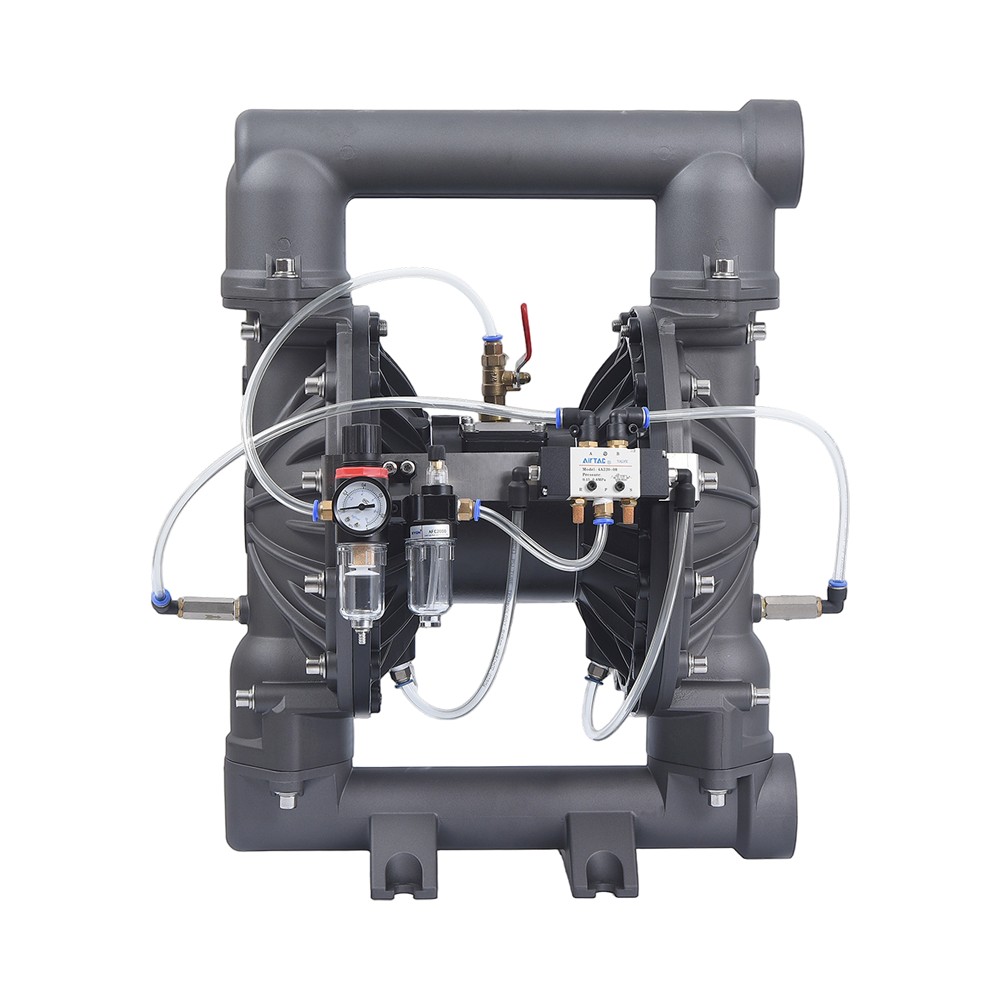
An air-operated double diaphragm pump does not require a pressure relief valve because it is self-limiting: when the discharge pressure equals the compressed air supply pressure, the internal air valve shifts to a balanced position and the pump stops stroking. This condition, called deadheading, is normal and safe for an AODD pump.
The maximum discharge pressure of an AODD pump is set by the air supply pressure. Feed the pump with 6 bar (87 psi) of compressed air, and a blocked discharge line will hold at roughly 6 bar while the pump stalls instead of continuing to build pressure. That makes AODD pumps a practical choice for transfer, filling, and filtration duties where an operator may close a valve while the pump is still running.
Two exceptions justify adding a relief valve to an AODD pump. First, if downstream components such as filter housings, heat exchangers, or flow meters are rated below the air supply pressure, install a relief valve set below that component rating. Second, if the pump will deadhead for long periods, fit a small relief or block-and-bleed arrangement so the diaphragm does not sit under full stall pressure indefinitely.
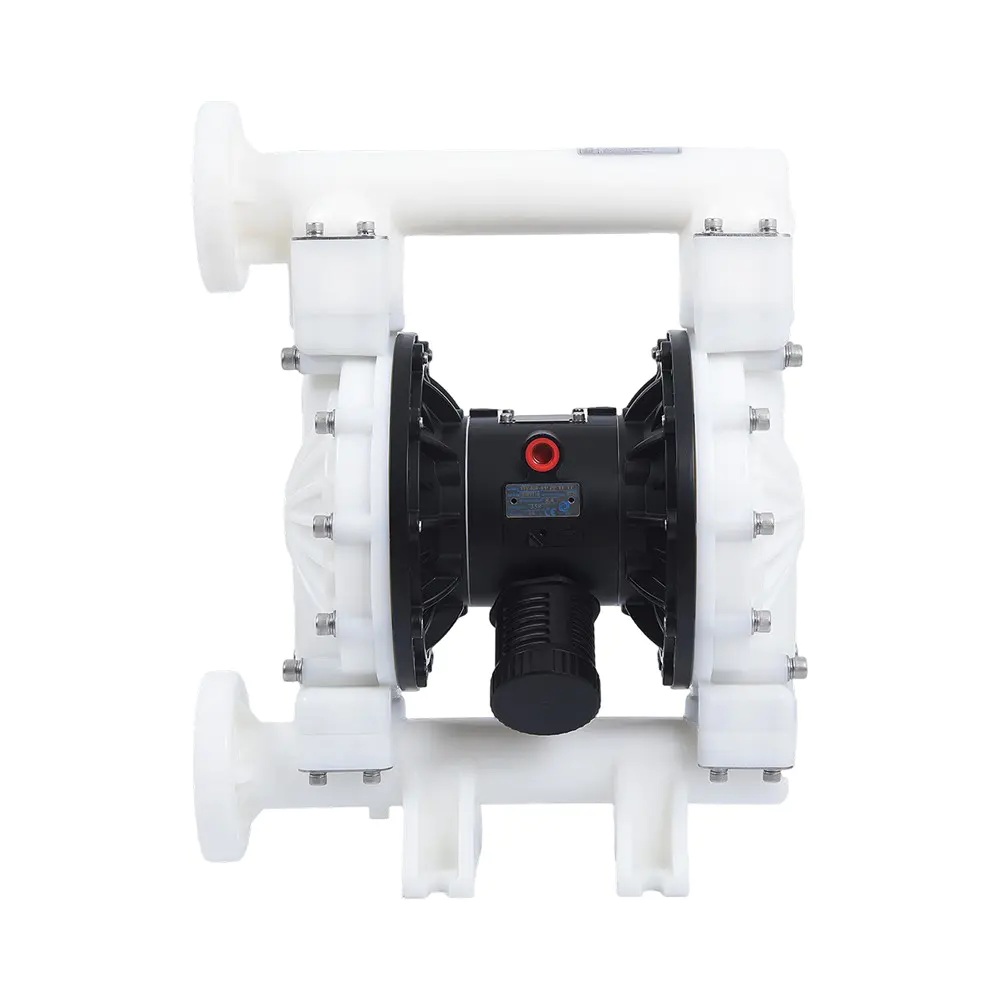
When selecting a pump for a deadhead-prone process, check the stall characteristics in the datasheet; our air-operated double diaphragm pump range includes aluminum, stainless steel, polypropylene, and PVDF versions, all of which stall safely at supply pressure.
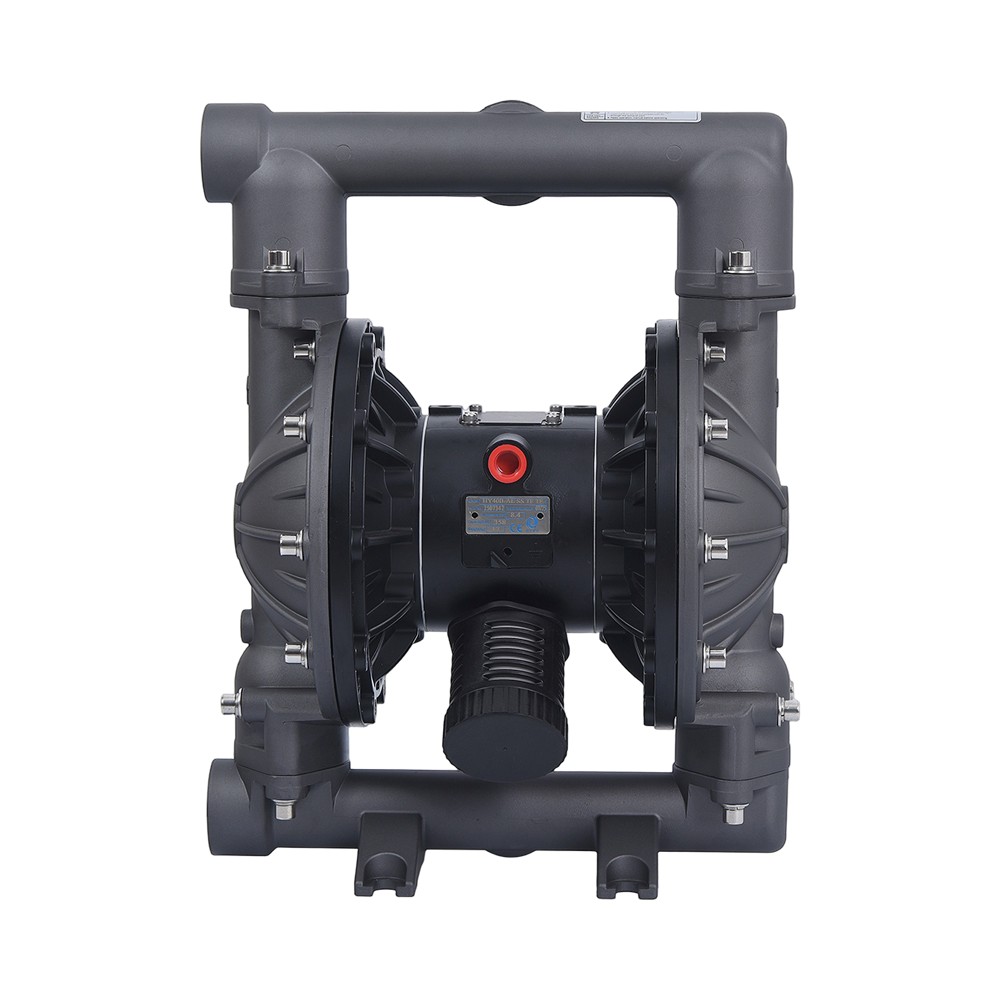 Pneumatic Diapagm Pump Manufacturer | AODD Diapagm PumpShanghai Haoyang Pump Valve Manufacturing Co., Ltd. is a China pneumatic double diapagm pump manufacturers and AODD diapagm pump factory,...View Product →
Electric Diaphragm Pumps: Bypass or Relief Valve Determines the Answer
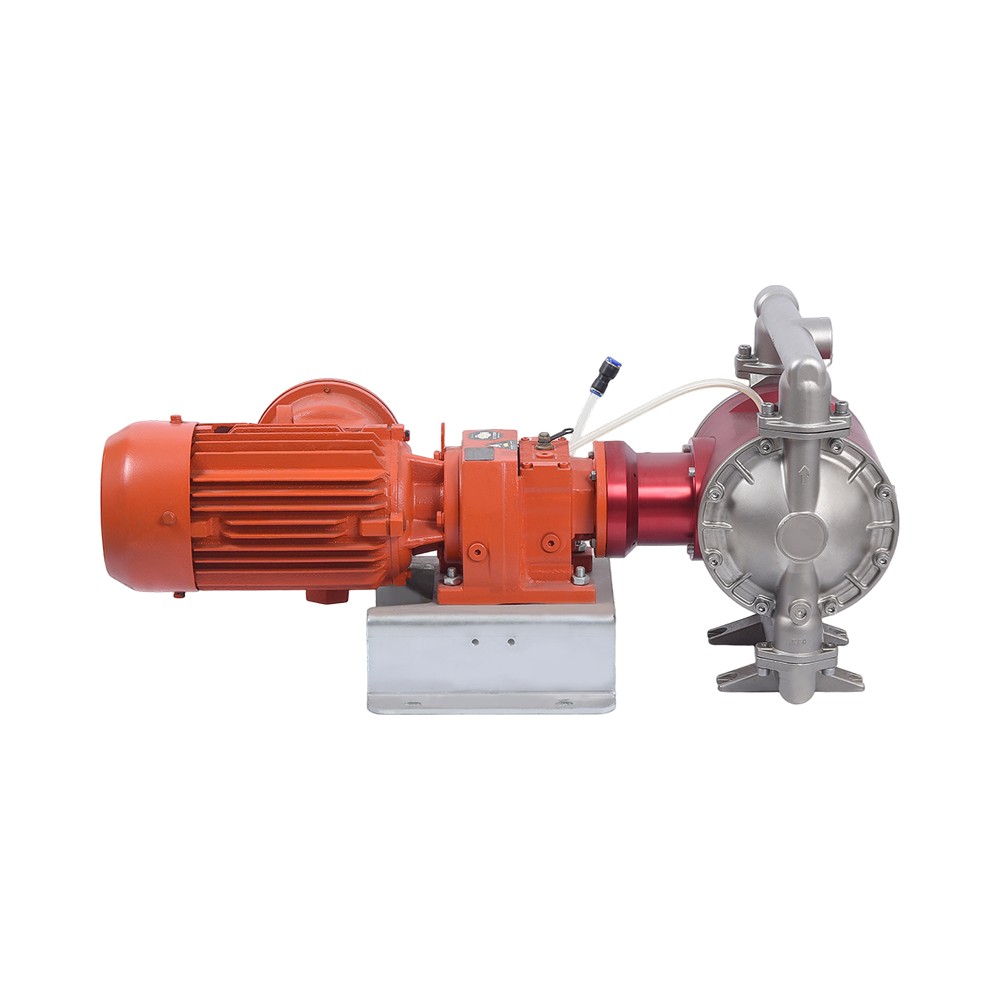
Electric diaphragm pumps fall into two groups: designs with an internal bypass or integral relief valve can be deadheaded safely, while direct-drive designs without a bypass need an external pressure relief valve, just like a hydraulic diaphragm pump. The rule is simple: if the pump can keep delivering energy to a blocked discharge, it needs a relief path.
In a typical motor-driven electric diaphragm pump, an electric motor turns a gearbox and an eccentric shaft converts that rotation into a reciprocating motion of the diaphragm. That mechanism is positive displacement. When the discharge is blocked, the motor keeps turning and the pressure keeps rising until the diaphragm, valve seats, or coupling fails. Manufacturers that include an adjustable internal bypass allow you to set a maximum pressure and recirculate the fluid safely, which removes the need for an external valve.
Check three figures in the pump datasheet before deciding:
- Maximum deadhead pressure: if the manual states a finite value, an internal bypass or relief valve is already fitted.
- Bypass adjustment range: confirm it covers your normal operating window and is not fixed at a pressure too high for the piping.
- Motor power at stall: if the motor can keep running at full torque against a blocked head, external protection is mandatory.
For electric-driven applications, the technical documentation for our electric diaphragm pump range states whether the pump includes internal overpressure bypass protection.
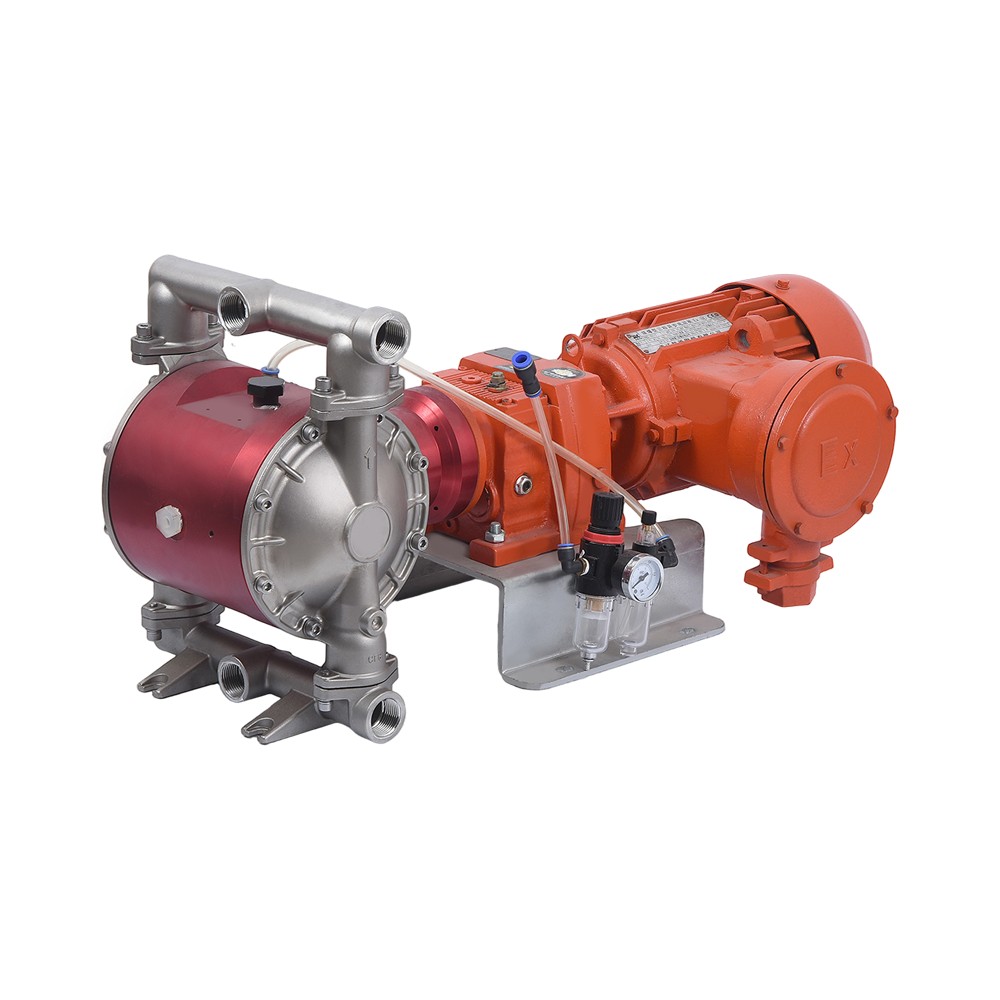 Custom Electric Diaphragm Pump High Flow for Water Transfer Manufacturers, FactoShanghai Haoyang Pump Valve Manufacturing Co., Ltd is top China Electric Diaphragm Pump High Flow for Water Transfer manufacturers and cu...View Product →
Diaphragm Pump Types and Relief Valve Requirements at a Glance
The decision comes down to what the pump does when the discharge is blocked. The table below summarizes the four common cases.
| Pump type | Drive mechanism | Behavior when discharge is blocked | Pressure relief valve needed? |
|---|---|---|---|
| Hydraulic diaphragm pump | Motor-driven piston plus hydraulic fluid | Pressure rises continuously until a component fails | Yes, an external relief valve on the discharge side |
| Air-operated double diaphragm pump | Compressed air | Stalls at the air supply pressure | No, self-limiting; optional only for downstream components with lower ratings |
| Electric diaphragm pump with internal bypass | Motor and gearbox with bypass valve | Pressure caps at the bypass set point | No, the internal bypass valve provides the protection |
| Electric diaphragm pump without bypass | Motor and gearbox, fixed displacement | Pressure rises until the drive stalls or parts fail | Yes, an external relief valve is required |
How to Set and Install the Pressure Relief Valve
Install the pressure relief valve on the pump discharge line, between the pump and the first isolation valve, and set it above the normal working pressure but below the rated pressure of the weakest component in the system. If the valve sits on the wrong side of an isolation valve, you can still deadhead the pump while the block valve is closed.
- Determine the normal working pressure at the pump's maximum expected flow.
- Identify the lowest rated component, whether that is the diaphragm, piping, flange, or downstream equipment, and treat that pressure as the absolute ceiling.
- Set the relief valve roughly 10 to 15% above the normal working pressure but below that ceiling, so it does not open during normal operation yet protects the system before damage occurs.
- Route the relief discharge back to the suction tank or to a safe drain. Never cap the outlet of a relief valve.
- Size the valve to pass the pump's full rated flow at the set pressure; an undersized valve will let the pressure climb above the set point during a deadhead.
- Test the installation by closing the discharge valve and confirming that the pressure stabilizes at the set point instead of climbing.
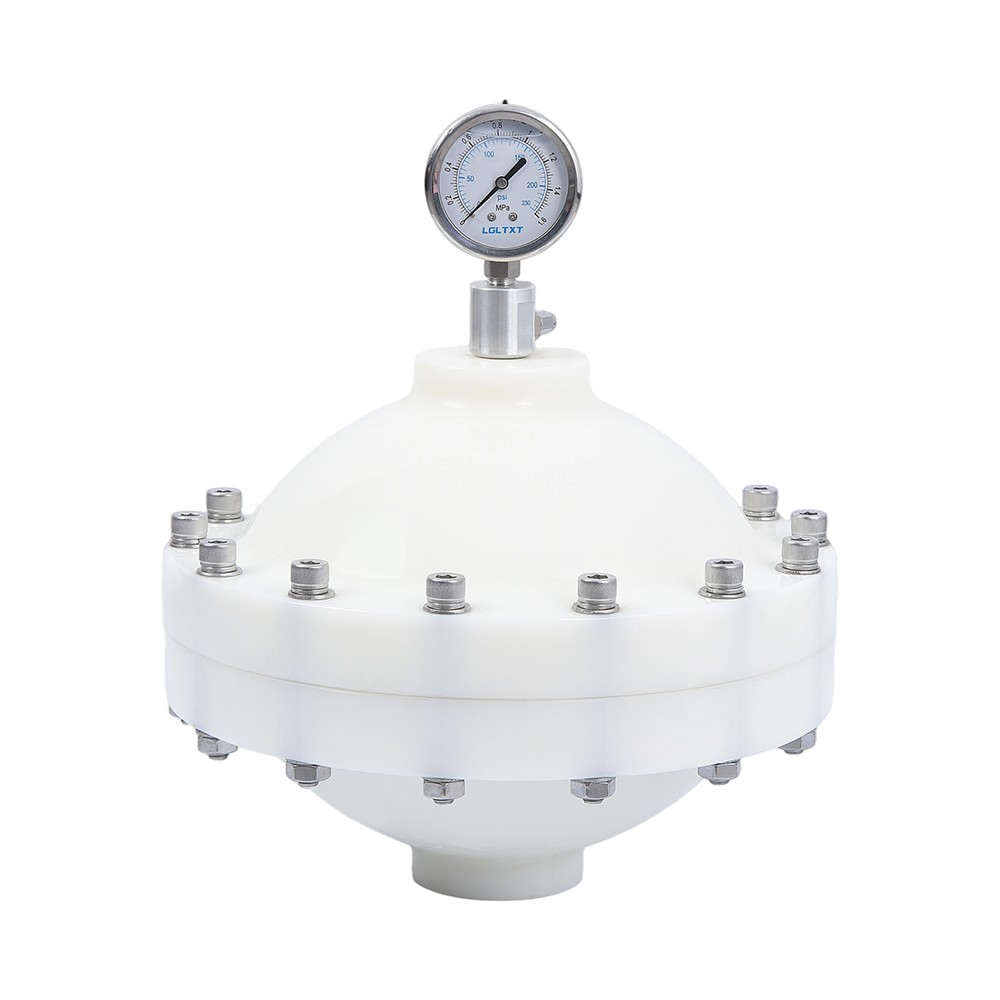
Pressure pulsation is a different problem from overpressure. A relief valve protects against excessive pressure; a pulsation dampener absorbs flow variation and smooths the discharge. On diaphragm pumps with long discharge lines, a correctly sized dampener reduces pressure spikes, which in turn makes the relief valve open less frequently and last longer.
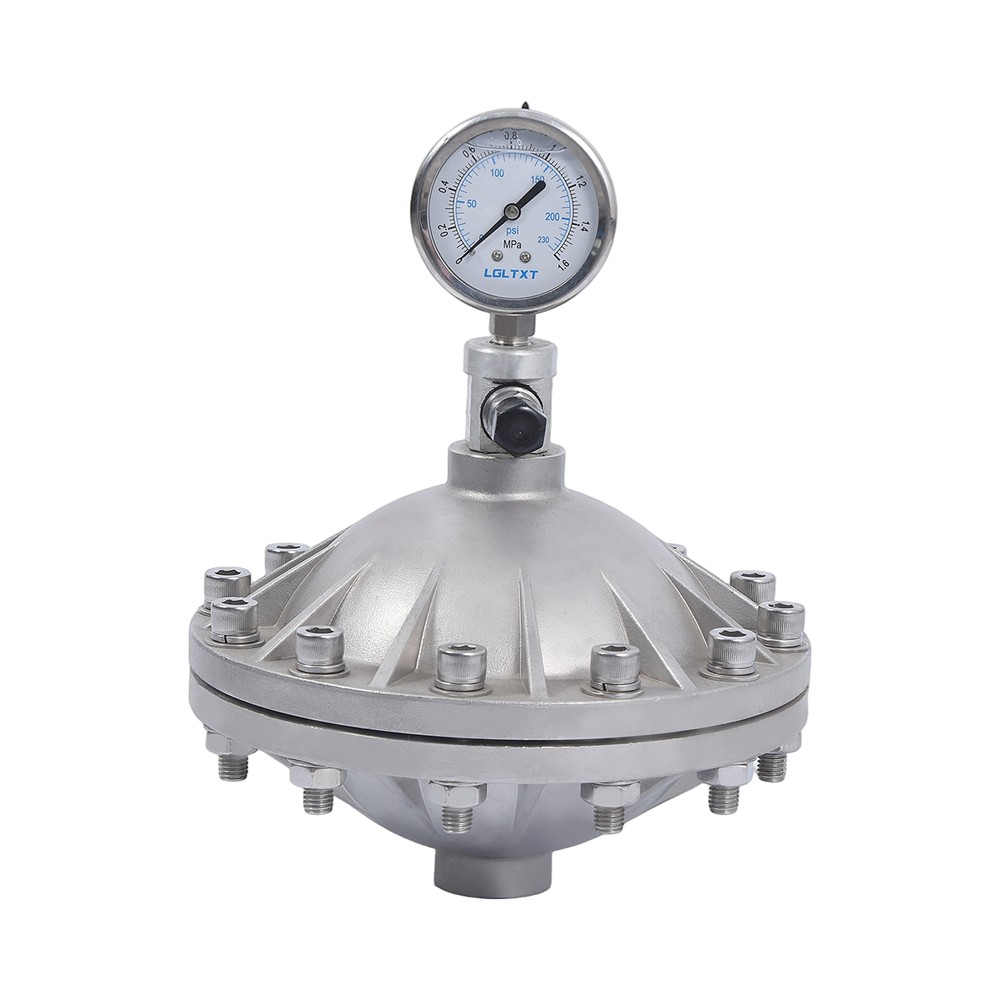 Custom Pulsation Dampener Manufacturers, Factory - Shanghai Haoyang Pump Valve MShanghai Haoyang Pump Valve Manufacturing Co., Ltd is top China Pulsation Dampener manufacturers and custom factory,View Product →
Frequently Asked Questions
Does an air-operated double diaphragm pump need a pressure relief valve?
Not normally. An AODD pump stalls safely when the discharge pressure equals the air supply pressure, so the pressure does not continue to rise. Add a relief valve only if downstream equipment is rated below the air supply pressure or if the pump will be held at deadhead for long periods.
Why does a hydraulic diaphragm pump require a pressure relief valve?
Because the motor-driven piston keeps delivering energy to a blocked discharge and the hydraulic fluid is practically incompressible. The pressure rises until the diaphragm, piping, or drive train fails; the relief valve is the only component that stops that rise.
Where should the relief valve be set?
Above the normal working pressure and below the rating of the weakest component, typically 10 to 15% above working pressure. The goal is to protect the system without opening the valve during normal operation.
What happens if the relief valve is undersized?
The pressure can climb above the set point during a deadhead because the valve cannot pass the pump's full flow. Size the valve for the maximum pump flow at the set pressure, not for the average flow rate.
Is a pulsation dampener the same as a pressure relief valve?
No. A pulsation dampener smooths pressure pulsations during normal pumping, while a relief valve opens only on overpressure. Many well-designed diaphragm pump systems use both: a dampener for steady flow and a relief valve for safety.
Selecting the Right Pump and Protection Package
Start with the duty, then decide what overpressure protection is already built in. For chemical metering and dosing, a hydraulic diaphragm pump gives you accuracy but must be ordered with a correctly sized relief valve and tested at installation. For transfer, filling, and filtration duties where deadheading is likely, an AODD pump offers safe stall behavior without the extra valve, piping, and maintenance burden.
When comparing products, look at wetted materials, the maximum air supply pressure for pneumatic versions, the bypass range for electric versions, and whether the manufacturer certifies safe deadhead behavior. Our product range covers both pneumatic and electric diaphragm pumps in aluminum, stainless steel, polypropylene, and PVDF, across common port sizes from 1/4 inch to 3 inches. You can also follow our industry news for practical guidance on pump safety and selection, and check our company news for updates on available models and configurations.